Courtesy of The Estate of Barbara Hammer.
Barbara Hammer modeled queer collectivity and lesbian eroticism. In this conversation with Brydie O’Connor about her new documentary Barbara Forever, we see a portrait of an iconic artist through the archive.
On a dreary, wet day in March, I, among about four hundred others, basked in the sun-kissed images of pioneering lesbian filmmaker Barbara Hammer. We were gathered to watch a new, meticulously collagic documentary about her legacy, Barbara Forever by Brydie O’Connor—her debut feature. Sinewy, nude self-portraiture gave way to gauzy landscapes shot through bifocals, as well as footage—at once hotly intimate and ordinary—of the artist’s many lovers. The film’s cavalcade of warm bodies and eye-popping imagery feels made for both Hammer devotees and the uninitiated. I’d seen a great deal of her work beforehand, first as a film student, then as an intrepid queer, but I still left the theater feeling remade, energized by the possibility of looking not with my eyes but with my entire body.
Courtesy of The Estate of Barbara Hammer
Later that week, I wrote in a dispatch that Hammer’s archives teach us “how to live collectively, how to care for your neighbor, how to find in words and images what otherwise resides deep in your chest.” Perhaps here I might amend or extend this thought: O’Connor’s treatment of the archive engenders the very collectivity by which Hammer lived and created. By setting Hammer among her wider circle, we get to see her many selves, crucially sloughing off the traditional linear timeline: first, the dawn of her lesbianism, her globe-trotting ex-marriage to a man, the various girlfriends who chaptered Hammer’s filmmaking, her prolific public career across East and West Coasts, a Shirley Temple-shaped childhood, her long-term partnership with Florrie Burke, and her eventual journey with ovarian cancer. A distinctly queer chronology that uncurls the tendrils of Hammer’s whole being.
When I meet O’Connor over Zoom, our conversations skip around in a similar fashion and, on more than one occasion, she pauses to neatly reorder her sentiments. I am unsurprised to learn that before becoming a filmmaker, O’Connor felt she would be a film critic, as her research methodologies feel both imaginative and journalistic. She first came upon Hammer’s work while writing her thesis and resolved to reach out directly to the artist, who sent her a hefty compilation of her 1970s films on DVD. Included was O’Connor’s eventual favourite: Superdyke Meets Madame X, a wall-to-wall account of Hammer’s relationship with video artist Max Almy.
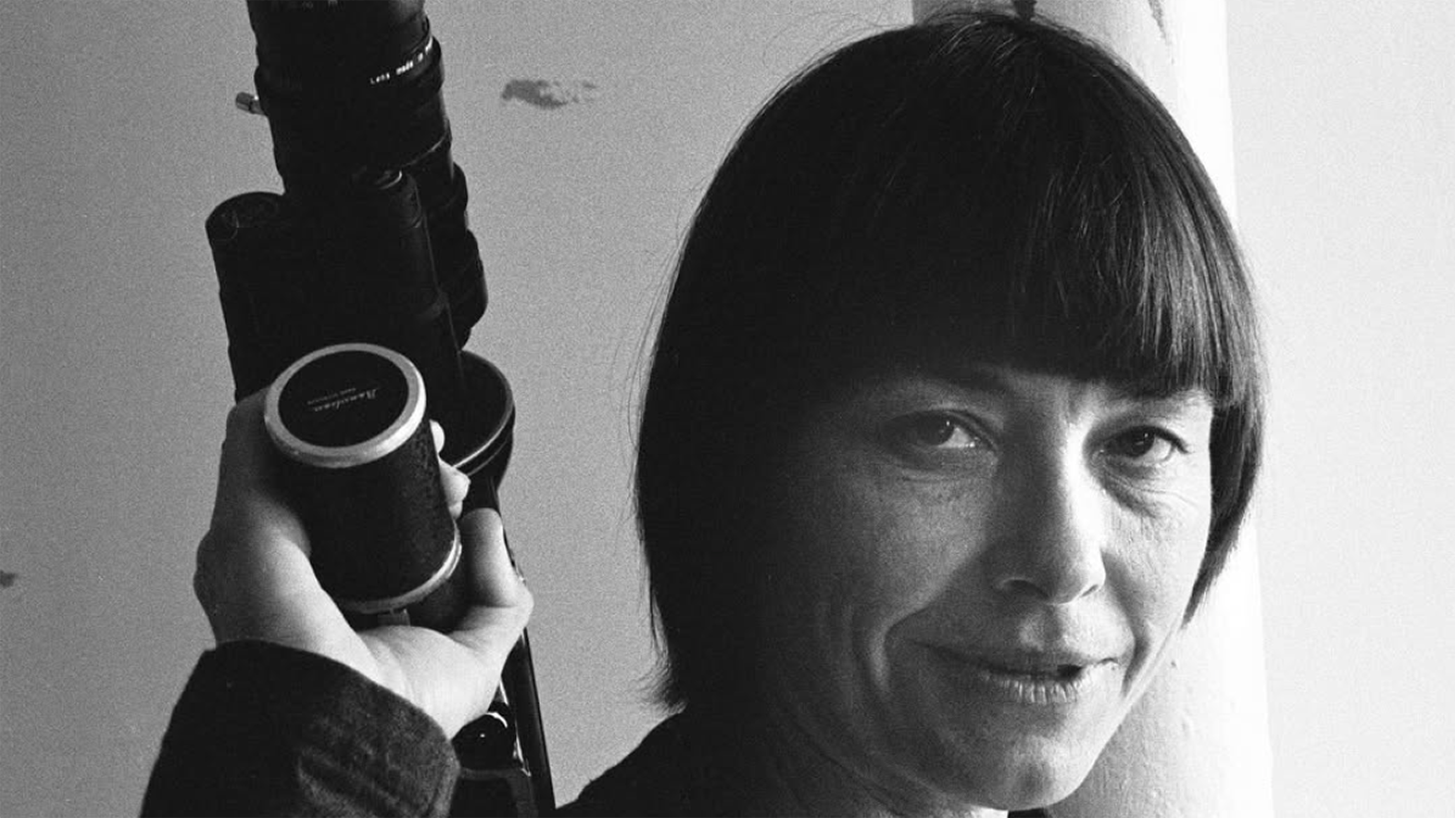
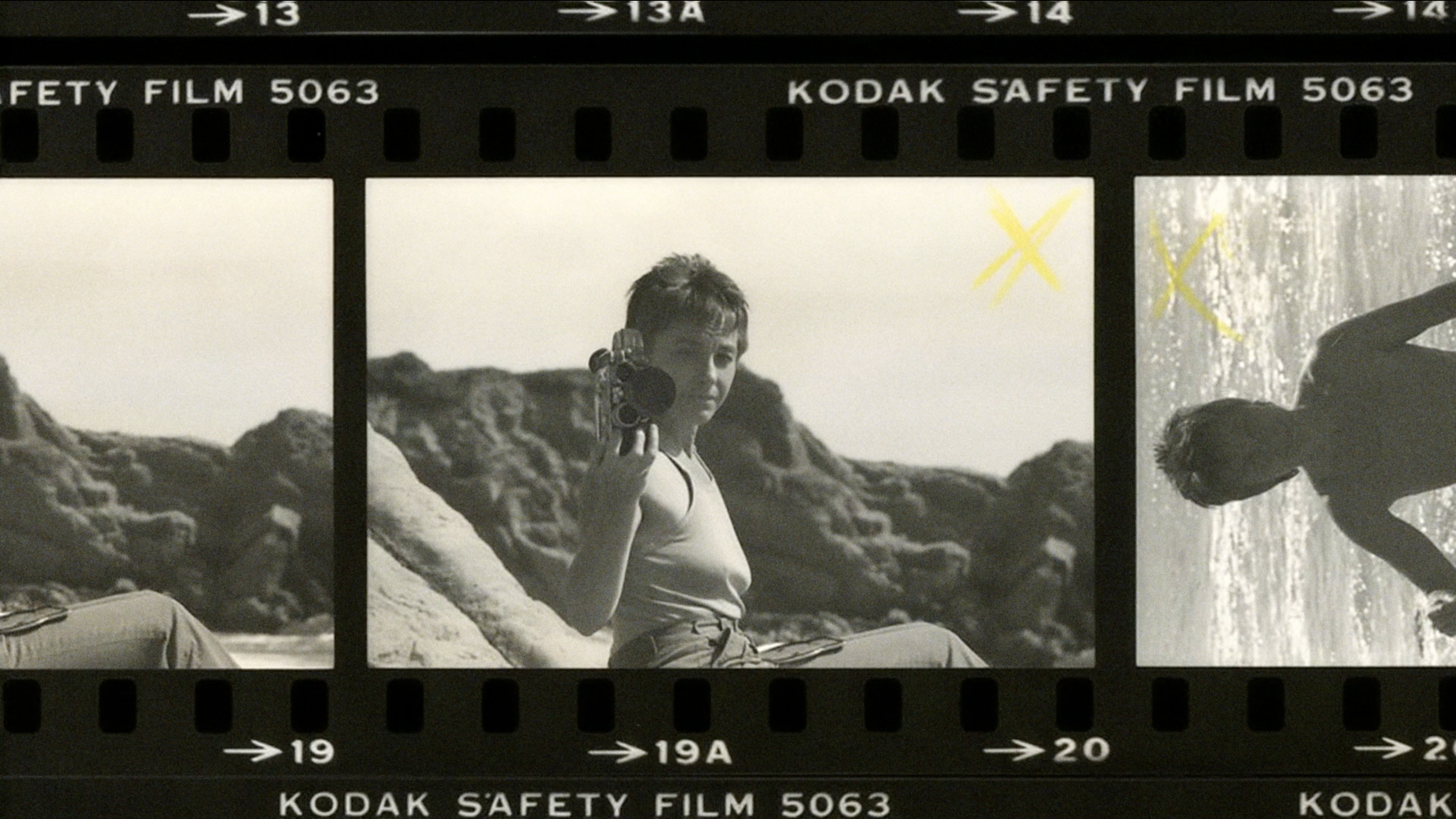
Like many, her first foray into Hammer’s ecosystem was Dyketactics, which instantly informed her research. “I was drawn to Barbara’s playfulness and the messiness of filming these women’s rituals and their ways of being, touching, and making love,” she tells me. Making love was also Hammer’s means of making art, evidenced by the sensual aureole that envelopes the work. O’Connor’s film tenderly compiles Bolex footage of Hammer in bed, in fields, in bathroom mirrors with her lovers, often fucking or talking about fucking.
Barbara Forever arrives four years after O’Connor’s short film Love, Barbara (2022), a filmic portrait of Hammer told through Florrie Burke’s eyes. Now with a more robust assemblage of archives—400 hours of footage, audio recordings, photographs, ephemera, and writings—O’Connor locates Hammer’s history within a lineage of lesbian preservation and commemoration. “As an archival producer, I said, great, I can ingest and organize all of this and then engage associatively and from a place of feeling. When shaping the film, my producers pushed me to think about why I was initially drawn to Barbara and to keep that impulse intact,” the filmmaker relays. “I kept coming back to embodiment and what it means to exist in a lesbian body, in a woman’s body, and to film those connective moments between multiple relationships. I narrowed in on this idea that to turn the camera on one’s own body and experience is an alternate method of making history. Barbara says so in the film, that she wanted to document what it meant to be a lesbian from birth to death.”
Courtesy of The Estate of Barbara Hammer.
Hammer is so present, so active, so embodied in the film that I often forgot we were rifling through her posthumous archives rather than simply living in her synapses, traveling with her from thought to thought. Hammer’s own body indeed became the subject of her later works, A Horse is Not a Metaphor (2008) and Evidentiary Bodies (2016) which thematize her years with cancer—both of which O’Conner includes in her film. One sequence from Barbara Forever documents Hammer’s chemotherapy sessions—what Hammer called “the rhythm of the days”—through PET scans. In another, we see Hammer filming the light that refracts through her infusion bag, a callback to her earliest experiments shooting through bifocal lenses (Schizy, 1968) and crystal ashtrays (Contribution to Light, 1968). O’Connor says that included within Hammer’s extensive records was a seven-hour taping of a surgery: “Her medical footage allows people to have their own relationship to her most intimate experiences. Barbara wanted to transfer her perspective and feelings to others, and illness very directly externalizes one’s internal experience.”
Hammer was sick for thirteen years and ardently maintained that she was not “fighting” cancer as a “battle.” This sort of violent language seemed to undermine her manifold potential as an artist. Instead, as O’Connor describes, “it was an experience [Hammer’s] body was going through, physically, mentally, and emotionally, but that was happening alongside so many other bodily experiences.” During my viewings of O’Connor’s film, I was taken by the fact that Hammer narrates her own film in varying states of health—her voice oscillating from resonant to breathy but always unmistakably hers—and that O’Connor neither dwells upon or omits this disparity.
For artists, illness often either corrupts a working order or lends it a more existential meaning. For Hammer, whose body had been self-exposed on film stock for decades, illness was another angle from which she could understand herself. Here, I think of Audre Lorde’s cancer journals, in which she wrote, “I do not wish my anger and pain and fear about cancer to fossilize into yet another silence, nor to rob me of whatever strength can lie at the core of this experience, openly acknowledged and examined.” Lorde’s language seems to echo within Hammer’s images, particularly those of the artist’s nude body shot in the midst of her illness, which identify the strength and pain at the core of Hammer’s later existence.
When dealing closely with an archive and personality of such singularity, O’Connor risked her own voice becoming subsumed by Hammer’s. And yet O’Connor’s documentary still feels keenly original: “We wanted there to be a separation between replicating Barbara’s sensibilities and presenting them.” O’Connor continues. “This was built out of Gisela Fullà Silvestre’s sound design which lifts the movie off the ground. At the world premiere, I felt my body buzzing through the floor and the seat during the internal orgasm scene.” I know exactly what she means; to me, O’Connor’s film invites a sort of calm eroticism, a countermeasure to the voyeurism or fetishization cast onto queer women’s bodies in the everyday.
Hammer’s films have always felt pleasurable in their ability to bring sex into the domain of the spectacularly mundane: vulvas transfiguring into blooming cabbages, daffodils, and lilacs in Women I Love (1976); a scene of windowsill masturbation beside a flowering shrub in X (1973); nude forms caressing trees, toes, and trapezes in Double Strength (1978); Hammer tonguing a small mound of sugar in T.V. Tart (1989). O’Connor’s documentary retains the truth of these images, the soft belly of lesbian histories. “There are endless lesbian aesthetics. Barbara Forever came out when I was 30, which is the same age that Barbara discovered she was a lesbian—I haven’t been able to kind of shake this knowledge of completing something at the start of her artistic trajectory and exploration. Life is so long,” O’Connor grins.
Though Barbara Forever is an archival piece, the contemporary weaves its way through. One such detail is the presence of Joey Carducci, whom Hammer mentors on their 2010 film Generations, a passing of the Bolex-torch to a younger generation of queer experimental artists. This friendship and collaboration is especially moving as we see Carducci come out as transmasculine to Hammer, as though wary of disrupting a lesbian history. As O’Connor maintains, the archive is a means of envisioning life beyond one’s own: “It’s really important to remember Barbara as someone who was interested in queerness continuing to expand and proliferate. So to put her lesbian legacy in direct lineage with Joey’s transmasculine legacy is to invite continued expansiveness.”
This expansiveness—this big, queer orchard—is sustained by ongoing creation. Right before we hang up, O’Connor puts it plainly: “You don’t have to be precious about everything you make. You can create through questions. You can create through the process of something, because being queer is iterative and involves discovery, newness, and self-reinvention. Barbara’s work offers a blueprint for documenting your perspective in whatever way feels true to you in that moment. It doesn’t have to be perfect or to fix queer representation. It can just exist as a piece of art—a touchstone for connection."