


Photography by Kees de Klein and Cain Isan Wittenhaus
Marf Summers has a habit of ending up in people’s bedrooms. In 2022, Summers—an artist, architect, and leatherworker—created their first certifiably viral artwork: a veg-tan leather toolbelt that features the O-ring from a strap-on harness. The idea was intended to serve as a “love letter to those at the center of the lesbian/DIY Venn diagram,” with the O-ring becoming a hallmark of Summers’s work on queer domesticity—a concept they describe as a resistance to definition, to orderliness, to hegemonic ideas of “good taste,” and an embrace of plurality, the imperfect, and the erotic outside the bedroom.
As an aftereffect of what became an accidental phenomenon, postcard prints of TOOLbelt (and Summers modelling it) now decorate homes globally. So much so that friends will often tell them stories of going home with someone and seeing Summers’s photo on the wall, “like, next to the bed while having sex,” they tell me, laughing.
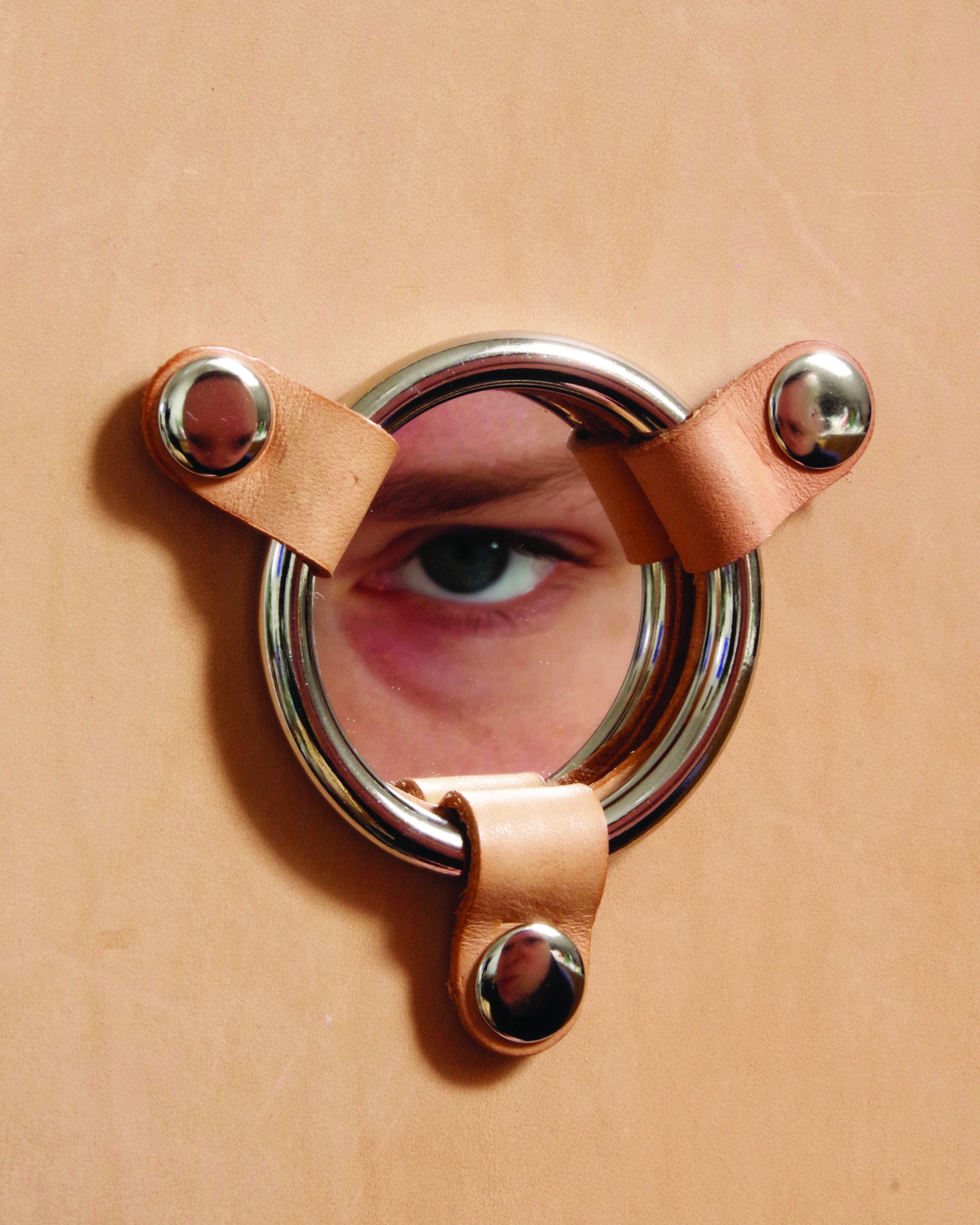
Hallway Mirror, the final object in the O-Ring series. “Those mirrors were very much about O-ring as a portal to another world,” Summers shares—with the in-betweenness of hallways serving as transitional spaces of display, departure, and arrival. Summers describes the O-ring as “the site of potential within a harness.” “Is this a thing from which things emerge, or a thing from which things enter?” Photo: Marf Summers.
Still, the response to the sculptural piece prompted Summers to take their practice seriously. Now, due to popular demand, they’re working on creating replicas that people can purchase themselves. “I just really appreciate having, on some level, a sort of presence in people’s consciousness,” Summers told me when we spoke over Zoom in early summer, from their home in Lewisham, South London.
Working out of their studio in Croydon, also South London, Summers specializes in three-dimensional and object creations. They break their artistic practice down into three phases. In the first, much of their work centered around mending, repair, and DIY. They describe the second as “the phase that was really more about domesticity and making objects for the home.” Now and for the last two years, they’ve focused on a “richer, deeper body of work,” originally titled Standing Stone Butch.
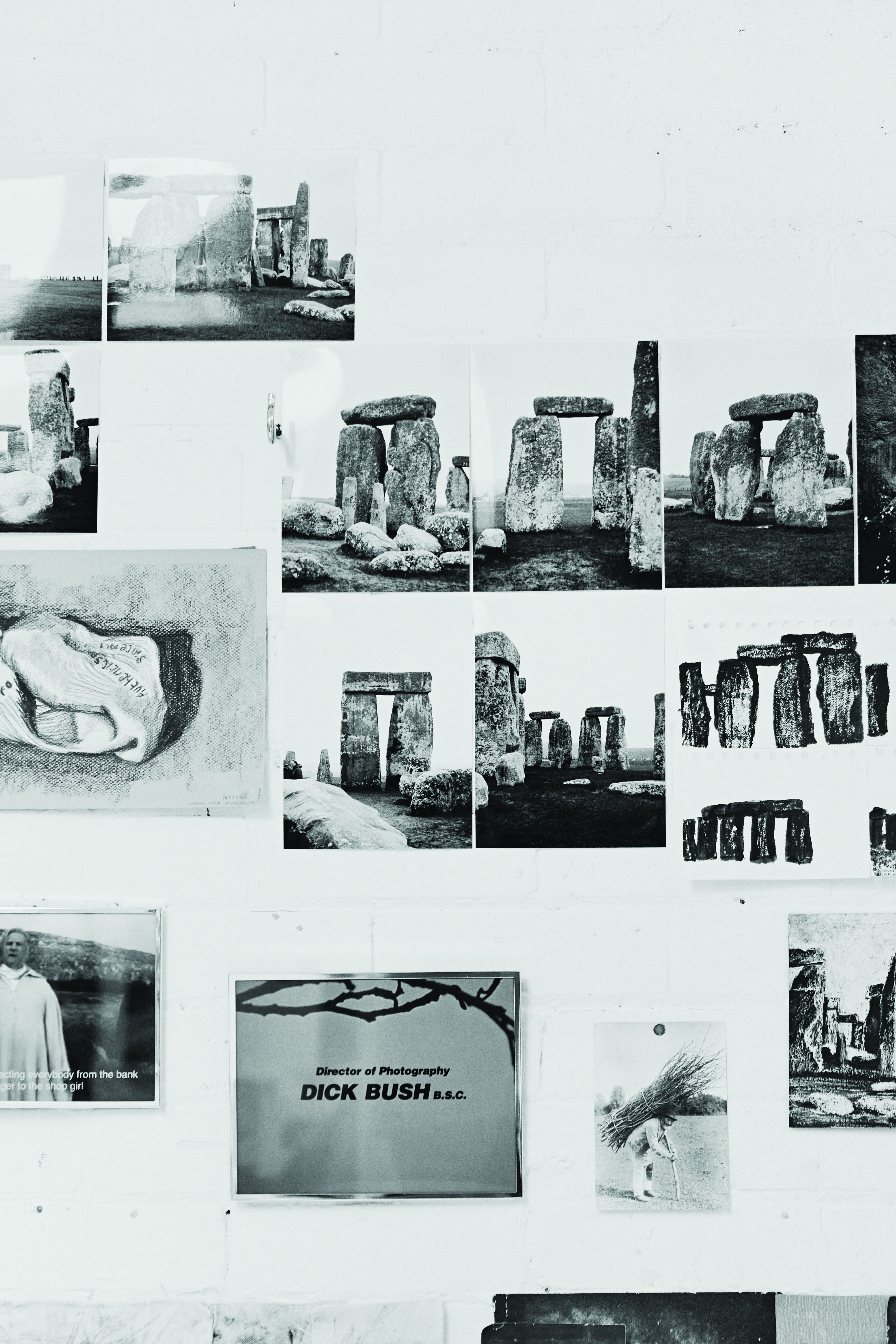
Summers’s studio pinboard is a living shape-shifting thing. The photographs of standing stones currently on display were taken on a tiny vintage SLR camera. “Anything where there’s weird stuff going on with scale feels very trans to me,” they say.
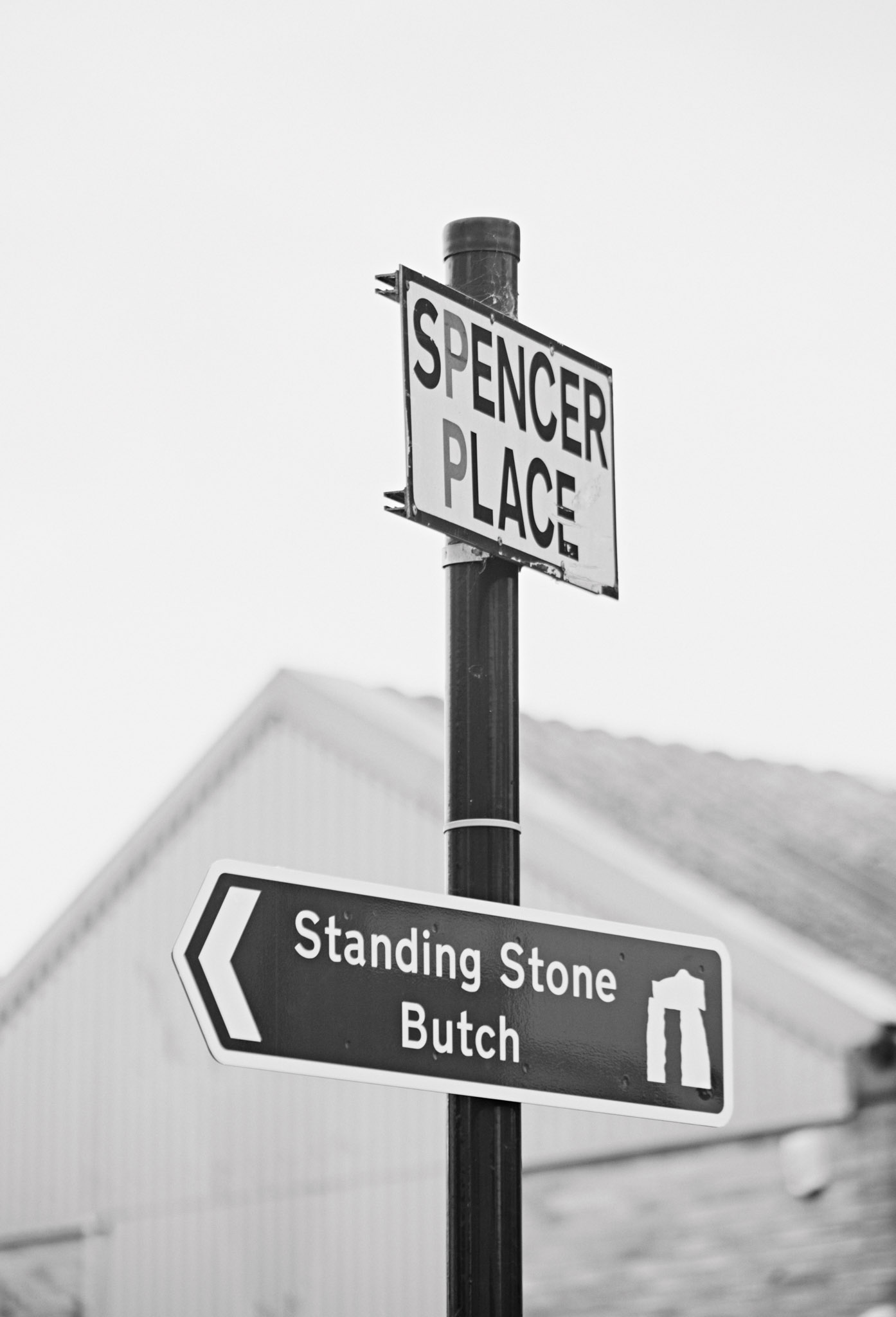
Inspired by the UK’s brown tourist street signs, Roadside reflects Summers’s interest in historic landmarks in unlikely settings. “I’ve been fascinated by ancient sites like standing stones that you find by the side of a motorway, or there’s one in Scotland that’s in the middle of a council estate.”
The collection includes: a live performance of the ancient practice of flint knapping (the method used to make neolithic axe heads) with hard candy; a vintage tracksuit top inscribed with an ancient chalk hill figure, the body explored as terrain; and The Lifestyle 1 & 2 (Testogel handprints combined with canvas rag and sandpaper), among various others. “It’s all about using neolithic history, prehistory, Stone Age history, and these ancient sites as a portal to thinking about transness along a spectrum of deep time,” Summers tells me, holding their fingers up to the camera to show the remnants of white paint—drawing parallels between contemporary queer identities and a world of the past “so unknowable it becomes this jumping-off point for possibility.”
“I guess to an extent [it’s about] anti-Americanization,” they continue, “wanting to pull away from this myopic, almost singular viewpoint that we often have on queerness and queer aesthetics.” Instead, they’re favoring that which is less rigid and more ambiguous, “connecting with the almost mythical and alchemic experience of transness, as opposed to how we’re often forced to experience it as this very medicalized thing.”
A key piece from the collection is Roadside, a queering of the UK’s brown tourist street signs, emblazoned with the words “Standing Stone Butch.” Besides inadvertently duping passersby into searching for a nonexistent neolithic discovery, Roadside works as an allegory for queerness in the twenty-first century, capturing a sense of “feeling like a roadside attraction” and the very British incongruity of ancient, mystical sites in unbelievably mundane locations. For Summers, however, “the only bit that still makes sense for me is the ‘standing,’” they laugh, explaining that they’ve since shifted away from the idea that they can describe themselves in language (partly because they don’t identify as a stone butch anymore, partly because they’re foregoing rigid categoricals in favor of ambiguity). “All of these terms need to have a looseness.”
Nevertheless, the sign still, well, stands. “It speaks to a moment in my identity that was true . . . I don’t want to erase that part of myself,” they say.
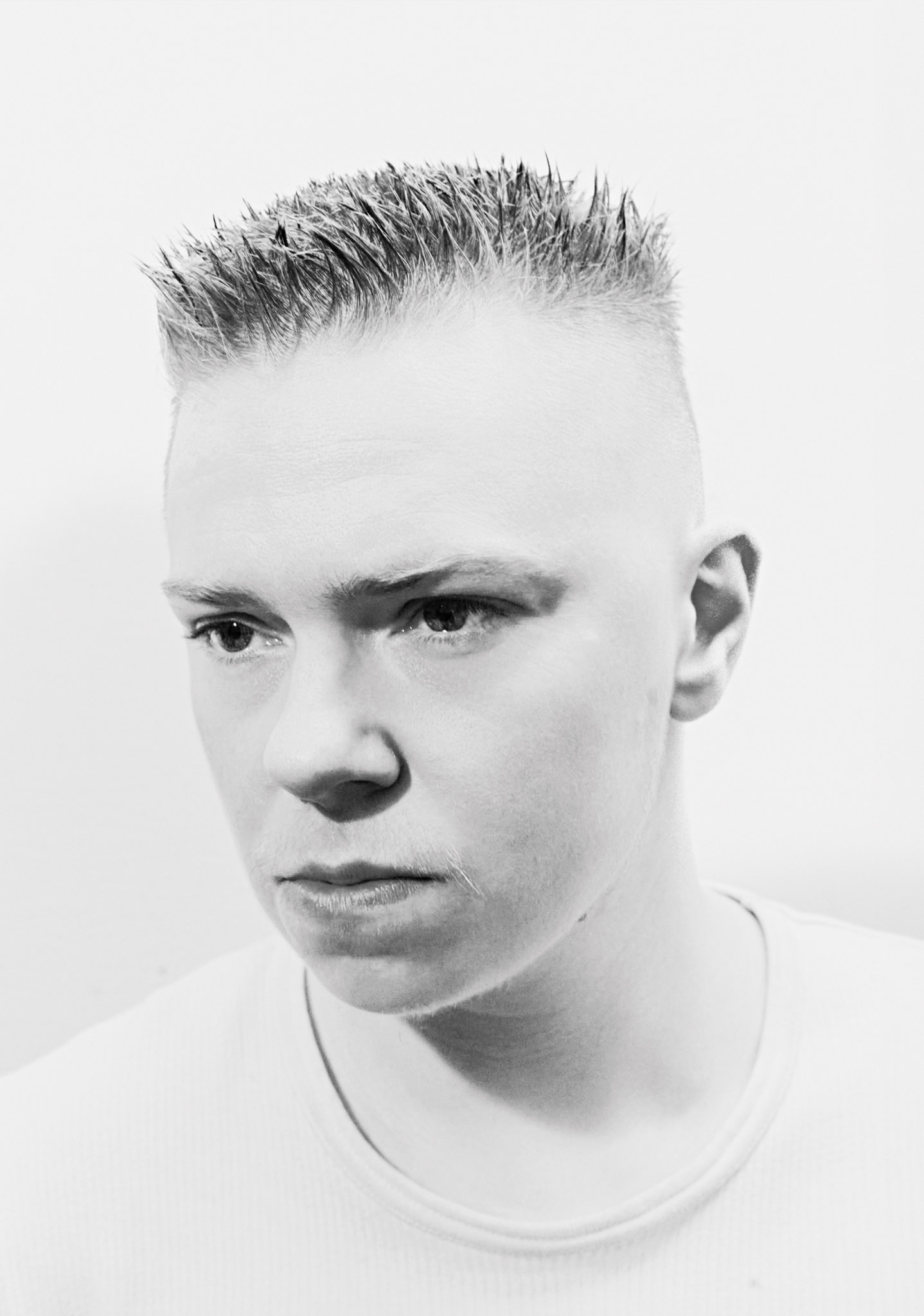
Two sides of the same coin.
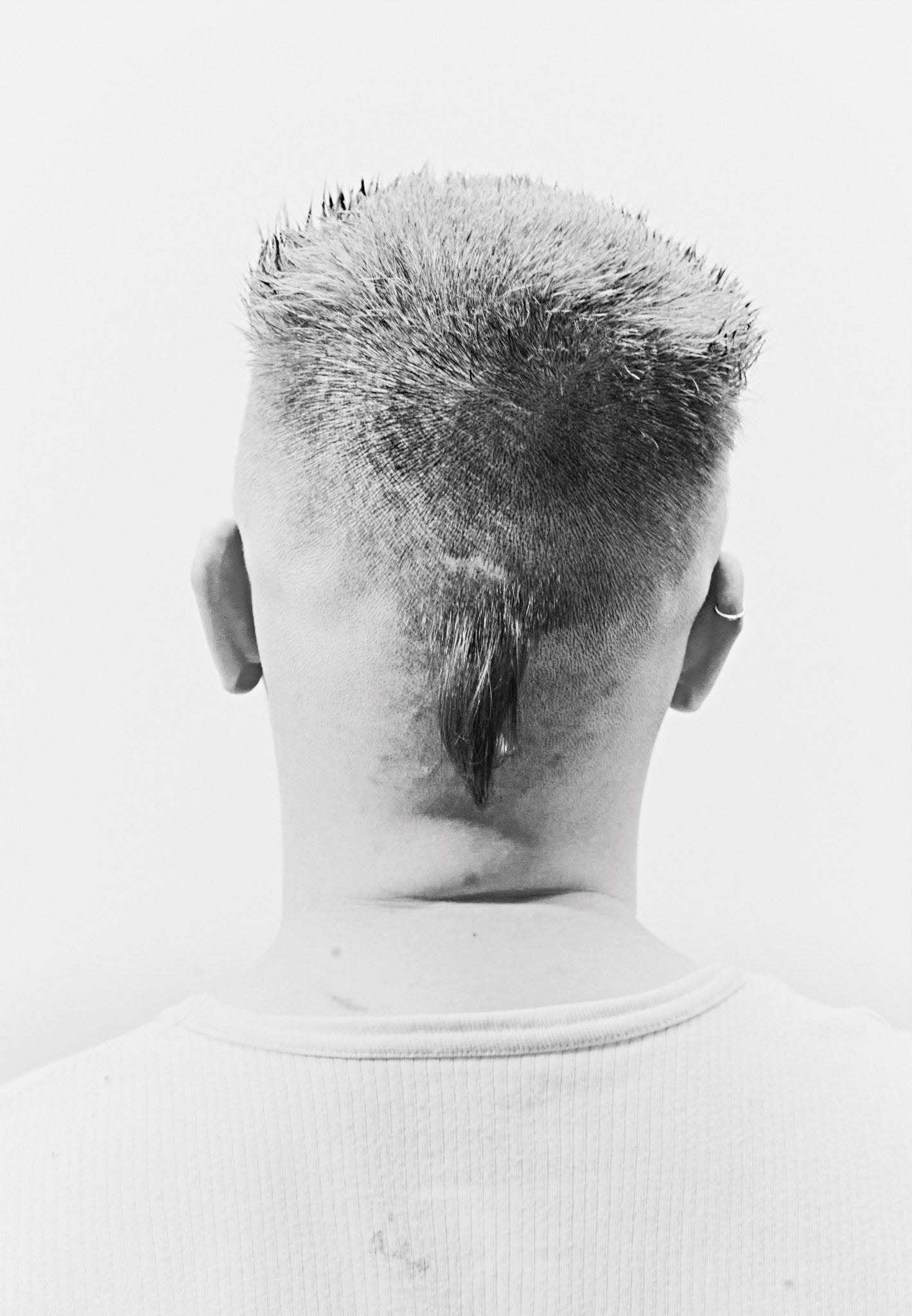
Much of Summers’s work focuses on seemingly opposing binaries revealed as secret collaborators—sacred and mundane, butch and femme “the way that juxtaposition can create this alchemic effect.”
That brings us back to TOOLbelt, which Summers also now feels a looser attachment to: “[Virality] can make something feel like it no longer really belongs to you at all, because everyone feels like it belongs to them collectively.” And that’s part of the beauty, maybe. “Younger queer people get very excited when they discover it,” they reflect, “and it’s like, well, there’s always going to be young queer people.”

Outside of their own spatial practice, Summers spent ten years working as an architect. While architecture inspired an interest in the home, and the minutiae and beauty of daily life, they were overloaded by aesthetically heteronormative environments, which prompted a reactive response: “How can I create subversive objects that maybe at first glance look tasteful, but actually there’s something kinky and perverted going on?” Examples from Summers’s portfolio include Sandpaper Doilies (“colliding a butch material with a feminine form”), Non-passing Utensils (tools from the shed, the workshop, the kitchen, transformed into something new), and their O-Ring Egg Tray (rehoming the strapon harness motif, this time for the kitchen). “A lot of that work was a coping strategy, almost, for the environment I was working in every day,” they recall. “I didn’t come out as trans until I got made redundant from being an architect.”
The O-ring specifically is a recurring theme, what Summers calls “a portal to another world.” Beginning with TOOLbelt, they’ve created a series of “sculptural children of the strap-on harness”—a bird box, deer antlers, sunglasses—celebrating harnesses as empowering and affirming tools, not throwaway toys. Summers’s Egg Tray rocks playfully on the kitchen counter: “Whenever there’s an egg in my work, it’s usually referencing transness, and that kind of eggness,” they explain, conjuring ideas of rebirth, hatching, transition from one state to another, and of, as Summers puts it, handling eggs gently and letting them crack in their own time.
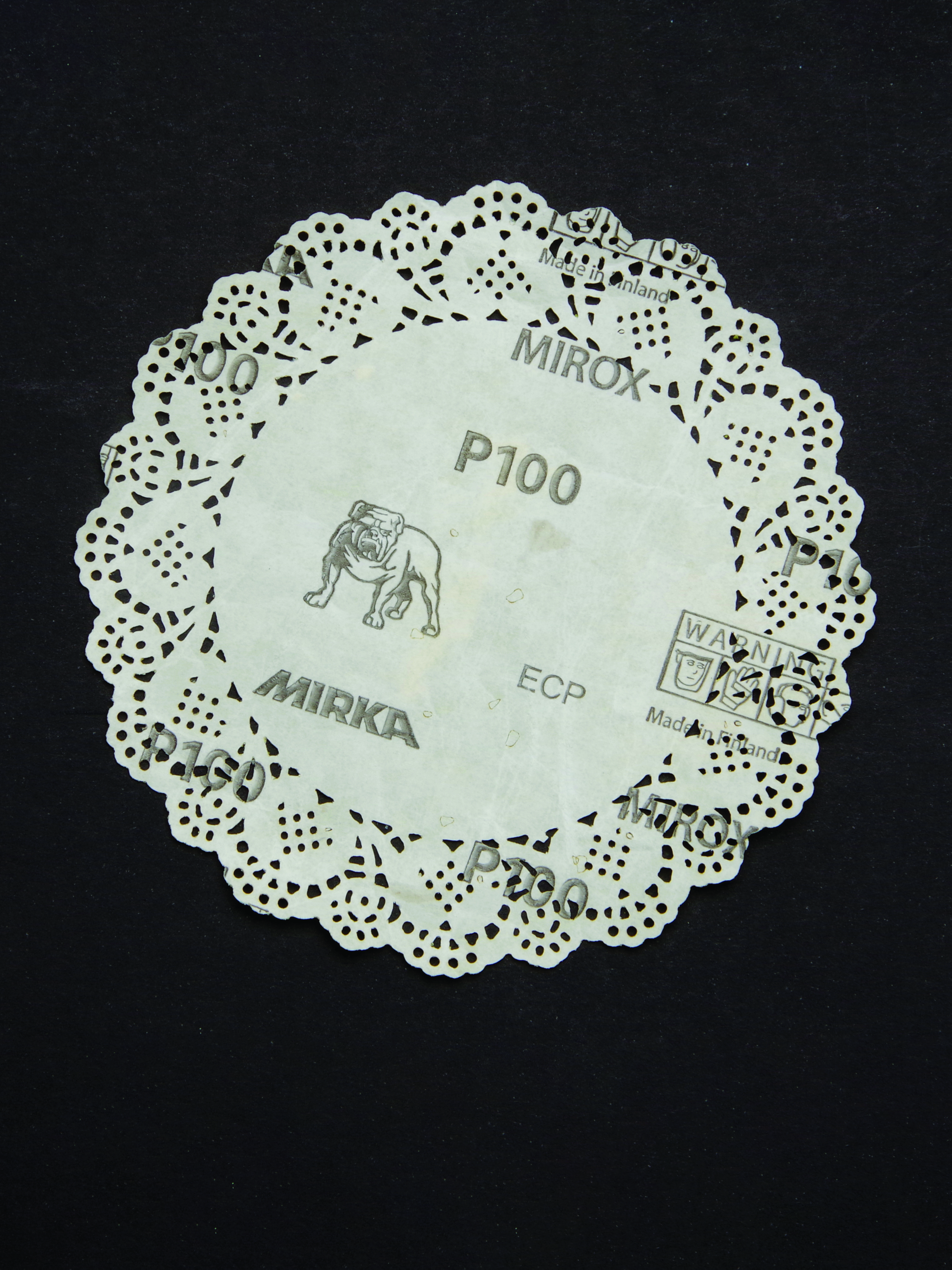
Summers’s Sandpaper Doilies are the clearest example of a butch-femme binary in their work, colliding the “clean” kitchen with the shed—dirty, used, rough.
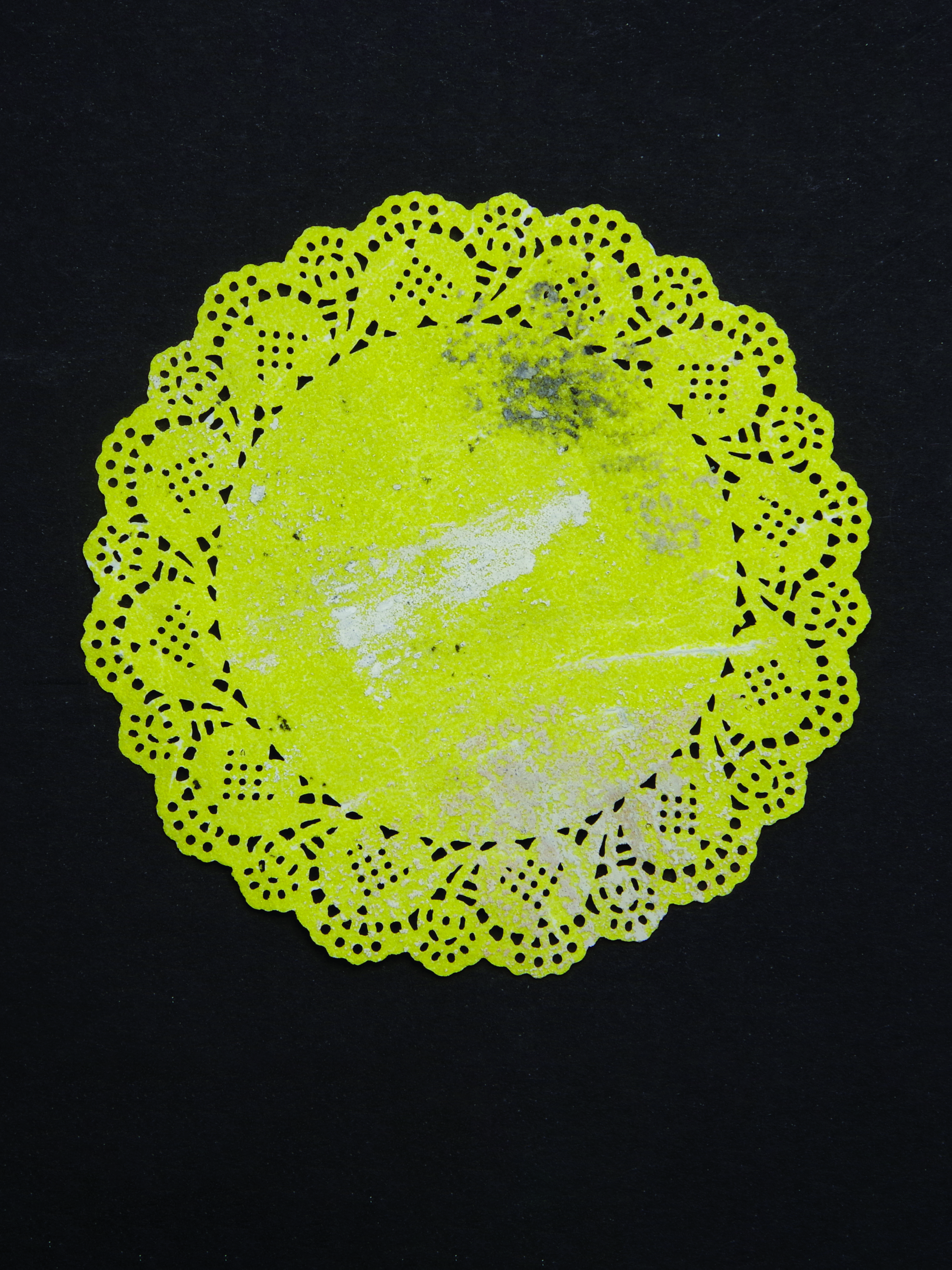
Their goal, they explain, is not to reinforce such binaries, but to call them into question.
Their recent live leatherworking performance, titled Standing Ceremony, featured Summers making a holster for a solitary egg. Inviting viewers to focus on the movements and sounds of the craft, rather than the outcome (an ode to butch leatherworking), Summers immediately destroyed their creation, causing the egg to fall to the ground, and, as one might assume, crack open. Not so much here. “It was a rubber egg, so everyone was expecting it to smash, and then it bounced,” Summers reveals—drawing correlations between transness, bouncing back, “and also playing tricks on people, and this idea of artifice.” Still, they conclude that their focus is on creating an atmosphere around ideas, rather than establishing concrete narratives.
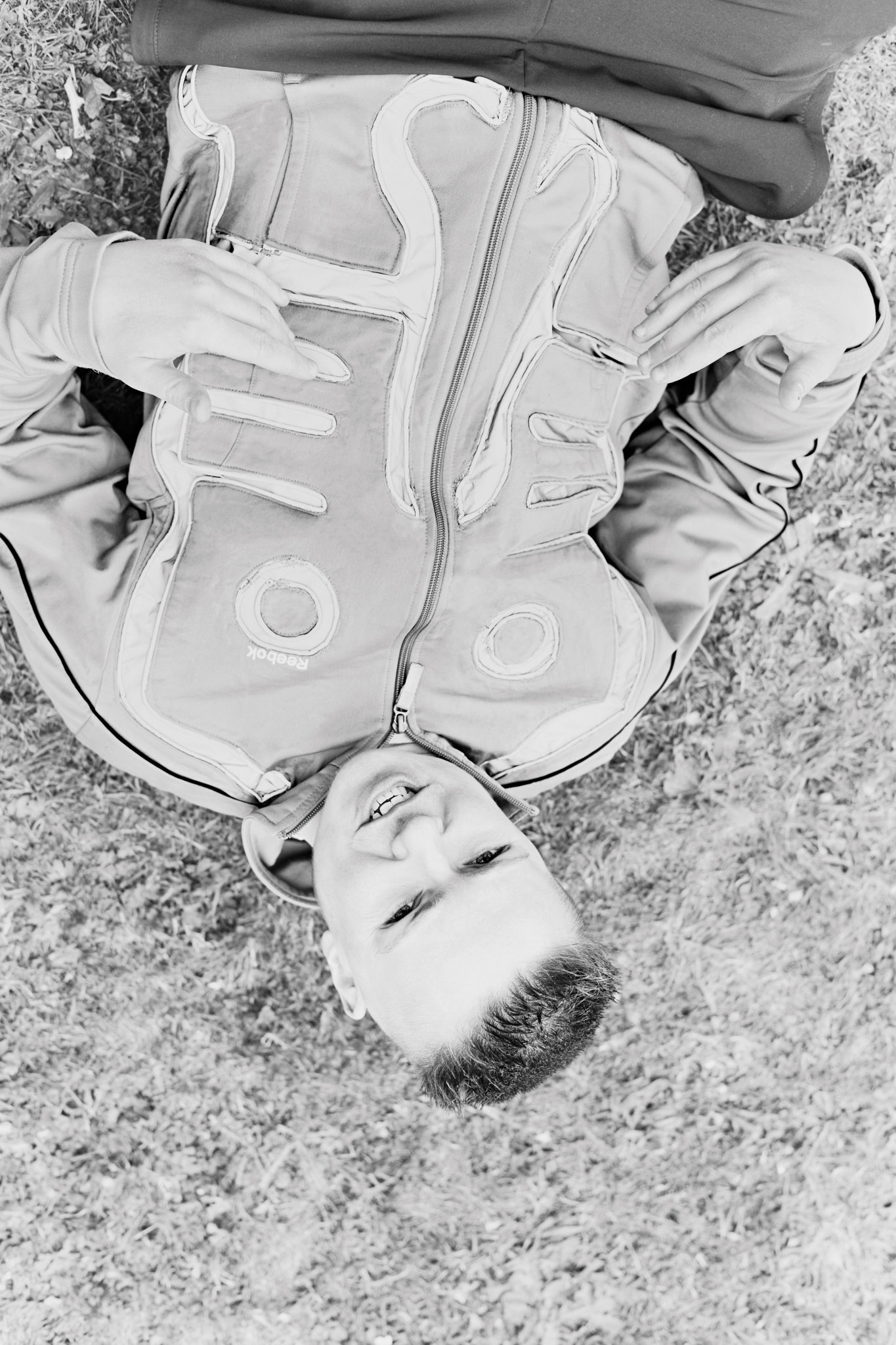
Gigantic, Big, Huge, a vintage tracksuit top modified by Summers and decorated with silver retroreflective fabric—riffing off ancient chalk hill drawings found in the landscape across the UK. Summers asks “Is the Cerne Abbas giant trans?”
Working as part of an artist collective in Croydon, Summers’s practice has migrated from their home to a studio, where their work desk is arranged in an “insulating” U shape. At home their work was confined to a smaller scale, “shaped by that container.” Creatively, they’re becoming more unrestricted as well, knowing that staying loose often doesn’t come naturally to them (which they attribute to their “autism-OCD combo”). “I used to be someone who ideated, and executed,” transforming fully formed visions into fabricated reality. “Now, I’m increasingly trying to work in ways that are less rigid, a little bit more like you’re discovering in the making,” they explain. “I just try to remain open to what the work might be telling me while I’m making it.”
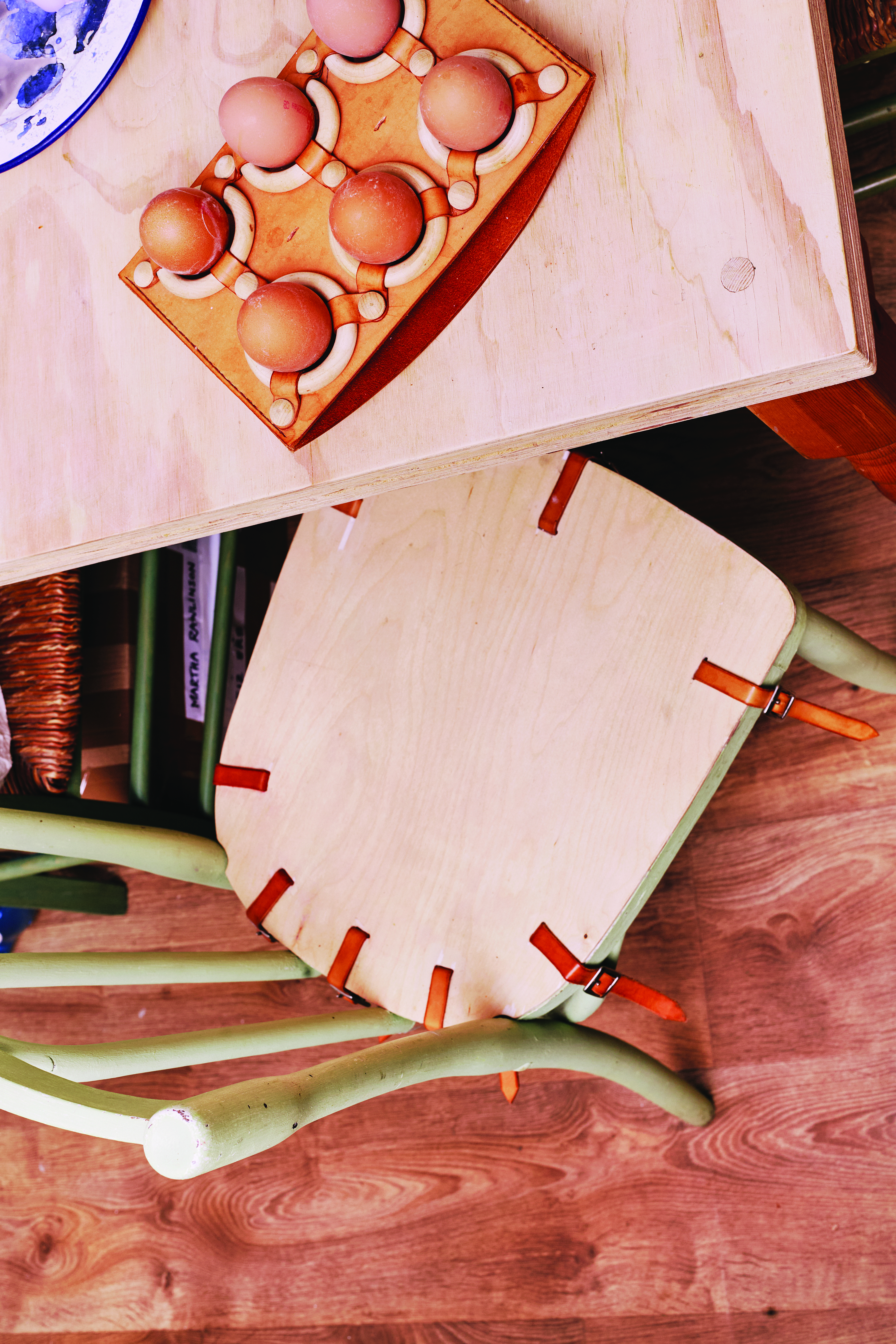
O-Ring Egg Tray and Mended Chair, No Glue. Summers meditates on homemaking: “I’ve got quite a few things in my flat that are mended things that were previously broken, and obviously there’s a really strong, queer narrative in there about taking something and making it whole, but not in this way that is denying its past state.”
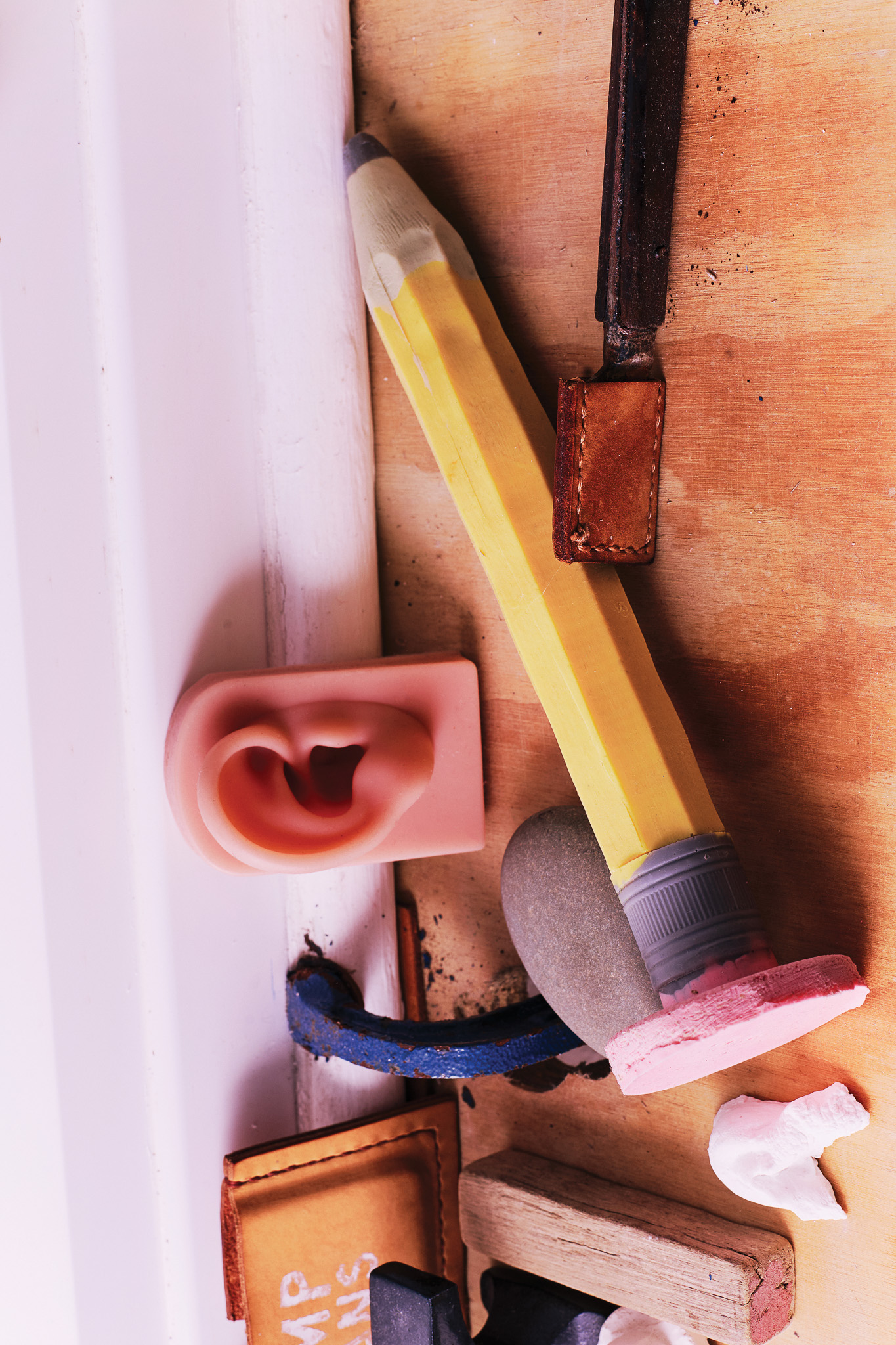
A random collection of “pseudo-work things”: a wallet from a Camp Trans leather workshop; an ear from a lab rat costume (Summers’s partner threw a rat-themed party), where the ear poked through a mini O-ring harness; a silicone pencil dildo from Summers’s top surgery fundraiser (they did a drag performance to James Taylor’s “Handyman,” wearing TOOLbelt).
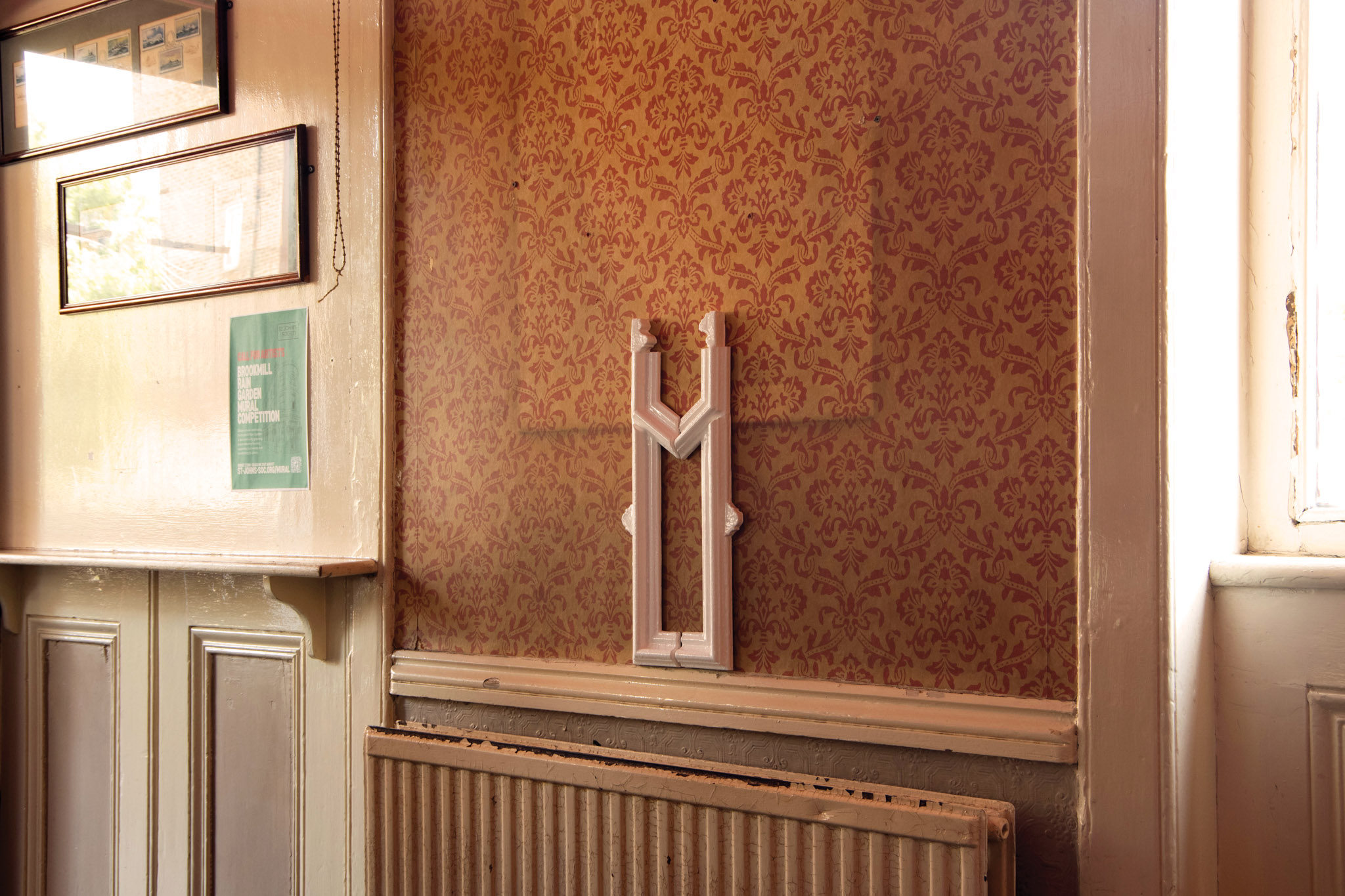
Summers’s most recent show was titled Rub-A-Dub and featured figures made from timber moldings, covered in layers of gloss white paint (a.k.a. “the landlord special”). Showcased at the Royal George pub in Deptford, South London, July 9–August 9, 2026. Curated by Natasha Eves and featuring work by Marf Summers, Laura Jagger, and Amanda Kyritsopoulou. Photo: Rita Silver.


