

Sheila Heti in conversation with Siri Hustvedt

Photography by Justin Leveritt
I spoke to Siri Hustvedt in her home in Park Slope, in late April, one week before the two-year anniversary of the death of her husband, the writer Paul Auster. He had been seventy-seven when he died of cancer. She was now seventy-one, and living alone.
Hustvedt had just published her sixteenth book, Ghost Stories, an account of the first year of her mourning, which she began writing a month after Auster’s death. It’s an affecting book, almost a collage, filled not only with her reflections, but old diaries and letters, and Auster’s own letters to their infant grandson, written in the months before he died. Ghost Stories touches on his wild fame in the 1990s, when people would be screaming for him outside his events; a crowd even once jumped on his car, as if he were a movie star. The result is a vivid portrait of their love, their relationship, the man he was, the woman she is, and the often annihilating, utterly bewildering state one finds oneself in after losing one’s partner of forty-three years.
She and I had met once before, briefly, in 2012, when we sat together on a panel at the Brooklyn Book Festival with Karl Ove Knausgaard (as yet unknown in America). When I met her in April, it had been raining all day, and it continued to rain as we spoke for three hours, which was not nearly enough time to cover the breadth of her work—seven novels; a poetry collection; The Shaking Woman or a History of My Nerves, a book-length investigation into the strange shaking phenomenon that periodically overtook her body; and many well-regarded, more scientific papers on the mind-body problem, epistemology, and psychoanalysis, among other subjects.
Hustvedt has a very expressive way of talking, sometimes headlong and digressive, at other times almost grave, patient, emphatic, and thoughtful. She laughs often, wrinkling her nose in a way that’s irresistibly sweet. Her conversation is full of ideas—about love and grief and family, her long marriage to Auster, as well as the difficulties they faced. (Not long before his illness, there was a great tragedy in the family: Auster’s son Daniel was charged with the second-degree manslaughter of his ten-month-old daughter. He died just a few weeks later of an overdose.) An avid thoughtfulness is always present in Hustvedt’s speech, whether she is talking about her own life or ideas from the history of philosophy, seventeenth-century biology, or contemporary neuroscience, all of which she discusses as easily and naturally as other people discuss their neighbors. We talked for several hours without pause until the photographer and his assistant came. (Naturally, the interview has been condensed and edited.) Siri offered to show them around the house, so they could choose the best place to shoot. She prepared us for what we were going to see: the library on the second floor, her own study on the third floor, and finally her late husband’s office in the basement. She led us up to the second floor, then up to the third, answering questions about the various things on display. Without quite mentioning it, however, she never took us to the basement. Either she forgot, or she changed her mind and decided not to. My guess, and hope, was that it was the latter.
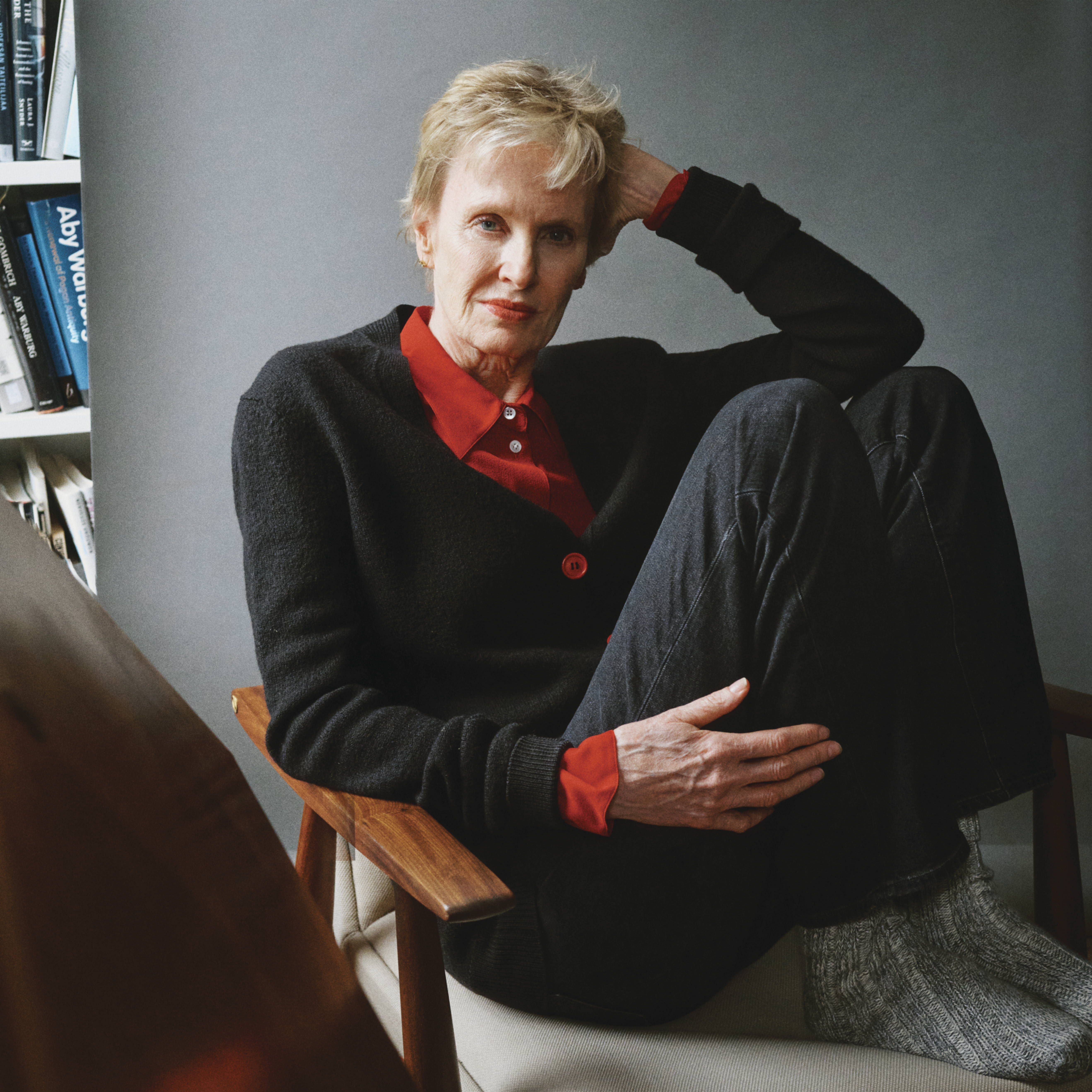
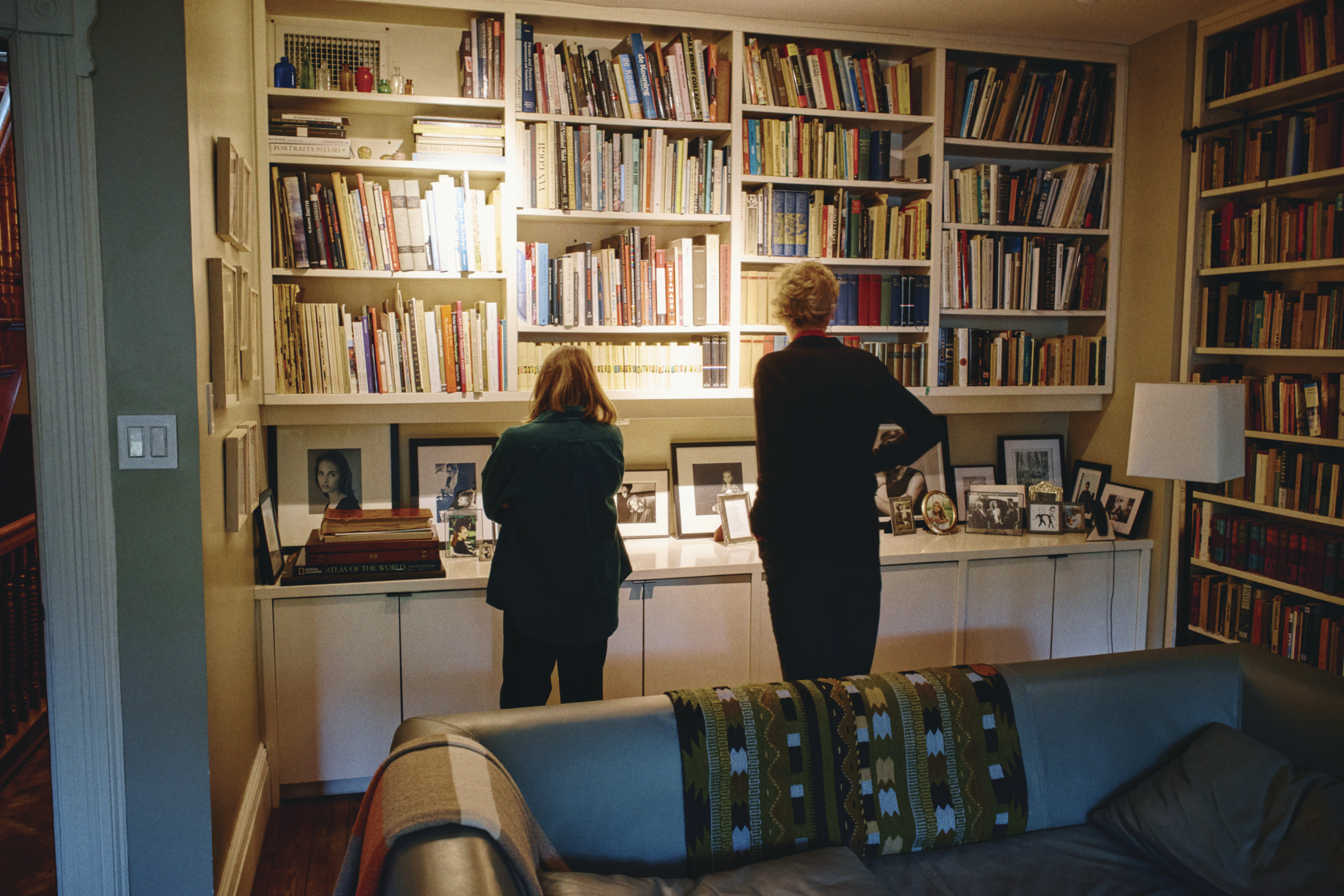
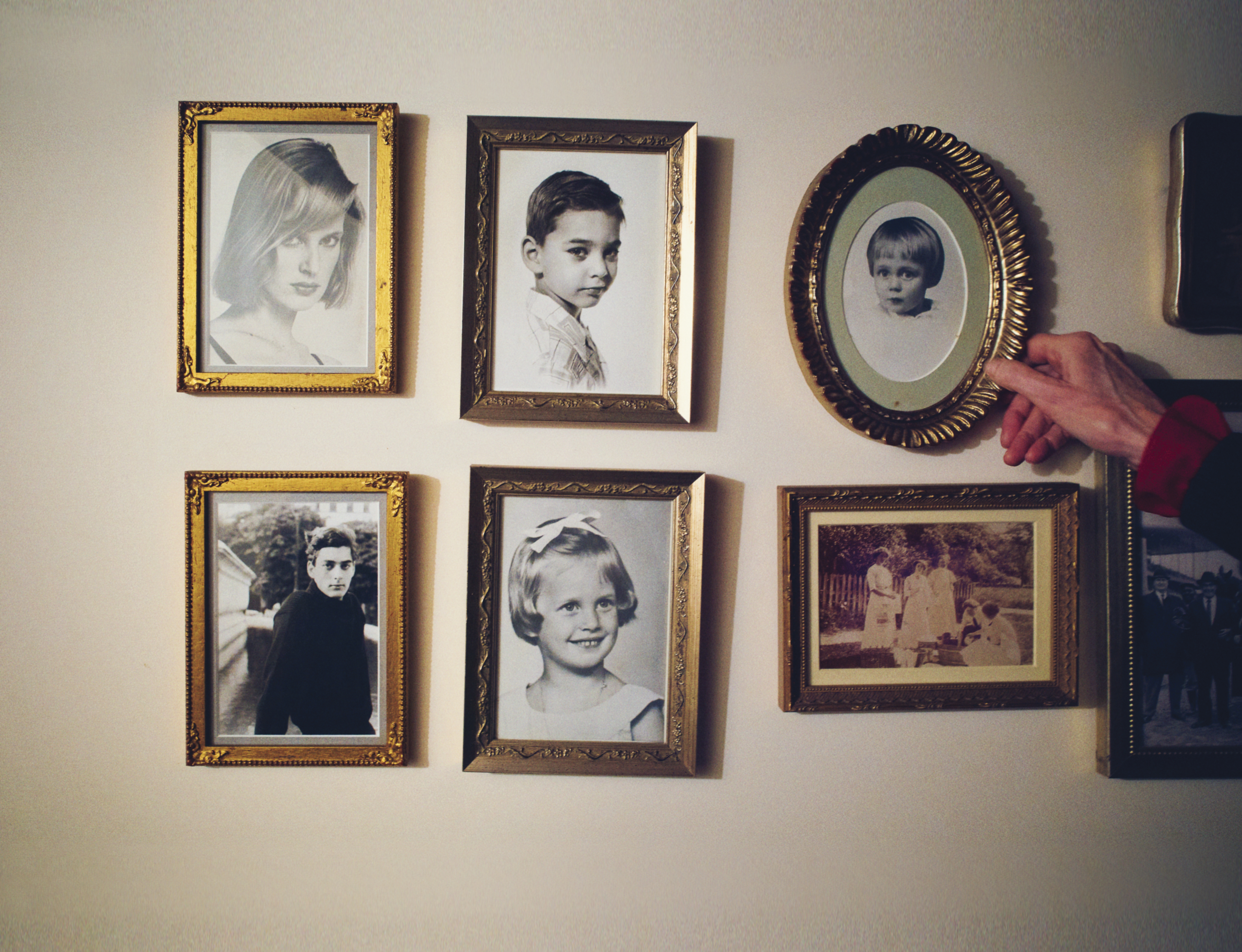
Siri Hustvedt photographed at home on April 25, 2026.
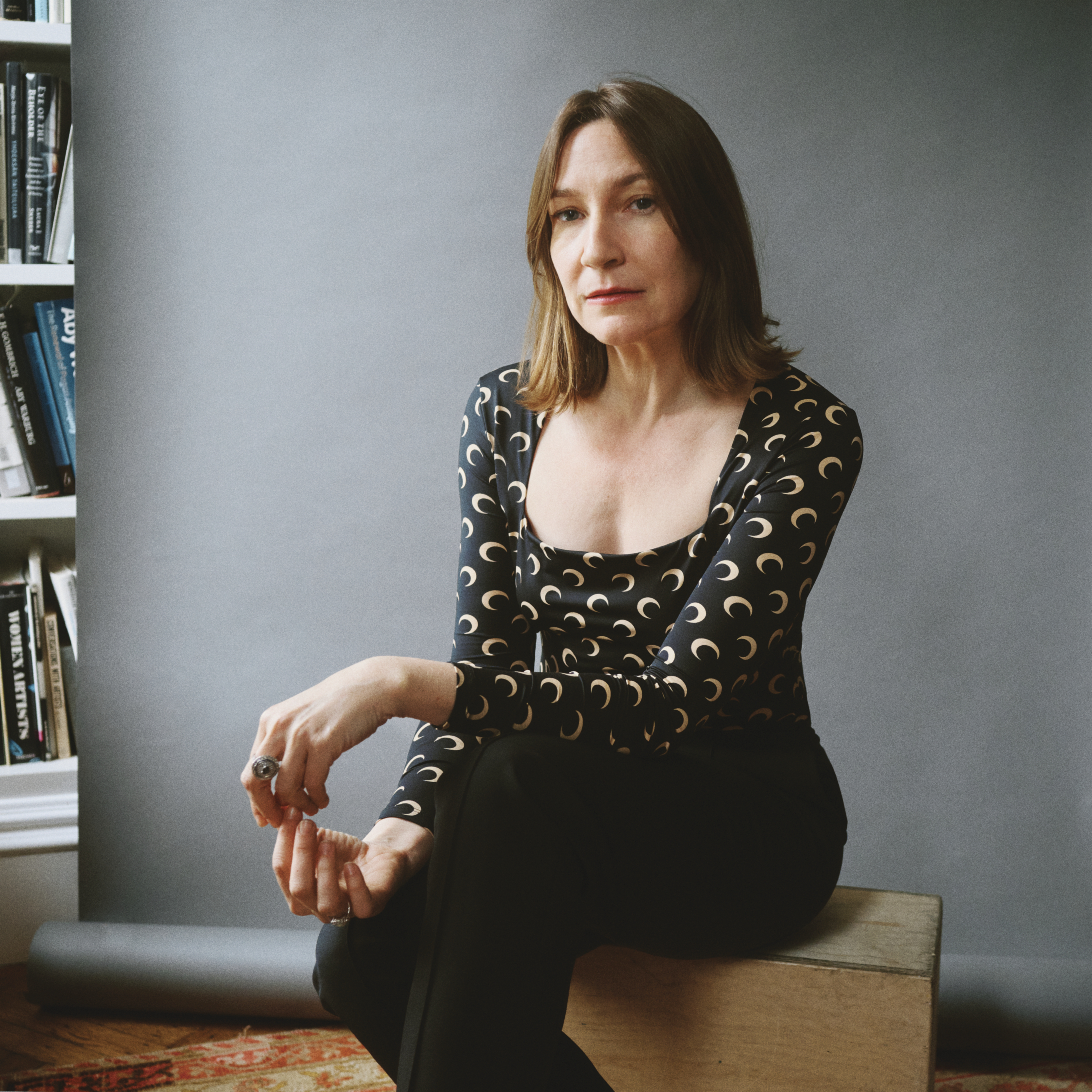
Sheila Heti photographed at Siri’s home on April 25, 2026.
PART 1
Sheila: You include all kinds of documents in the book, and I want to talk to you about that, because formally, it’s so interesting. You transcribe the letters that Paul wrote to your grandchild, Miles, and the letters you wrote to Paul early in your courtship, and the letters you wrote to friends and family when he was ailing, to update them. I was thinking, why? And then I thought, maybe it’s because when you’re in mourning or in grief, you feel outside of time in some way, and the documents are proof that time happens, yes, that you were actually in time at one point.Siri: It’s a way of laying down stones. I mean, I realized right from the start that the whole temporal dimension of the book was really important. There is a timeline that sort of hovers behind the narrative, almost. The book starts in May and ends the following March, and there are these documents that come from all sorts of different periods in our life together. Putting his letters in was very important because it creates a kind of posthumous dialogue between our two voices.
At one point you write, of your earliest meeting, “Paul’s gaze, his gestures, his voice are in no way seductive, and this lack of seduction seduces me. I’m so tired of leering, pouncing, grinning, condescending men, their eyes alive with a sexual eagerness I don’t share. They give me no room. I have come to hate them.” Their desire gives you no room, in some sense, to even know if you desire them or not.I think this is maybe one of the issues with that kind of pressure, which I felt a lot when I was young. You know, where am I in this drama? You’re sort of nowhere and you can’t breathe. And Paul gave you so much room to breathe. And, of course, that’s very seductive. You just feel you have to keep yourself from lunging. I think he didn’t have to work very hard, probably because he exuded some indifference. It’s very arousing.
You do become a different person because of who you spend your life with. Like you say in the book, you’d be a very different Siri if you had a different partner, or no partner, or multiple partners, or whatever.It could have gone in many ways. And I think this was part of Paul’s ars poetica, that the mechanics of reality involved accident—it wasn’t fate for him.
That you two came together and stayed together?Yes. How many times did he say over those years, “What if I hadn’t met you? What if I hadn’t met you?”
And what did that mean?As the years went on, I understood more. He felt—and this is a little grandiose—but I do believe that Paul felt that because he met me and because I loved him, he bloomed, and he was able to do the work that he so desperately wanted to do.
And what do you think it was about your mind, or your way of loving, or your body, or your intelligence—that felt so necessary to him?He told me once. This was very early in the first days of our being together. It was maybe April, it was a warm, warm day, and we were sitting on steps somewhere in the Village. I remember the sunshine. And he didn’t say anything about it to me then, but he told me later that I was talking and he was listening, and suddenly he had this feeling that I was incredibly wise and intelligent, and he was possessed by a feeling of amazement, and that was very important to him. Of course, I don’t remember that. I remember sitting on the steps with him, I do, and I remember the sunshine. But I don’t remember what I was talking about—not one word. But something happened inside of him that he referred to over the years. That’s the kind of thing that can happen between people, right? Of course, I was crazy in love with him from the first second I saw him.
How do you understand that?Well, he was very beautiful, and then he was a poet. But you know, if I hadn’t liked the poems, I don’t think it would have gone anywhere. Yes, I remember reading the poems and thinking, God, he’s extraordinary. And there was this manuscript of poems that I had, and I could see that he was impressed. And if we hadn’t had that—
If you hadn’t loved each other’s writing—Yeah. I think we needed that admiration.
Well, how can you have a happy forty-three-year marriage without admiration?I don’t think you can.
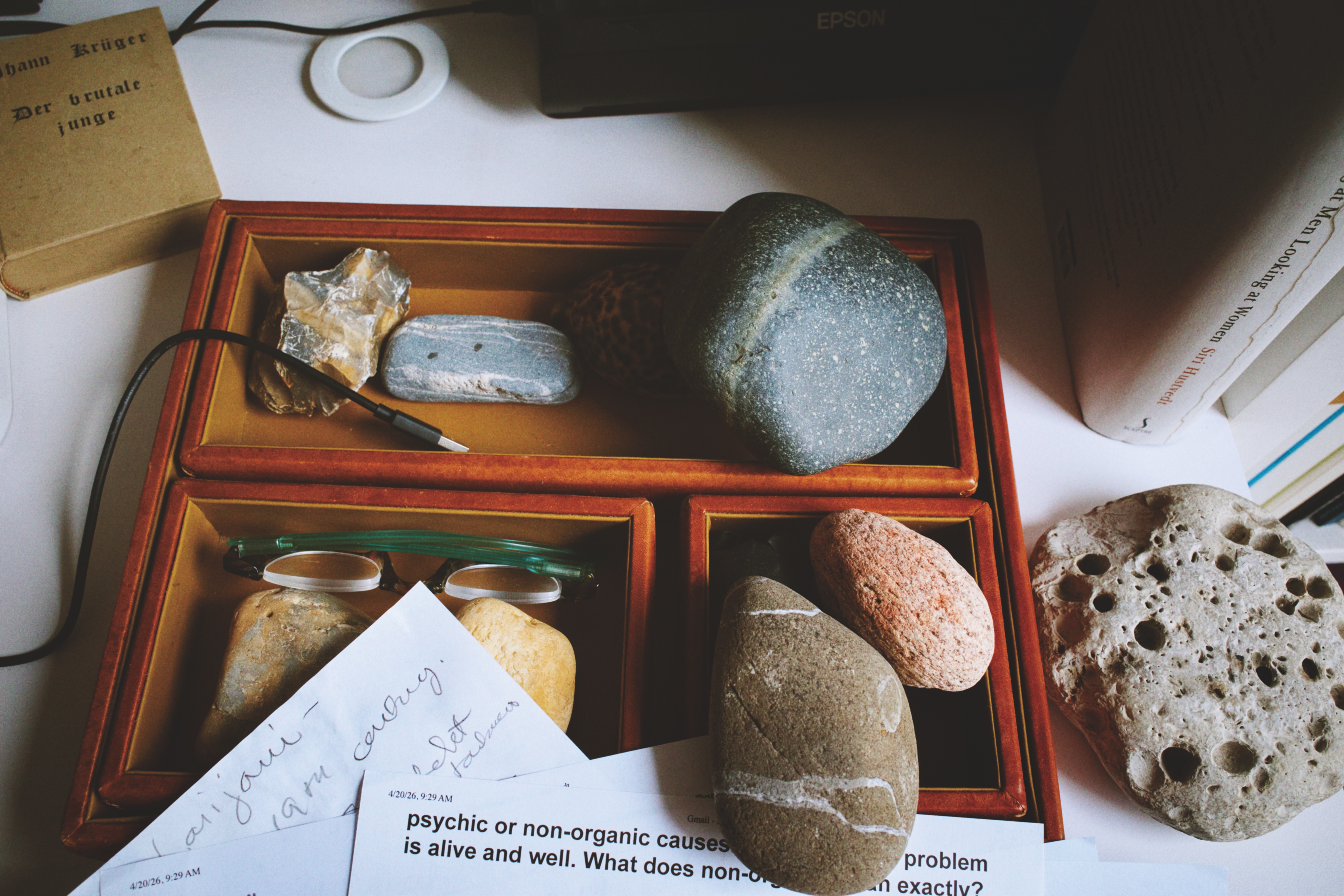
Text, texture and stone. A still life of Siri’s writing desk.
That is a very good question, isn’t it? You know, I was very well loved by my mother. And I was well loved by my father, to a degree.
And what does that mean—to be well loved?What you’re saying is that there are different ways of loving, and that certain forms of complexity can get mixed in, right? And, yes, loving is a good thing, but it’s good to be answered, to be loved back. I think probably sustaining love when there’s no love back is very difficult. That doesn’t really work, right?
Sheila: No. I want to read this line from one of your early letters to Paul: “I will shine on you and keep you as well as I can always.” That just makes me want to cry, it’s just so beautiful. “I will shine on you.” I thought, where does that knowledge of what love is come from?Siri: It could be Mama. She was that kind of shining presence. I think people need love. They need attachments to grow. And when attachment goes wrong, it can be really perilous for the person.
Sheila: Can you talk about your idea of the mechanistic versus the organic models of loving?Siri: Well, as a young person I was in this relationship that was giving me a lot of pain. Just to give a small taste of it: When I pounced, he ran, and when he pounced, I fled, and the whole mechanism would keep going over and over and over again. And I thought, “Well, Siri, there’s no perpetual motion machine. It’s going to run down.” And the organic model that seemed very attractive to me at the time was that a big storm comes along and it blows off a tree’s limb, and the limb does not grow back in the same way, but there’s a new bloom. Often sexual fantasy runs off a kind of machine model—people need the same ingredients to get the erotic charge. But a long love affair, I think, has to be more in the organic model.
It has to be a tree. When did you know that it was a tree with Paul?I think I realized it when I really needed him to move, and he did. He could be really stubborn, really kind of immovable. That was really part of who he was, and it helped him in his working life. But, you know, sometimes inside the marriage, I wanted him to talk about what was going on with him, and he could be very shut down.
Something interesting I found—not just with Paul, but with other human beings—is that sometimes you have to let things be, and pressing and prying can be harmful. I mean, it’s very important for me not to bury my own thoughts and feelings, but also it’s important not to be a barrage of insistence that somebody be different.
People need to have their privacy in a marriage, and you have to let people say things when they’re ready to say them, yes.Part of the excitement of being with someone for all that time is that you don’t know everything, and you’re quite aware of that. I’m sure he took things with him to the grave that I will never know, and that’s okay.
What do you mean by that?I don’t know, but when we read our work to each other, there was always an element of surprise. So that is an indication that there are these places, these regions, this geography of another self that isn’t, you know, an open book. It’s part of the mysteries of the other, and that is also—
Erotic?Yes.
“I was never a person who expected life to be some big happy thing.”
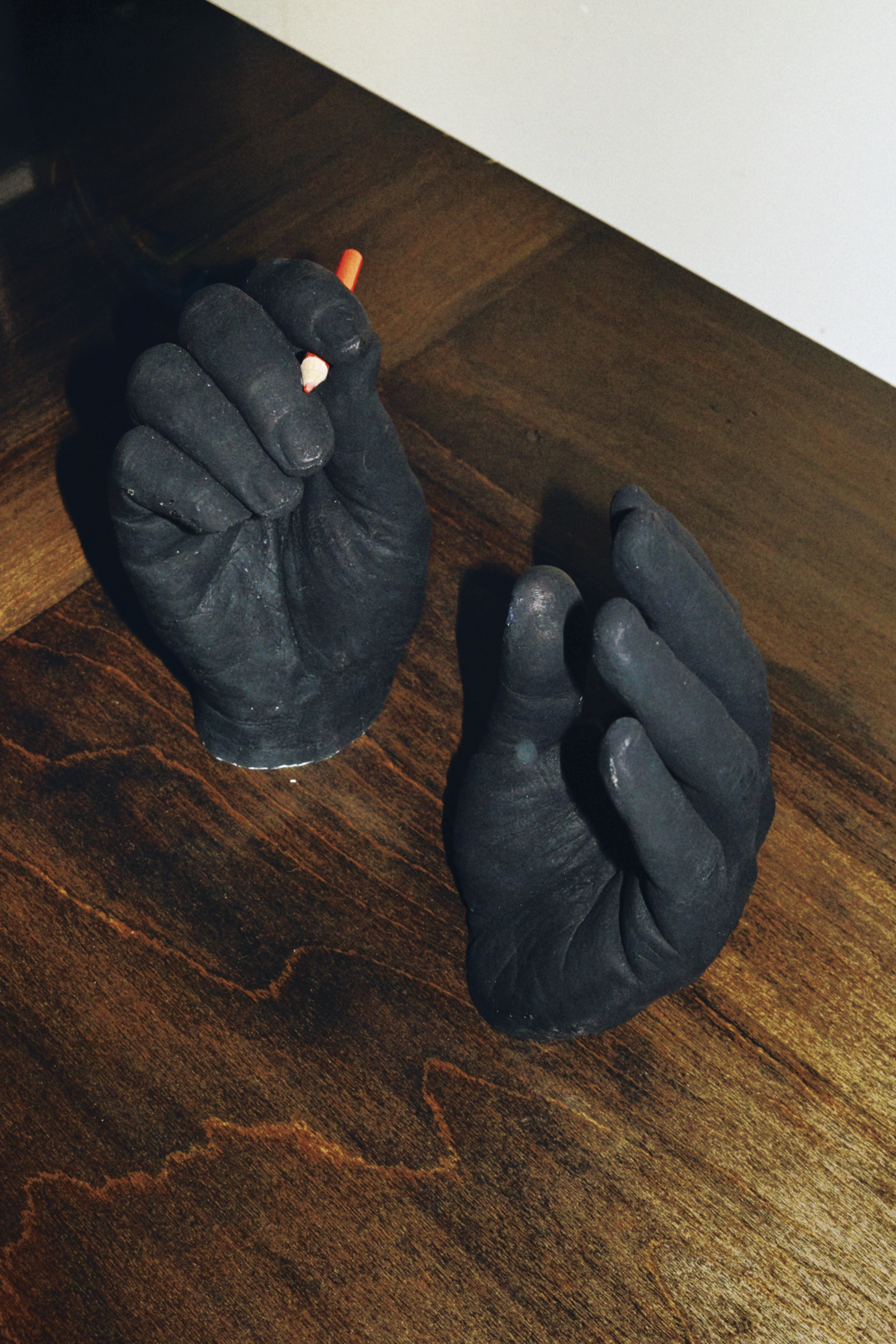
The artist Jon Kessler, married to Siri’s sister Asti, cast Paul’s hands for a 2004 exhibition at Tokyo’s Hermes Forum Gallery, centered on the second volume of Paul’s New York Trilogy, "Ghosts."
Yes. I think there are many ways to love, and really I had no intention, in the book, of holding up our relationship as some kind of moral guide for how people should live. I am most definitely an epistemological pluralist. That is how I live inside myself. I do not think that there is a single paradigm for anything, and everything is so complex and so enormous that the idea that anyone owns the truth is absolutely ridiculous. There are many ways to be together, and “forty-three years” is a sort of meaningless thing.
Though, I mean, it’s a long time to be in conversation with someone, and to share a bed with someone, and all of this.Yes, but I didn’t want to create some portrait of this fantasy marriage where there were no conflicts. It was not a fairy tale. The relationship with Daniel was rough, and that was very much part of the marriage, because Daniel was three when I met Paul. I had to withdraw myself from [their relationship], to kind of save myself. This was not early on. You know, a grown man is not your child anymore, and you’re not in control of that person’s life . . . That’s a simple way of saying that there’s a lot we don’t know, but to overlook emotional intensity—especially grief, rage, and sorrow—that’s a bit foolhardy.
PART 2
Siri: Well, it’s undemocratic.
We have both interviewed him, but your experience led you to write a wonderful essay called “No Competition,” which you collected in A Woman Looking at Men Looking at Women.Yes. I asked Knausgaard at one point why there was only a single woman mentioned in the entire six volumes of My Struggle—it was Julia Kristeva—and he looked at me, and he said, “No competition.”
This was on stage.Yes. And I was so flabbergasted. And of course you sort of wonder exactly what this means, and I think I didn’t really have a retort.
Well, your essay was the retort. And in the essay, thinking about why he said, “No competition,” and what that could mean, you write, “For him, competition, literary and otherwise, means pitting oneself against other men. Women, however brilliant, simply don’t count.” And you continue, “Facing off with a woman is necessarily emasculating.” I was thinking, do many male writers not feel that they’re in competition with female writers?Well, I think often this is unconscious.
In your experience of knowing all the writers you’ve known, do you know of any women writers who became successful—whatever that means—within a marriage in which the husband was not supportive of their work?Oh, that’s a really good question. Well, I’m not going to say the names, no, no, but I can think of one. But they divorced, right? But there was a kind of rivalry, and he was a writer as well. The evidence I had was that they were not truly for the other, and I do think it was probably on both sides. But I think in this case the woman was the less recognized.
This is a good question. Who was it for? I think, maybe more than other books, this was maybe for an imaginary self, the other self.
The other self being yourself?Yeah, because the book created a kind of coherence in me. This is true of reading, but writing too—it creates a distance between the embodied self and the representation. When I was writing this book, my embodied self had less coherence than the thing I was making.
I think there were other motives too. I recognized that with Paul, he did have a kind of persona in the world that was both beloved and hated. I witnessed it myself—this kind of crazed hero worship. He wasn’t famous until he was forty, and, you know, a famous writer is not fancy. But in literary circles, it was a little wild. I think people just fell in love—because he was beautiful in his forties. Sometimes I’d sit in the audience, it’s true, and I’d look at him and I’d go, “Whoa, you get to go home with that guy.” He had a kind of magic. After Paul died, John Coetzee wrote a little tribute to him, and John has been a good family friend for a long time, but he noted the screaming girls. He kind of envied that. And this is Mr. Nobel, you know. And I had to smile.
But to return to my question of the imaginary other: I don’t know if this is true, but it just seems so nice if the imaginary other was a younger version of you—because this young woman embarks on a life at twenty-six with a man. Who knows what’s going to come of it? And the book says, “This is what it became. This was the story. This is what happened.”Yes, I think that’s right. And the joy of it is—I had him. God knows if I had lost him when I was forty it would have been different. I went to a festival in Iceland and there was a woman there, much younger than I am. She was probably in her early fifties, but she lost her husband when she was thirty-eight, which happens to be exactly my daughter’s age. I think she remarried. But you know, when you’re my age, it’s different.
One of the things I found when I was reading grief memoirs was that very few people talk about the erotic life. It’s almost completely missing.
I don’t think the loss is any less acute. I don’t think what one feels is less strong. But I’m very well aware that I have much less in front of me than behind me, and that does create a perspectival difference.
That you don’t have to go through as much without him, you mean?I think so.
But do you feel that the main story of your life......is over? No, I don’t feel that. And actually, I think writing this book helped me not feel that.
How so?Because it’s an attempt to make something out of nothing.
What’s the nothing?Death. His absence. The fact that he just isn’t here. You know, so much vanished with him. The two biggest things, I think, are the talk and the touch. And that’s not better—that’s worse. In some fortunate way, I was never a person who expected life to be some big, happy thing.
When you say touch, do you mean sex, or do you mean any kind of touch?I mean the whole ball of wax, from the pat on the back to the kiss on the cheek to the holding hands in the taxi, to full-blown, erotic, multiple orgasms. And that vanishes. One of the things I found when I was reading grief memoirs was that very few people talk about the erotic life. It’s almost completely missing.
Why do you think people leave it out?I don’t know. Supposedly we live in a culture that can address these questions. This is not Victorian England.
But even some of the best novelists never write about sex. It’s not even grief memoirs. I think it’s all over literature—that people don’t talk about it or write about it. I don’t know why.I don’t really either.
You talk about it in your book. And it’s wonderful, the moment—it’s burned in my brain—where you report Paul saying, three days before he died, that he had lost his feeling of lust.It wasn’t to regale people with the details of our erotic life together, but it was very important to me that I said that that went on, and that it was really important to both of us, and the loss of that part of our life together is a deprivation, and I feel it. I remember after my father died, I gave my mother a gift of a massage, because all those touches—you don’t have intimate touch anymore. C. S. Lewis, in A Grief Observed, says the most beautiful thing. You feel that he’s almost looking down at his body, and he says, “This body was H’s lover,” and he said, “Now what is it? An empty house.”
That’s so sad.And so beautiful. The other thing I realized from reading grief memoirs is that mostly they’re anatomies of the griever. The dead person is often missing. But what is the name of your novel?
The one that’s just coming? That I just finished? It’s called The St. Alwynn Girls at Sea.Okay, are they really at sea?
Yes, it’s a girls’ school on a ship.They’re traveling by ship?
Well, the principal—it’s during wartime—the principal thinks they’re going to be more safe out in the middle of the ocean than on land, so she brings the girls onto a ship in the middle of the ocean, and they’re floating there, and there’s a boys’ ship, and they’re writing letters to the boys’ ship.It’s almost like camp, how the girls’ camp and the boys’ camp are sometimes within shouting distance.
Yeah, it’s kind of delightful. It’s the first book I’ve written where I just thought, “I love this book,” I mean, in a very simple kind of way. You know when you’re a girl and you read a book and you love it? Oh god, that’s how I felt about this book for a month before I started worrying. We’re a long way from my question of who your book was written for, but is it possible that it was written for a younger version of yourself? The one who hadn’t already lived all of this life?Maybe, maybe. Of course, that especially pertains to my inclusion of those young, sort of buoyant letters I sent him at the beginning of our relationship, and also this slightly sad aspect, which I realized after I’d finished the book—that those letters were summoning him back. And that’s exactly what the book is hoping to do. You know, “I want you back.” With death, the call is there, but there’s no getting him back. And that’s death. Whatever one thinks about the universe—even if one believes in paradise or whatever—it ain’t here. I’m not getting that guy back.


