


Photography by Bobby Doherty
Tracy Rosenthal speaks to Hasan Piker about performance, gender, and making his life a stream.
Somewhere inside the Venn diagram of the present—a decade after the internet’s irrepressible pivot to video; when one in five people get their news from direct-to-camera clips served by black-box algorithms; when “bubble” describes media environs and entire economies; when a Pope once called Mary the world’s “first influencer”; when corporate news coverage of Israel’s genocide, fascist ascendance, and American decline can feel, um, fake—there’s Hasan Piker.
I am waiting for him in Midtown. After his appearance on a nationally-and-Netflix-syndicated podcast (he discusses democratic socialism and the New York Knicks), he will talk to me, then to a men’s fashion podcast (he discusses democratic socialism, the New York Knicks, and his recent pivot to wearing suits), then to The New Yorker (not yet published, not hard to guess). Then he’ll clock in for an eight-hour streaming shift in front of approximately twenty-six thousand people, commenting on YouTube videos (Mr. Beast on the algorithm, CNN on the electorate, Fox News on Piker’s own stream) and responding to a torrent of chat messages (“permission to hope, chat?” and “im cumming”). That night, he will end up with a few other streamers broadcasting his dinner. (Highlight: a Pride-month-themed, gay-baiting, Lady-and-the-Tramp bit with a hot dog.)
Piker emerges from the elevator bank. The suit is steel blue, double breasted. Everyone is tall to me. He has more freckles than I expected.
I am buying what he is selling. Last year, one in every two hundred New Yorkers volunteered for a mayoral candidate who called himself a democratic socialist. Then that socialist actually won. (The loser also burnt millions on ads smearing Zohran Mamdani for associating with Piker.) As a partisan of a fragile political project whose future depends on its mass appeal, Piker scrambles by merging the handed-down dogmas of Left Organizing Leader Identification: not the person who talks the most, but the person with the most influence. Organizations have organized Piker to organize his “followers,” at times turning the online meaning of this word into its movement meaning. (If the margin of victory obtains in the number of phone-bankers Piker drives to a Democratic Socialists of America mass dial, I shall not sneeze at the stream.)
You are not born with politics. Something gets in your way. Piker likes to say he was politicized in reverse: anti-imperialism from a childhood spent in Turkey, socialism when he needed healthcare in the US.
He was a Jersey teen, a University of Miami freshman, then transferred to Rutgers, pledging Theta Delta Chi. In a yearbook’s most-likelies, where is Mr. Rodger’s for the Terminally Online? What about Cocomelon for At-Risk Adults?
Like that of any decent politician, Piker’s pitch is about tying policy proposals to indisputable values, making the people out of a public, and making the right enemies. He wants to be that something in the way for others.
That also means he wants “to be everywhere.” When Piker first started streaming on Twitch, just thirty-five people watched. After eight years of endurance training on the medium, he can boast 100 percent preparedness for on-the-record speech. He tells me that when he goes on a podcast, the first thing a host will do is promise that anything Piker says can be later edited out, but he knows he will “never say anything that will need to be edited out.” The talking points are baked in.
There has to be something at least a little bit wrong with you if you want to be a politician (i.e., get famous on the basis of other people’s well-being). Is the same thing wrong with him? Many are called; few are chosen. We already know what Piker eats because enough journalists cathect their bicep-ogling into hypotheses about his gender. The repressed question is about the medium and the message—what he says and what his appeal says about “our” appetites.
Following him to his next appointment, I ask him about his own algorithm, which has adapted around the second life of his streams, farmed as clips for scandalized, scolding reshares. My algorithm has learned that I want to see him, but has skewed the other, fawning way. When we arrive, the first thing the men’s fashion podcaster does is promise that anything Piker says can be later edited out. I realize it’s probably for the best when Piker can say, “I told you so.”
This interview has been condensed and edited for clarity.
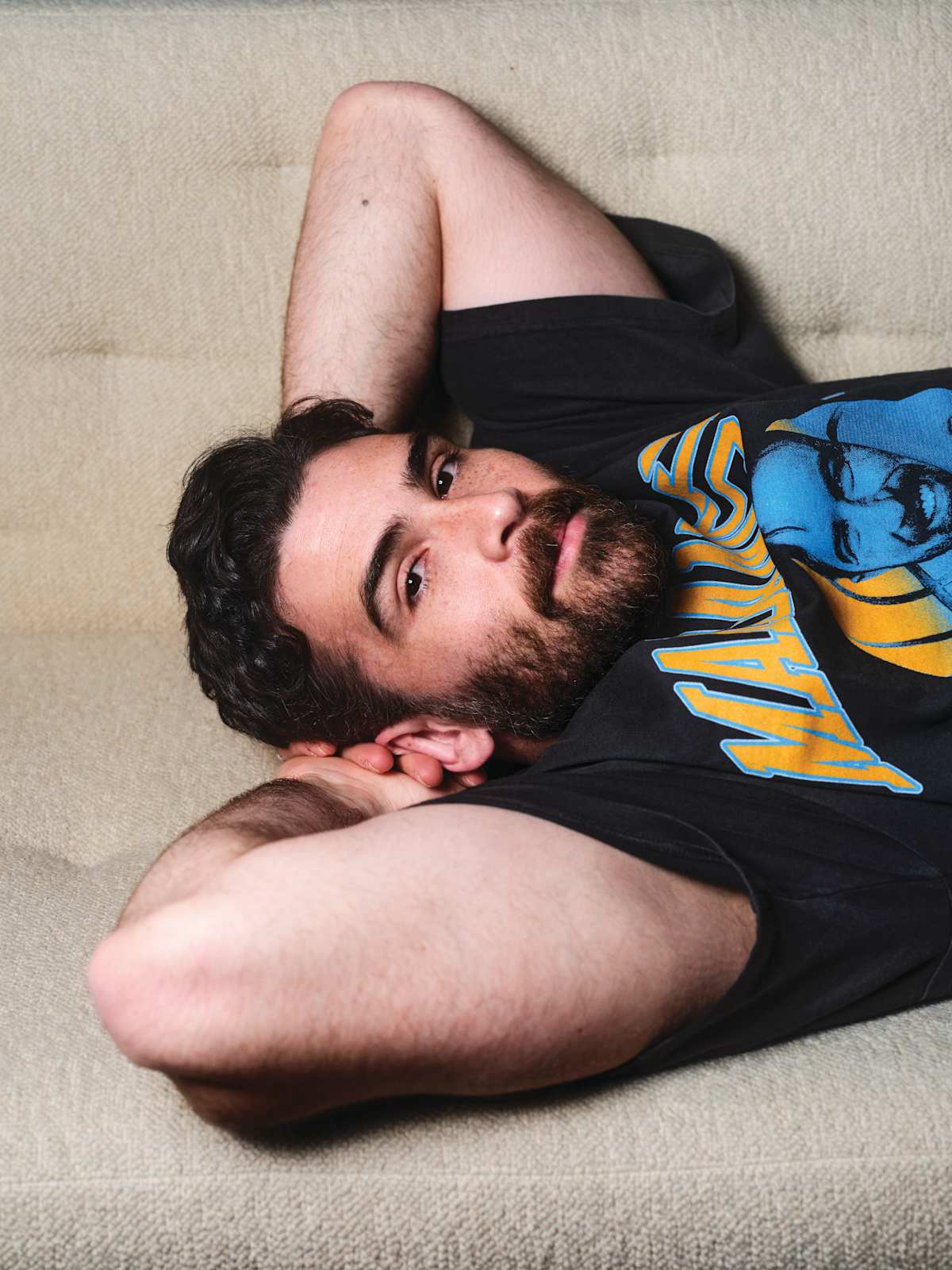
Photography by Bobby Doherty
I am a terrible interviewer. I think that the style of production I engage in is not conducive to being cognizant of all the production-related things I have to pay attention to, while also hyper-focusing on the subject of the interview at the same time. It’s an art, in and of itself, to not just be a conversationalist but also someone who can draw new information out from another person.
I’m much better when I’m being interviewed. You probably have noticed that I never stop talking.
If you went on a silent meditation retreat, what do you think would happen?I would die. I would perish.
You talk for eight hours a day. You could let your stream be the whole story, but you’re also doing so many interviews yourself. What’s motivating your desire for all the press?It’s good to go down every avenue. Not everyone is watching my stream, and not everyone is going to seek out the full context. I don’t want to give the opposition an opportunity to frame my message and dilute or bastardize it. So I try to have different conversations with different people from different perspectives, to be in front of them on my own terms.
Do you think what you do is performance?There’s a performance in everything we do, but I can’t perform for eight hours a day. It’s impossible. So I’m literally who I am off camera. There are moments where I’m hyperbolic, but at the end of the day, it’s who I am, with the blemishes. There’s no way I could keep up a front all day in front of hundreds of thousands of prying eyes.
I wear suits in ninety-degree weather now.
That’s what comedians do, right? There are certain things I lean into and have repeated over and over. I always bring back a botched every dollar spent on a bomb is stolen from you, because it could have been spent building schools in your neighborhood. I’ve yet to perfect my delivery. I think [repetitions] end up happening because I talk so much.
There’s a lot of emphasis placed on the way you look and carry yourself.I think the juxtaposition of how I look and carry myself with my worldview is sometimes a setback for people on the left, and can be disarming for people on the right. Physical objects and the way you dress can have an impact on all that.
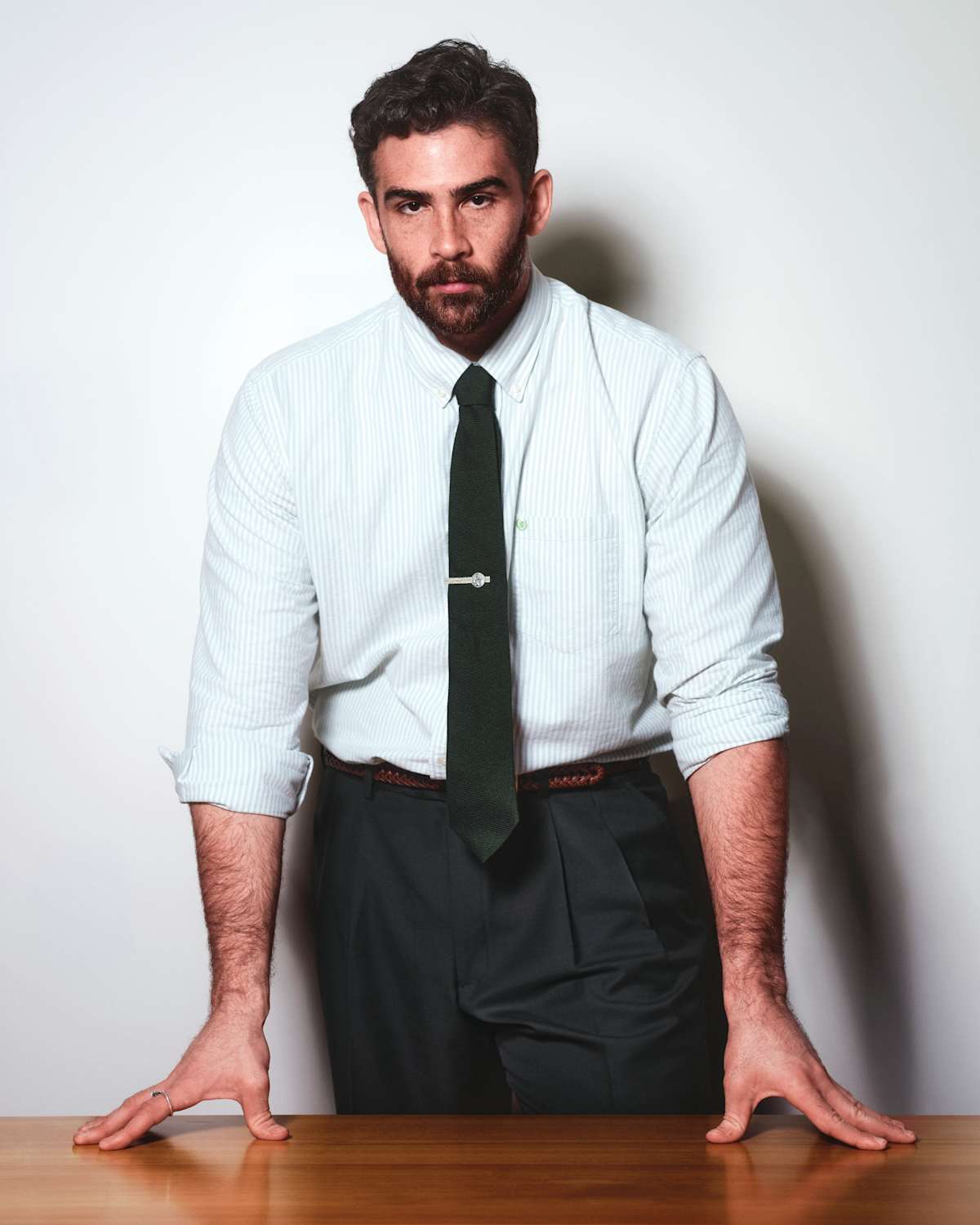
You’ve said you started wearing suits because it might help you “appeal to grandmas.” Are you interested in leveraging respectability? What does respectability mean to you?For me it’s optics. It’s civility. It’s maintaining a certain line when talking about issues, maintaining neutrality, never getting emotional, never saying what you fully mean. But my trade is yapping, so there are areas where I don’t think it’s a big sacrifice. Wearing suits is a new way for me to express myself. But I do match the energy. If I’m going on a professional news broadcast I’m not going to curse. I’m not an animal.
"My trade is yapping."
Photography by Bobby Doherty
Okay?
Like, there’s a world in which both of us are on testosterone, or on the same “TM” [trans-masculine] spectrum.I take DHT blockers for my hairline. That’s gender-affirming hormone replacement therapy, though it’s the opposite of testosterone. I might eventually get on [testosterone].
It’s actually a good introduction for people to think about things in a way maybe they never have. Gender is a performance; everyone’s trans at the end of the day. I do what feels natural and what I guess I’ve learned is cool. What makes me feel good. That’s why I wear suits in ninety-degree weather now.
And you extend that to politics: hormone replacement therapy for everyone.You’re saying I’m the HRT of politics? I’m helping people become confident in their political skin and identify who they are, is that what you mean?
No, but say more. Is that what you think you’re doing?I legitimately believe that, at root, most people have certain values that allow us to live as social animals. All of those values I’m thinking of, they’re kind of socialist. Everyone’s got that little socialist dog in them, and you lose that through your lived experiences and the way the system is designed. I’m trying to help people unlock those super simple concepts, like “sharing is caring.” When you’re being kind to others, treating them as you would want to be treated, that’s not radical. It’s the most natural, normal thing.
Who do you think your audience thinks you are?People approach me and they’re like, how do you define yourself? I’m a political commentator, influencer, content creator. But some people think I’m a movement leader—I don’t think so. Some people say I’m an activist or a journalist—I don’t think so. I’m sure there are plenty of people in my audience who feel that I’m one or all of those things.
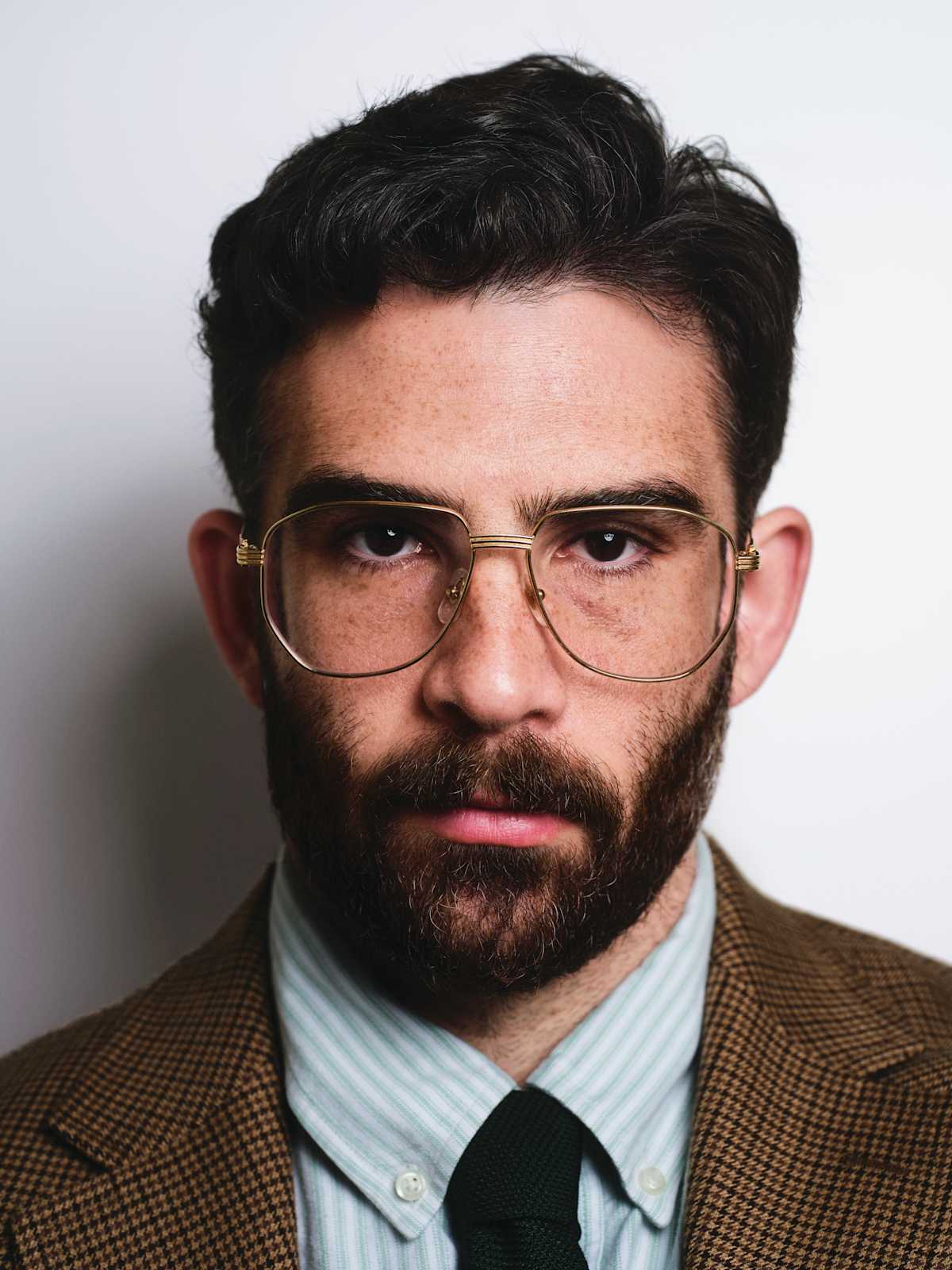
Photography by Bobby Doherty
[So you’re] doing gotcha journalism.
You called them “iPad babies who are thirty-eight years old.” And they still come back and watch you. Why?They were probably misbehaving. This is an interactive medium. What I’m doing now is not so different from conservative talk-radio shows [of the 1990s]. But there is an element of interactivity that makes it totally unique. I’m talking about subjects that people have a personal relationship with, or challenging an opinion they’ve internalized. Like, if you’ve learned about gender as this totally rigid construct and you hear someone say that’s wrong, your world is exploding in real time. Because it’s an interactive medium, you can say something back, or try to be as frustrating as possible.
This is such a personal medium as well. I’m talking to you directly in your home, in your ear, while you’re at work, while you’re cleaning your house. That can lead to people getting frustrated with me too, wanting to ask, “Why are you this way?”
Your work puts you in proximity to some dark corners of the internet.There are some really disturbed people out there, and I live in a media environment where they dominate in ways many people don’t perceive. An example of this is “lookism,” which is a bodybuilding forum that turned into an incel red-pill movement and is now part of mass consciousness. It was relegated to the darkest corners of the internet, and is now discussed in broad daylight. Internet culture does have the capacity to become mainstream culture. There’s some danger to that.
Do you feel like your audience is, in some ways, a former version of yourself?I think everyone’s on their own ideological journey. I hope to be the person that gets someone curious.
I’ve been organizing for years, and I still struggle with the idea that hope or faith is cringe. We live in an era when it’s cool to be nihilistic.I care about improving people’s material conditions. If people find that to be corny, fine. I’d rather be corny and fight for something than be perceived as cool and fight for nothing. I think nihilism is a way to give up while still thinking that you have control. To recognize your powerlessness, but then try to say, “No, I want this, nothing is changing and it’s actually cool.” I talk a lot about maintaining revolutionary optimism. Some of the most evil forces on the planet want you to give up, so at least let spite be your motivator.
There are pockets of hope, like the sea change on Palestine. There are moments when people who have been inundated with propaganda their whole lives can unlearn a lot of what they thought was true.
I don't have off days. Every single day is like this.
I don’t have off days. Every single day is like this. During this conversation I’ve probably received twenty calls and fifty text messages from politicians, campaigns, family, friends. And [family and friends] understand. This is what I’ve dedicated my life to.
Can you talk about the responsibility you feel at this moment?With this crisis of credibility from mainstream media, we have no consensus reality. That makes it very difficult for organizers. Everyone makes up their own reality. They live in these bubbles where this unreality is reinforced. On the independent media side, it’s algorithm driven. There’s no investment in an ethical standard; they only care about being first to market and lying directionally towards a particular ideology.
How do you manage to stay positive—or at least stay funny—when so much of what you’re describing is bad?It’s appropriate to look at a situation and try to make light of it, especially if there’s educational value to make it palatable in my delivery. What are we supposed to do? Just be depressed?
I think people recognize their powerlessness in the face of unchanging systemic forms of cruelty that other people are sometimes oblivious to, or worse, in support of. I feel like carrying the weight of that all the time is a choice. It’s okay to pull yourself out of it now and then.
What is it like to experience so many conversations or encounters with the expectation that they’re going to be hostile?The spaces that I’ve always occupied have been very right wing and either completely uninterested in politics or outright hostile to progress, so I just kept it close to the chest for most of my life. I developed an expectation that every person I encounter is going to be antagonistic to my worldview, or at best a little curious.
Do you get enraged by the news cycles about you?Being a leftist figure on the internet since 2013 has caused me to develop this incredible resistance to people who are cynical operators and apply tremendous scrutiny to everything I do. You’re expected to be almost this Jesus-like figure. But I’m used to it, I expect it.
We’ve talked about your opps and haters. Who do you feel appreciated by?So many people have come up to me and said, “I started watching you when I was thirteen, and I was going down the right-wing pipeline, and if it wasn’t for something that clicked when I started watching you, I could have easily been different.” There are people of Palestinian descent who talk to me about how appreciative they are of my advocacy. I feel most appreciated by the members of my community who are actually doing the work, by the people in the movement, by the candidates—people who are constantly organizing and trying to make the world a better place.
I command the attention of a lot of people. I have grown this community, and I’m able to activate it in the direction of issues we care about. I like the fact that we are capable of making political change, no matter how marginal. We’ve fundraised millions of dollars for Gaza. I feel like being able to, on a whim, fundraise for a candidate that might potentially change the outcome of their race, for causes that could save people’s lives—that’s real impact. It goes far beyond talking shit on the internet.
Photography by Bobby Doherty
Absolutely. Unlimited. A bigger force for fundraising, a bigger force for door knocking, a far greater force to reckon with. And that means that this movement is growing in general. I’m just one component and one person, but it’s a good metric to gauge the level of interest in socialist politics. It’s a barometer for where things are.
If a tree falls in the woods and there is no one around to hear it, does it make a sound?From my perspective, yes. I was saying the exact same things to thirty-five people that I’ve said to thirty-five hundred people, to thirty-five thousand people, to three hundred and fifty thousand people. Given my profession, obviously, it’s a lot more important if it’s making a sound that other people can hear.


