

Fashioning queer identities: On the politics of getting dressed

“Clothes are a big reason I have clarity in my transness.”
In the fall of 2009, Becca DeGregorio experienced what they have since dubbed their “big awakening” in the men’s sale section of J.Crew. The store was an explosion of color, so preppy it verged on camp; the perfect place, in other words, to experiment with gender when you’re not yet aware that you’re trans. DeGregorio’s mom bought them a pair of cropped blue satin trousers that they wore to the suburban kid version of the Met Gala: their first high school dance.
“They were stretchy and shiny, with darts in the front,” DeGregorio remembers, nearly 20 years after the fact, “and they were a really royal blue, with a cropped hem.”
At the time, wearing pants to prom in the early aughts represented a kind of styling that, if not explicitly gender transgressive, was at least “not like other girls.” DeGregorio’s experimentation continued from there.
“I have this idea that style hasn’t meant that much to me, but when you frame it [as], What does getting dressed mean to you?, my immediate response is, Well, everything,” they tell me. “Clothes are a big reason I have clarity in my transness.”
The three-article rule
It wasn’t so long ago that crossing the gender divide at the shopping mall was not merely taboo, but effectively illegal. Several laws were enacted in the 19th century (and again in the 20th) to police what people wore, and therefore what gender they expressed, including the “three-article rule,” which empowered authorities to arrest a person if they were not wearing at least three articles of clothing that reflected their assigned gender. Today, anti-drag bans that rely on vague language are deployed to similarly restrict self-expression.
“It places a disciplinarian gaze on you when you leave the house,” Dr. Sasha T. Goldberg, an LGBTQ historian, tells me. “And so you’re already conditioned to be thinking, Okay, how am I gonna be seen? And if I am busted, am I going to try and negotiate that in some way?”
San Francisco’s 1863 “masquerade law,” Goldberg says, is a great example of the fact that people have always transgressed gender boundaries; society, in turn, has always made an effort to stop them from doing so. The law banned “wearing the apparel of the other sex”; other cities, like Columbus, Ohio and Nashville, Tennessee, passed similar laws that prohibited “disguises.” Nearly one hundred years later, these laws were drudged up from the history books in order to prevent cross-dressing in the name of “decency.” That’s right: though the three-article rule had real-life consequences for queer and trans people in the 1940s, ‘50s, and ‘60s, a corresponding law didn’t actually exist. Police simply repurposed old, forgotten legislation to clamp down on so-called deviants by arresting them for breaking other laws that, up until then, had been all but forgotten.
“Things are exactly as they always have been, which is to say we have exactly as much gender diversity and exactly as much sexual diversity and interest and behavior, regardless of [how we define] identities, as we have always had,” Goldberg says. “We keep trying to suppress it, we keep trying to excommunicate it and interrogate it, shock it out of our systems, and actually it’s not suppressable because it is a part of human nature. All of it. From Kristi Noem’s husband to To Wong Foo to 1863.”
Likewise, queer people have always resisted the policing of their identities. “We have this long history that shows us that we can survive this,” Goldberg adds. “We may not deserve what’s happening to and around us, but we are actually built to sustain ourselves. We know this because we’re still here.”
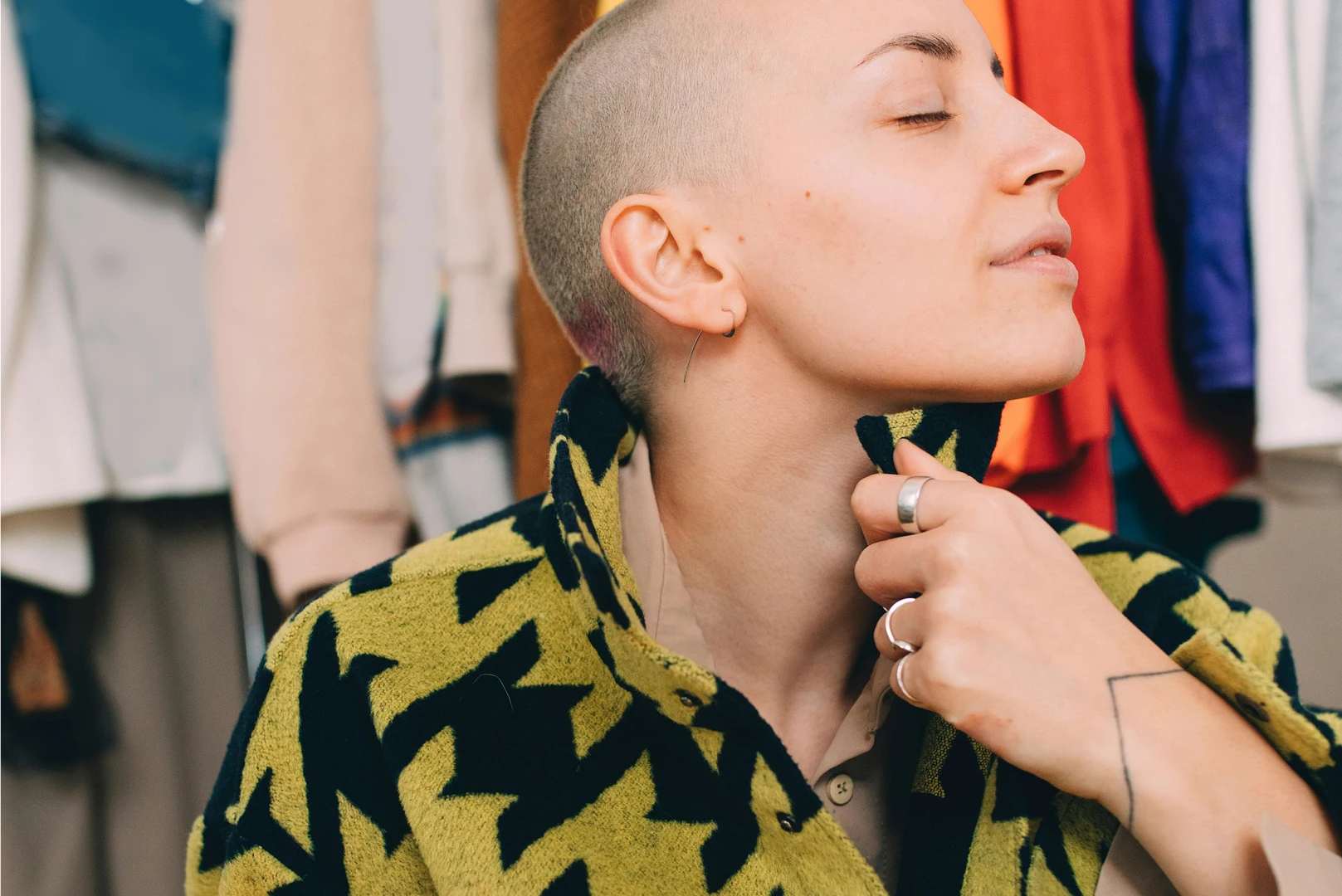
“Retired hot girls,” and other acts of sartorial resistance
The way I see it, getting dressed while queer is a balancing act of several key elements—see: taste, safety, visibility, comfort—that aren’t always in sync. Clothes have the power to convey what words cannot; at the same time, you can’t always control how you are perceived by others. Corbin Chase, a photographer and vintage furniture dealer in Austin, Texas, jokes with me that “there is always something I want to get across with my outfit: like, not just that I am gay man, but that I’m a single gay man.” On a more serious note, he says, “What I wear is maybe the most important part of how I express my sexuality.”
And yet, expressing one’s sexuality—along with one’s sartorial preferences—isn’t always safe. Today, over 700 anti-trans bills are currently under consideration in state legislatures across the United States. On the federal level, meanwhile, the Supreme Court struck down Colorado’s ban on conversion therapy for minors in the name of free speech. LGBTQ+ people are also five times more likely than non-LGBTQ+ people to be the victims of hate crimes, according to the Williams Institute. This is the environment in which DeGregorio got top surgery, “six months after Trump’s second inauguration,” and began wearing a T-shirt emblazoned with the words “retired hot girl.” If that’s not an act of resistance, what is?
“I knew I was gonna start dressing twink-ier, but I didn’t realize that it would feel political,” DeGregorio says, adding that they have another similarly “cheeky” shirt that says “angel” on it. “It’s funny, I wore [that shirt] a lot right after top surgery—it looks very Limited Too—and I feel really good in it, but there’s always this sense when I put it on that someone might see this and think I’m the devil for showing it off. And that feels cool to me. I think it’s making my turn back toward girliness feel a little more punk.”
Back in Texas, Brent Ramsey reflects on the ways in which a wardrobe can become a kind of camouflage rather than a tool for visibility. (Sometimes safety takes precedence over self-expression instead of the other way around.) When he first moved to Lubbock in his 30s, the former fashion correspondent—who is now a professor of practice at Texas Tech—bought “all new clothing” in order to fit in. “I had a moment, thinking, Oh, I should look a certain way, I should dress a certain way,” he tells me—but it was short-lived. “I no longer wear those items.”
Instead, Ramsey has returned to his signature look—tattoos, earrings, "atypical" shoes—which, in a way, is healing for his 13-year-old self. Ramsey grew up in rural Alabama and, as a kid, dreamt of owning a cross-body book bag. When he finally got one, he wore it to school just once. Being a boy with a bag was “so unconventional” at the time that he never wore it again.
Chase, too, has a vivid memory of the first time he transgressed the invisible boundary of boy- and girl-coded clothing. The year was 2005(ish), and his dad bought him a “disgustingly gaudy” turquoise blue Ed Hardy T-shirt. Chase loved it. “I got to wear it to my private Baptist middle school on a Friday,” he tells me. “And I think every other person at the school was like, What the –?! Like, You’re going to hell, or You’re going somewhere we’re not going. Basically, there was a reaction.”
Fundamentally, it was a provocation, Chase says. “Provocative doesn’t always have to be sexual, though,” he adds. “It can just be different from the norm. And yeah, I’ve never really been ‘norm.’”
"Abnormal, atypical, and downright weird"
“Norm”—it’s a loaded word, historically speaking, and one that was previously deployed via those aforementioned “masquerade laws” to categorize people into acceptable versus unacceptable groups. Today, however, being abnormal, atypical, and downright weird is a point of pride for many queer people. Outrageous colors; exaggerated shapes; tiny shorts; tattoos; all of these qualities set us apart, if we so choose. Ultimately, of course, it’s a matter of personal preference.
“There’s something really gender euphoric to me about color-blocking,” DeGregorio says, adding that, at one point, their wardrobe resembled “a clown’s closet.” Three thousand miles away, Chase likewise tells me that “color is very important.”
“It’s gonna be the classics, the Crayola [spectrum], whatever. I love it. It is a little rainbow if you think about it, but I’m not a walking Pride flag,” he jokes. “How your clothing fits you… what it’s highlighting on your body… it’s just so fun. There’s always something to play with.”
Curious about exploring more of your own identity, and connecting with those who meet you where you’re at? Find what’s waiting for you on Feeld.


