Photography by Z. Walsh
"You write theory, but you make it cunt."
McKenzie Wark is a transgender theorist, professor, and writer who described her book, Reverse Cowgirl, as "basically a manual about how to fuck me" (her current partner read it before their first date). Her work tends towards the auto-theoretical, baring her sex life, relationship to raving, finances, and later-in-life transition to the reading public—in ways that are rarely paired with rigorous thought elsewhere. The writing is sexy, intellectual, personal, and provocative. She has authored more than twenty books and is a regular in New York's raving, sex party, and theory scenes.
Wark and I sat down in Brooklyn to talk through her latest thinking on dysphoria, dancing, confession, and queer philosophers.
Interview has been edited and condensed for length and clarity
CG: Reverse Cowgirl opens with you explaining how you wanted a partner to fuck you until you didn’t exist. And then it ends on these really embodied experiences of realizing you're trans, early transition, starting hormones, dancing, having sex. Can you tell me about the connection?
MW: Among other things in the book, it’s about dissociation, which people who've had trauma in their lives are likely to do—and all the trans people I know, with a few exceptions, also dissociate for various reasons. Dysphoria will put you there. For me, it was a very long era of being dissociated from my life and my sexuality and my gender [transforming] into a kind of capacity for presence, which is just starting to happen at the end of the book. That's the thing that's just started to be possible. And it's been a book about needing very intense forms of experience in order to get out of dissociative states, and the kind of risk that was involved in that.
CG: MIT Press called Reverse Cowgirl an auto-ethnography. You've often used your own experiences as a launchpad for intellectual inquiry, and I'm wondering what it was like to release this intellectual, theoretical book with so many intimate details.
MW: I'd given up on advancing an academic career any further. I have a book called Reverse Cowgirl! It's my favorite of my titles, I gotta admit.
There's an ethics around writing in the first person; these books are not in a confessional mode and they don't claim to be the truth of the self. There's some stuff that's fictional in it. (Because I fucked somebody who had money and power in Australia and there's really vicious libel laws there). So I have to really cover my tracks for one of those stories. But there's also an ethics around other people's stories.
It's choosing to put a certain piece of your life [slightly] adjacent to the public. But also, the book's not a confession in that sense. You really can't rely on anything I've said there to be the actual truth.
CG: You've got a little bit of distance built in…
MW: Although, when I was single, it was a useful book to have out because it really describes how and why I get fucked. Just read the relevant pages and that's what works for me as a behavior.
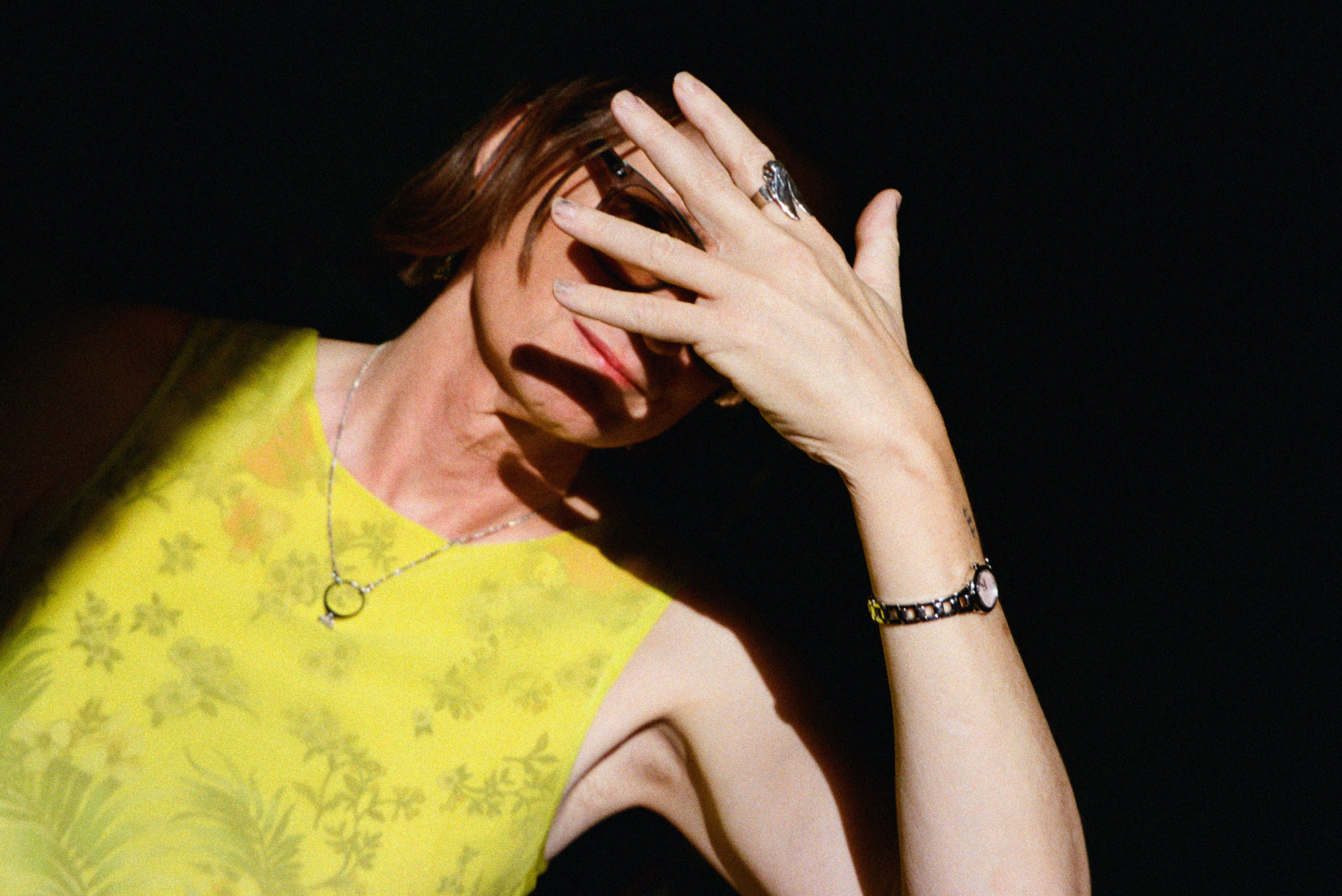 Photography by Z. Walsh
CG: What are some other benefits to using yourself as a subject?
MW: Writing in the first person is a method of becoming a certain kind of person. And I think I wrote my way through transition. I wrote this one before I went on hormones 'cause I thought that would mess with the instrument. I couldn't write for three years after I went on estrogen. It was like I'd been a clarinet player my whole life and gotten pretty good at it, and then suddenly it's a saxophone. And I can sort of play it, but I can't play a solo anymore. It just wouldn't quite work. So the first-person books were part of transition for me, and part of learning a different mode of writing.
CG: Reverse Cowgirl was followed up by Raving, which, in so many ways, felt like a sequel to me. Do you want to talk about the connection between them?
MW: Raving was the first book I managed to do after I'd been on hormones for a while. And it was a commissioned piece. I signed a contract for a book that I would write in six weeks.
CG: Six weeks?
MW: Yeah.
CG: Oh my god.
MW: I'm really proud of that one, and it resonated in interesting ways. It's a book about finding my people. Brooklyn rave culture is having a moment. It really is good at the moment, and I found my people. I have a trans mom who's actually younger than me. I was telling her, "Hormones are fucking great. I feel so much better." But there's just some low-level dysphoria that I know nothing will work on. The only thing that works is dancing. I really get out of that when I'm dancing. And she's like, "Bitch, you will be at my apartment at two o'clock this morning, and I will take you to the party, because this is what you need."
I really wanted to write a love letter to my rave community. And I sort of found a form for it. It was starting in Reverse Cowgirl, but in Raving, I was getting the description and the emotion and the concept in the same sentence, to come together.
CG: There's an element of surrender I see in both books, getting fucked until you don't exist, the bottoming in Reverse Cowgirl, then opening yourself up to being fucked by the beat in Raving. I was wondering if you could expand on that?
MW: The dance floor is kind of erotic. It can be sexual but it doesn't have to be. Eroticism is a much wider concept than that. So it's that physicality of it, and the intensity of it, for someone who needs intense experience to feel alive. I've lived long enough to know that's a bit of a dangerous zone, and [knowing] how to manage myself in that has been a lifelong learning experience. I'm not only out as transsexual, I'm out as a recreational drug user with 50 years' experience, you know? This is not for everybody; a lot of my friends have to be sober, and I respect that. But I've maintained. So it's a book about that nexus of chemistry and music and the dance floor and the intensity.
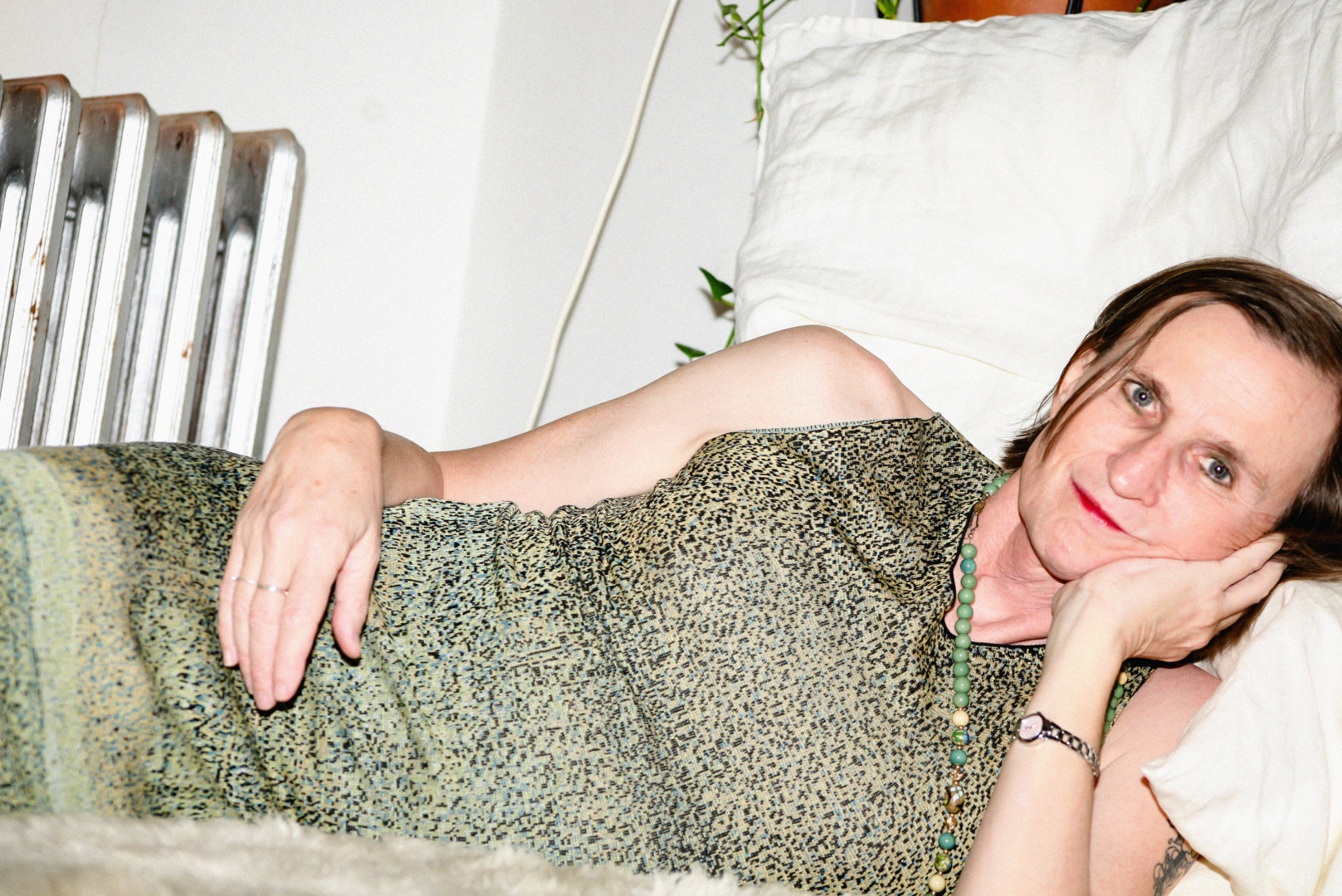 Photography by Z. Walsh
CG: I really loved a story you told in another interview about being introduced to Foucault through Xeroxed copies being passed around queer-nightlife and queer underground scenes as a way of understanding, within the community, our own lived experiences. And I see you reaching for that same thing in your own work. I'm wondering if you could talk about theory's potential.
MW: This other trans woman said to me the other day, "You write theory, but you make it cunt." That was the best compliment I've had in years. I think that was the aim. I was ambitious for one thing and have a strong sense of self-preservation, but on the other hand, I've always operated in this world that's defined by subcultures, social movements, avant-gardes, and bohemians, you know? I love the intensity and craziness of those sorts of social spaces. I've always had one foot in that, and one foot in a day job and stability and all that kind of thing. I wanted [to include] not just description and the feeling of being in those sorts of spaces, but [a sense of] how it generates concepts that enable you to articulate how power works, where possibility is, what a way of collective life could be. I think that's sort of the goal.
[On the Foucault story:] It was true. My first encounter with Foucault was not the official translations, but handmade translations in photocopies passed around by self-described nasty street queens, you know? Like, "Girl, you need to read this. This is about our situation."
CG: It is an intense time right now for trans people. Any advice?
MW: It's not back to how it was. I think we have to learn a bit from the more down low and discreet era. And strengthen and abide by our networks and give up on fucking canceling each other and our nonsense. We're all wrong about something. And it's fine, you know? So to build those networks and share resources and share what little money we've got to endure [this].
And the thing is, we're older than God. We're not going away. We've always been here and sometimes [society says] we're sacred and sometimes we're garbage. And it would be so great if we just got to be ordinary.
Ready to explore the expansiveness of your own identity and desires? Discover more meaningful connections on Feeld.