Identity, conformity, and queer self-determination: Becoming with ALOK, Kat Blaque, and Ev’Yan Whitney

Photography by Javier González and Alex Free
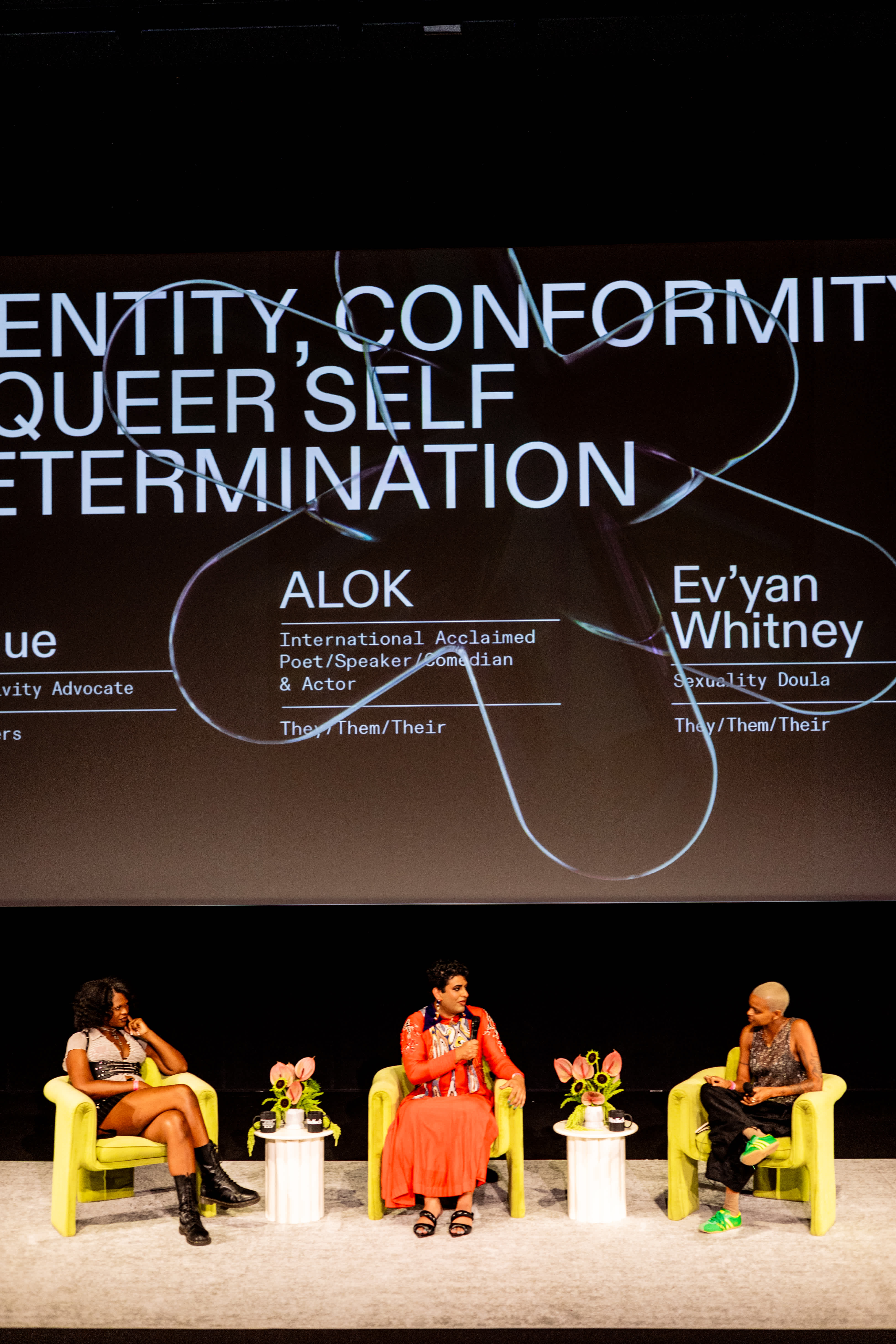
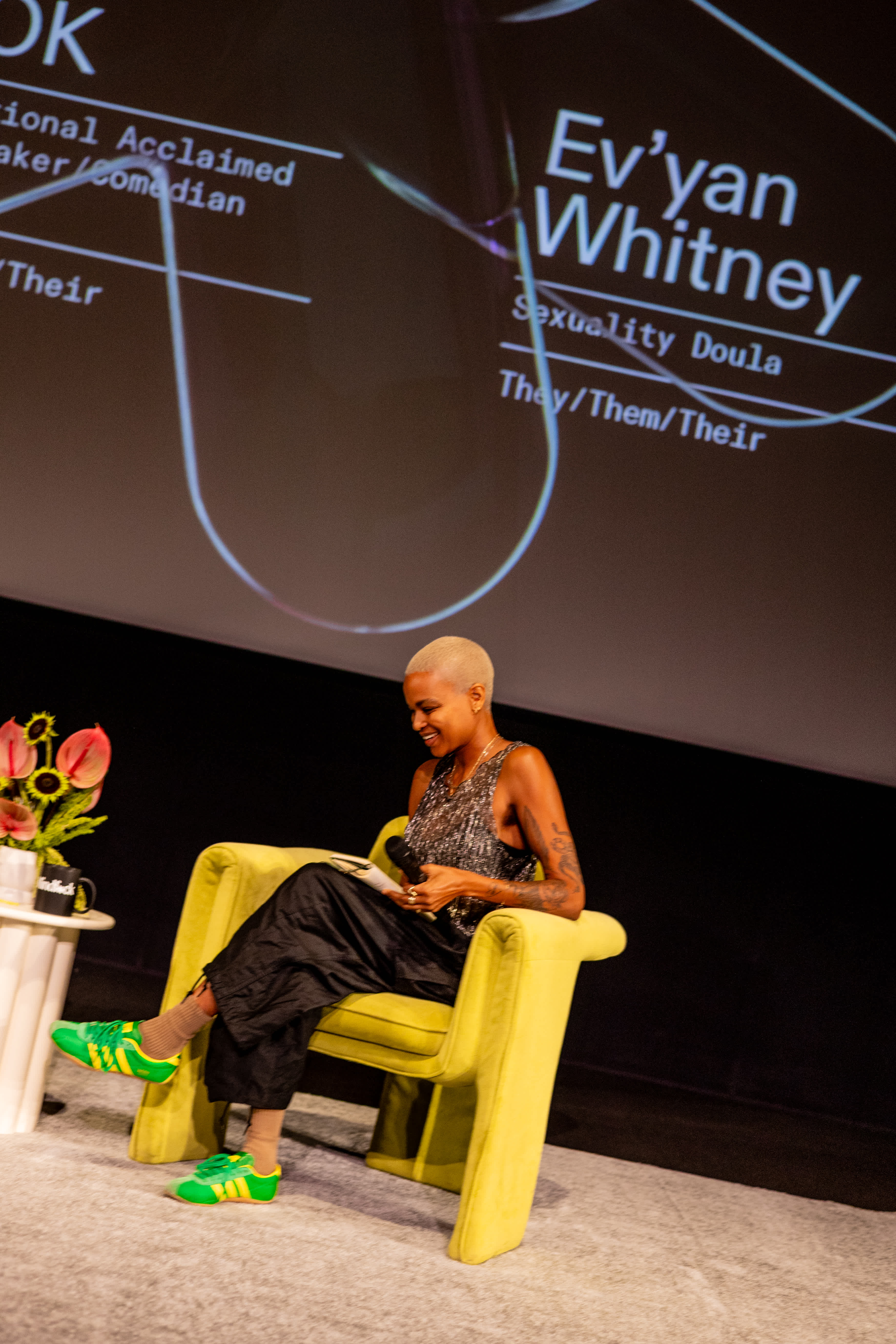
Artist, poet, and activist ALOK and writer and sex positivity advocate Kat Blaque join sexuality doula Ev’Yan Whitney in conversation about the tension between belonging and individuality, the complexities of queer identity and self-expression, and the freedom that comes with daring to be different.
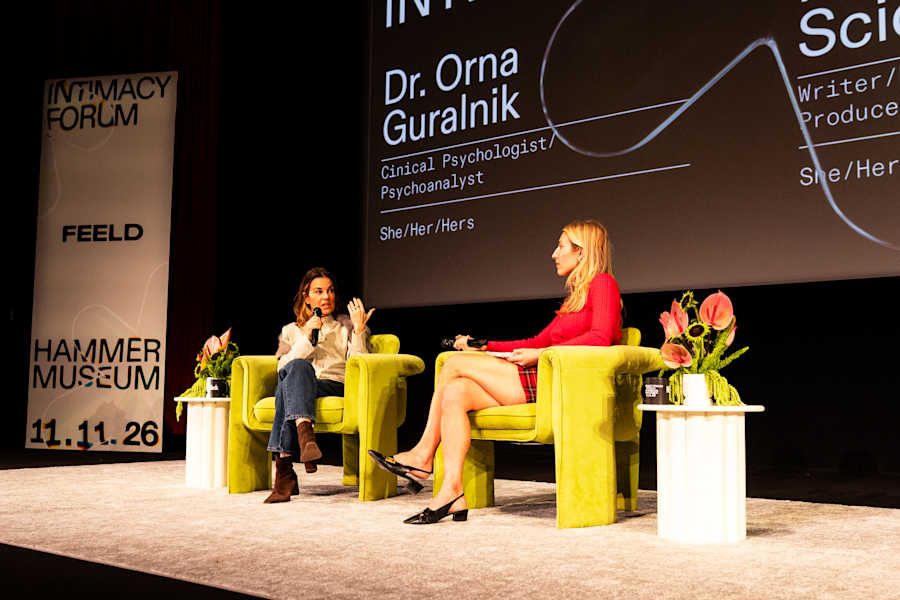
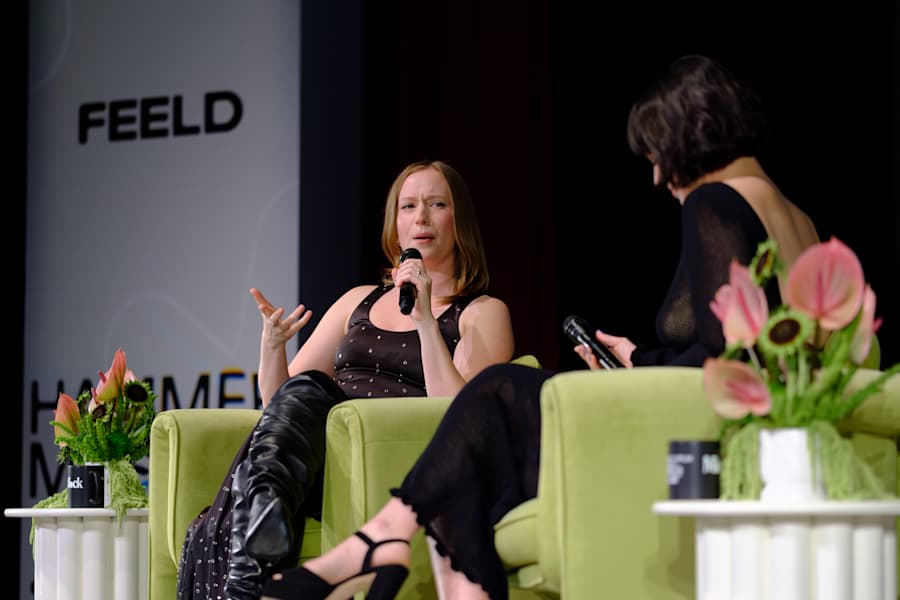
This interview was originally conducted at Mindf*ck, Feeld’s first ever intimacy forum at the Hammer Museum in Los Angeles.
Ev’Yan Whitney: Thank you for being here. I'm excited to be talking to you both. There's a lot of depth that I want us to get into in this conversation. So my first question is: When you look at how normative society and oppressive systems teach us how to love and relate to one another, what's one thing we've mistaken for human nature?
ALOK: First of all, thank you, Feeld, for having me and for staging these important conversations. The lighting is officially bisexual.
What I would say is, we're indoctrinated into a society that whispers the lie to us that romantic love is the most transcendent, and that therefore all other forms of intimacy are means to an end, or are things that end up on the cutting room floor when you fall in love. Even that phrase, "falling in love," elevates romantic love as the pinnacle of human existence, and then we're expected to cohere and anchor our entire lives based off of that goal—as if you've failed if you don't have it, and you're successful if you do. On both sides, that's just a burden.
And actually, love is too big, too enormous, too electric, too expansive, to be winnowed down to just romantic love. There are so many people to love in the world. There's an earth that's waiting for our love desperately. There's friendship. There's a relationship with animals, with water, with wind, with ancestors, with memories, and those forms of loving can be just as vital, just as earth-shattering, just as poetic and beautiful. So then, what happens if we decenter romantic love as the pinnacle of love, and we live lives that insist on being lovely wherever that takes us? I think that work for me has been some of the most challenging, because every pop song, every film, every check-in with a friend, re-entrenches the idea that I should be allocating the majority of my time trying to fall in romantic love, rather than noticing the loving economy all around me: the ways that I already love my friends, my family, and my shoes. Thank God for my shoes.
EW: What about you, Kat? What is one thing that we've mistaken for human nature?
Kat Blaque: Monogamy, for sure. I spent a lot of my life tearing myself into pieces because I thought monogamy was this rite of passage. It was an expression of value. It was the way I validated the idea that this man truly loved me. But it causes you to tear yourself apart and not be aware of what actually satisfies you. I spent a lot of my life not really thinking about that because I thought that submission to a man was what I was supposed to do. And so I've been unpicking a lot of gender essentialism, these conceptions about what a relationship is supposed to be like. Polyamory has been amazing in allowing me to see a wide range of ways that we can love each other and understand that different relationships can function differently. I have three boyfriends, and the only thing they have in common is that they're all engineers. Turns out I do have a type, but it's amazing. To be able to have all of them in the same room and see that they're all so different, but they have commonalities, and that we all love, respect, and show up for each other—monogamy will kind of teach you that's not how it should be. When I say that I have three boyfriends, people are like, “Which one is the actual boyfriend, which one actually loves you?” And I'm like, “Well, they all do, and that's what's beautiful about it.”
I think even if you are a monogamous person, it is really worth questioning the way that patriarchy informs monogamy, the way that it's viewed as a value system, and the colonized patriarchy we live in.

EW: How do we expand our definitions of love and relationships through this lens of non-monogamy and polyamory, even if we don't feel like we are oriented toward those things?
KB: I think people have to experience it to really know it. I had to be in a monogamous relationship where I lost a lot of who I was to realize love doesn’t mean relinquishing myself to make one person happy. With polyamory, sometimes you have to sift through what works for you. When I first started exploring, I had to actually connect with people who were practicing a form of non-monogamy that was compatible with me to really realize that it was something that I could do. I had to let go of certain ideas, and accept that my boyfriends and I like different things. For example, I'm a masochist, and my engineer boyfriends don't want to hurt me, and that's beautiful. But I enjoy it, so I find people with whom I can do that, and they all understand. That's something that a lot of people will have a hard time comprehending, but I know my partners are supporting me in my pursuit.
A: I would add that all of us are already in non-monogamous configurations that we don't announce as such because of the privileging of romantic love as the only attachment that gets given weight and heft. All of us are navigating simultaneous relationships with our friends, our family, our job, with ourselves. Even if you have no friends, you're in a relationship with yourself and with the world, which is non-monogamous. And so, this idea that there are certain people who are non-monogamous, and certain people who are monogamous relies on a colonial worldview that only sees romantic love as the pinnacle of relation.
I think it's much more interesting to speak about the simultaneous relationships we're already all navigating, and begin the conversation from there. A lot of people will use non-monogamy as an ethical imperative, [feeling that they’re] more enlightened, more critical because they’ve done the work of being in a non-monogamous relationship. That doesn't feel as compassionate as asking how we’re all already navigating multiple entanglements, and how we can create a world where they are seen as real. We live in a state right now that only apportions rights, healthcare, tax benefits to romantic love, which is ridiculous, because many of us are caretaking for elders, people with disabilities, our besties, roommates, and the fact that we can't sponsor their healthcare because we live in a world that legislates normative love is a crisis that impacts all of us.
EW: I want to stay on this track of non-monogamy expanding our understanding of relationships and love. How has non-monogamy, or kink, deepened your capacity to feel?
A: Dissociation has been the artist residency that I keep on returning to my entire life. It's where I've gotten my best work done, and being lucid feels more challenging to me than almost anything, because having to be present in the world is incredibly painful. I don't want to do the L.A. thing of saying I'm an empath, so we're going to find another way to say that I'm a human being, and I care deeply about everything. It's not one issue or cause that propels me in the world. It's feeling an indebtedness and profound gratitude that I get this chance to be alive. And so, dissociation has always offered a safer alternative to feeling; what’s so delightful about meeting people who are working on themselves is that those are rare safe spaces where I'm actually allowed to feel. A lot of spaces will offer themselves as “pro vulnerability," but it's actually like, “We're into vulnerability while you're still articulate, vulnerability with college degrees, vulnerability that makes me feel good about myself or confirms what I already thought about the world, not vulnerability that's obtrusive and has a stench.”
That's what intimacy is for me: meeting people who encounter my wonderful contradictions, my painful and pathetic terror-management coping mechanisms, and smile and say, "Me too. I too am deeply afraid of being in the world. Let's try to figure out something else together.” That's why I think we need an intimacy revolution, which is different from a love or sex revolution. An intimacy revolution is a world where people can be lucid and experiment with what it's like to actually be here. I’ve found that people who are exploring non-monogamy and kink tend to correlate with people who actually give a shit about being a human being.

KB: I do BDSM community organizing, and [that involves] providing spaces for people to meet and witness each other. BDSM is play; it's very vulnerable play and it's escapism for a lot of people. That can be scary—especially for a lot of marginalized folks. I love the scene because it [contains] a high concentration of people who give a fuck. A lot of people are there because they intentionally care about cultivating a space where people can come and be a bit strange. I'm so glad that I pursued BDSM as a social thing because now I spend most of my time socializing at the BDSM dungeon and not getting hit, honestly.
For me, BDSM was initially appealing as a survivor of sexual violence. It taught me that I can say “no,” and a lot of people connect with it on that level, and so you are surrounded by people who [understand]. As a munch host, I've had so many people come to my event one gender and leave another gender. We are exactly the thing that the President's afraid of. “You will come out with a sex change,” [laughs].
Kink and polysocial scenes are not just a bunch of people doing sexy stuff—but people caring about each other, keeping each other safe, doing this ethically and with thought. That is healing for me.
EW: Beautiful. Our good sis Adrienne Maree Brown says that “pleasure is a measure of freedom,” and we are living through empire collapse. Where are you in terms of your pleasure currently?
KB: I'm having a lot of fun right now. I'm gonna be so honest. There's something about living in a culture that wants to exterminate me that makes me want to be hot in public. I do so much of what I do out of defiance. I'm not going to feel bad about myself; the fact that you want me to feel bad about myself actually made me realize, “Oh, you're gaining strength off of me. I'm kind of badass, aren't I?”
All of the white supremacy, transphobia, all the bullshit that's happening right now, it's just made me feel more hot. I'm a stubborn bitch. I will not allow these motherfuckers to feel like they've won and made me feel lowly about myself. Sometimes when you're a Black transsexual, you walk into the room and you're the main character. I've started to accept that and not slither away like I know our culture wants me to. I love my Blackness. I love my transness. I love my curvy body. I love every part of who I am, and the fact that it is so threatening to people, it kind of gets me off.
A: Listen, I grew up an emo kid. Misery is the easiest chiropractic shape for me, and pleasure always feels like a foreign visitor. I'm like, “oh wow, that's possible, cool,” because my neutral way of being in the world is just being sad. It's kind of my whole personality. It's like in the middle of a birthday party, being like, "but I'm gonna die soon." But I'm trying to take what Adrienne says seriously and to challenge how that became my thesis. Was that organic or was that imposed? Often our own self-concept is not actually our own; we inherit something like a costume that's put on us that we begin to think of as a second skin, but it's not. And so the work of exploration actually requires imploding our own sense of ourselves. It’s not just about overcoming an external enemy.
I'm in that continual process of rethinking. I am trying to insist that my life can be a lacquered, manicured middle finger to the world. It's some of the toughest work I've ever had to do, because it requires me to take accountability for me.
EW: A very Los Angeles question: What's your big three? Because hearing this, I'm like, do you got water placements?
A: Yeah, I'm Cancerian.
EW: I knew it!
A: Like identity's complex, and we're all fluid, but then that one's so on the nose.
KB: I'm a Virgo, as the best people tend to be.
EW: Excuse me, I am also a Virgo.
KB: To my point! And I am a Cancer rising.
EW: Oh my God, my people. ALOK, what question should we ask ourselves about how we might expand our understanding of gender?
A: Why would you deny the world your beauty? A lot of people are going to work overtime to muzzle you, but why are you doing that to yourself? Who made you believe that you had to hide, shirk, shapeshift, and what would it look like if tomorrow you asked, "Can I allow myself to be beautiful?" Get out of the way of yourself, because that's the true crisis of gender: policing from others, yes, but gender policing from ourselves, because ultimately that's what's censoring our brilliance.
All of us were meant to have a motley crew of genders, a smorgasbord, a force field of a brilliant array of colors we don't have words for yet—and we’re choreographing ourselves to a dance routine of gender created in the Bridgerton era. So many men say to me, "I want to paint my nails, but... " so many women say, "I want to not shave my armpits, but... ", and ultimately they're the ones making the decision. Often the genders we're creating are for other people—so what does the gender look like when we make it for ourselves?
KB: Even as a fairly assimilated trans woman, gender is a scam. And billionaires are offering up trans people as the scapegoat for a reason. If you challenge the idea of gender essentialism, you suddenly topple patriarchy because it relies on that. Gender has always been this tool of control. As trans people, we draw attention to that.
There was a time where I was stealth, meaning I let people assume that I was a cis woman, and that was a prison of its own. I couldn't freely express myself, I couldn't acknowledge my past or what was currently going on. I was living in Orange County and trying to be a housewife. It was a lot. Through unpicking my own gender essentialism, [I realized] there's no reason for me to do any of this. We should be very aware of the fact that, contrary to what everyone is trying to tell you, there are trans people living their lives and they're happy and functional. The biggest hurdle in their lives is just transphobia. It's not that by virtue of them being transgender, their lives are hard.
Gender can be a fun thing if you understand that it's performance. But if you feel like it’s essential to your being, you will tear yourself apart trying to fit into an outfit that isn't your size and never was. I have so many conversations with people where I'm like, “You have the keys to this prison that you're in. You could actually just walk through [the gates].”
EW: What can normative society learn about queer folks' ability to self-actualize through our sexuality and gender as we're living in oppressive systems?
KB: Normative society should recognize that they can define their own way of being. You don't actually need to follow these rules. Even if you ultimately end up in a heterosexual, monogamous life, you could still think about: What are these things that I'm being told? Are those things actually serving me?
A: The scam is gender, but the scam is also the idea that if you just be good, you'll be rewarded on the other side. [Instead], I began to build the good here. Every conversation rinsed itself clean of small talk. It became about, “Who broke your heart and how did you heal? What are you doing with your life, really?” [There are] no strangers, just people who have something to teach me. That's what normative society can learn from us: You've built your entire life on anticipatory joy, but joy is immediate if you let it be. What would it look like if the cadence of your life was choreographed to a metronome of now?
This came from a dark place, [from] my latent suicidal ideation. But the precarity you've match-made queer people with has ironically made us more brilliant than you could ever imagine. The technologies of your homophobia and transphobia have made us luminary scholars of the things that you can't even riddle out. We have hacked every one of your conundrums, and we did it with your help because you oppressing us gave us the space to meet each other in the trenches and the trash cans, and build another life there.
EW: Well, goddamn! Sheesh, that was beautiful.
A: Can I ask you a question? Like a lot of knowledge systems that emerge from queer, trans, and non-monogamous people, our ideas are becoming codified as Instagram carousels—detached from actual educators, facilitators, doulas, scholars, and just becoming ether. Are we participating in our own erasure? One fear I have is that the Blackness, the queerness, the transness, the disability will be rinsed on the other side of the non-monogamy conversation.
EW: I think about this a lot, how everything is so clickable, so scannable. Nobody is really embodying this wisdom, or even doing the deeper work of referencing. What's been so frustrating for me—and one of the reasons why I've had to get off the internet—is that I don't want my work or your work to be bastardized in that way. It’s important that work is protected and venerated, and that I'm able to sit with it for longer than 60 seconds. Conversations like these are so crucial because we live in a moment where everything is TikTokable—you watch it, consume it, and then it goes away. What I’m interested in right now is learning from people in real time, being bodies in a room. Getting off the damn internet and reading a book, tracing those lineages back to the Audre Lordes, the Zora Neale Hurstons, the Toni Morrisons, that's where I feel very deeply nourished. And when I tune into that work, I can also tune into the ways that that work is continuing to proliferate through folks like you.
Thank you for asking, and thank you all for being here.