Disabled bodies are routinely desexualized, fetishized, or reduced to being objects of pity. What happens when we reject the performance of sex, and rewrite disabled intimacy through radical presence and desire?
I grew up with a right arm that hung differently. Erb’s palsy, a brachial plexus injury from birth, left me with limited movement, reduced sensation in parts of my hand and forearm, and a body that announced itself before I could speak. In elementary school, some classmates turned it into a game. They would pinch the fingers I couldn’t feel, laughing when there was no reaction, then pinch harder where sensation flared sharp and sudden, causing me to flinch. For a long time, touch meant assessment. It meant pain.
I learned early that my body lived very differently in other people’s imaginations compared to my own. People saw fragility or something to be fixed. Even well-meaning hands carried a slight hesitation, a carefulness I felt before contact fully arrived. I became hyperaware of the difference between being touched as a person and being viewed as an object of pity.
That gap followed me into adulthood, and into intimacy. Attraction became something I monitored and overanalyzed. A brush of fingers could feel electric precisely because it was so rare, but my mind would race to decode it: Was this flirtation? Ableism in softer clothing? Curiosity disguised as care?
The first time someone touched me in a way that felt genuinely like desire was a couple of years ago. We were sitting in a café, locked in the most intense eye contact, as we rubbed the backs of our hands against each other’s. Nothing overt. Just skin meeting skin without retreat. It startled me. For once, my body was not being assessed. It was simply being met. It made me feel comfortable enough to follow the rhythm, to stroke his beard, to kiss, and to be vulnerable enough to have sex for the first time ever.
Who gets to be sexual?
The answer to the question of who gets to occupy erotic space has never been neutral. Desire is shaped by race, gender, class, beauty politics, and bodily “norms.” Disabled people are often permitted to be resilient, inspiring, brave. What we are rarely permitted to be, without complication, is sexual. Pop culture routinely reinforces this segregation: when disabled characters appear on screen, their storylines usually revolve around overcoming physical adversity. Often they serve as a moral compass for non-disabled protagonists, effectively stripping them of their own private, messy, desire-driven inner lives.
This structural desexualization frames disabled bodies as fragile, clinical, or even completely non-sexual or incapable of intimacy. Dating culture reproduces these assumptions constantly; this can manifest in the form of unsolicited questions about what your body cannot do, attraction framed as generosity, or the subtle expectation that disabled people should feel grateful for attention.
Milly Evans, an award-winning sex educator who is queer and neurodivergent, sees these assumptions play out even in spaces that understand themselves as sexually positive. “There’s an assumption that sex is just a set of activities—foreplay, oral sex, penetration etc. and that [a certain] kind of sex is the only meaningful kind of intimacy,” she tells me. “In reality, intimacy is so many different things. Someone stroking your hand or playing with your hair can feel so deeply intimate and vulnerable without ever taking your clothes off. There are also so many ways to play with desire, kink, and fetish that can be really sexy. Sex is so much more expansive when you’re curious about those possibilities.”
Milly pushes back against another deeply harmful misconception: that disabled people are only desirable to other disabled people. “I really hate that assumption, not just because it’s nonsense and all kinds of bodies and brains can be attractive, but also because when disabled people feel undesirable, it makes us more likely to think we have to settle for whoever does show interest in us, which can trap us in unhealthy and abusive dynamics.”
I recognized that dynamic immediately. A scarcity mindset shapes intimacy psychologically. According to Paula Sojo, a disability advocate and fashion influencer living with Crohn's disease, this is a major cause of relational imbalance. When desire feels conditional or rare, attention can begin to feel like validation rather than connection. In a hyper-visual dating landscape characterized by swiping and instant gratification, non-normative bodies are often skipped past entirely, making the psychological weight of that perceived scarcity even heavier. A scarcity mentality had shaped some of my own choices, in ways I only understand now looking back.
Trading performance for presence
Equally unsettling, disability can become the object of fixation itself. The problem with fetishization is that it is a reduction. The body becomes symbolic rather than relational. You are no longer being met as a person with desires and agency. You are being consumed as an idea. A striking example of this is a new wave of AI-generated social media accounts which use hyper-realistic, sexualized images of disabled women to drive traffic.
This fetishization dynamic is an extension of what disability advocates call the "inspiration porn" complex, seen across platforms, and explored in digital care discourse, where disabled lives exist primarily to generate emotional epiphanies or edgy algorithmic fixations for the able-bodied gaze.
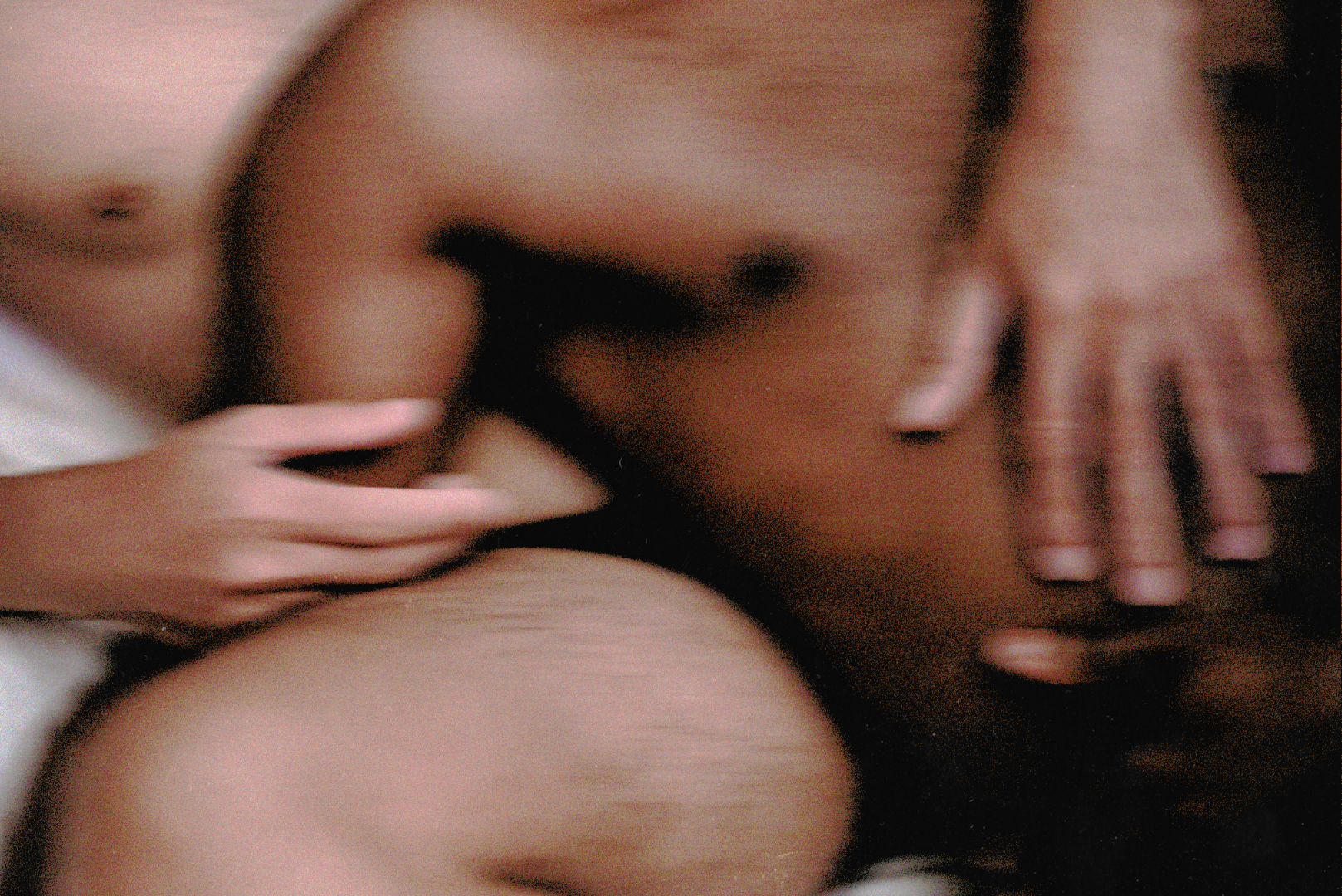
Aisha, a 21 year old living with multiple sclerosis (MS), said she always worried that partners would experience her body clinically rather than erotically. “A mix of bad experiences in relationships made me minimize my disability so much that I erased myself from intimate experiences,” she explains. I was performing instead of being present. That changed when I started becoming vocal to my partner about how I like to be touched, my boundaries, my hypersensitive zones, the places needing different pressure. That understanding became part of the seduction. It felt intimate and hot.”
Ru, a psychosexual therapist, often sees this development in her work. “The first real shift tends to happen when people move away from thinking about what sex should look like toward what they actually want it to feel like,” she explains. “When individuals focus less on performance and more on presence, intimacy deepens significantly.”
Ru's practice offers a map of how this can unfold. In her work, people typically begin by focusing on physical bodily functions, like navigating mobility limitations, before they are able to articulate desire more holistically. "I often need to gently probe before we move into the emotional and psychological aspects of sex and desire," she says.
Conventional ideas about sex tend to center spontaneity, performance, and bodies assumed to function in predictable ways. But disabled intimacy frequently demands something different: slowness, negotiation, adaptation, and presence. "This is where I see some of the most profound transformation," Ru says. "When partners step away from performance-based ideas of sex, there is often a moment where they feel truly seen, almost as if they are naked for the first time in an emotional and relational sense."
New sites of pleasure become possible in that openness. Ru draws on sensate-focused approaches to help individuals and couples reconnect through non-genital touch, a concept that actively decenters traditional milestones in favor of alternative erogenous zones.
"One of the key shifts that occurs is a reorientation toward the body as a whole,” Ru says. “People begin to understand that the skin is the body's largest sensory organ, capable of generating a wide range of pleasurable and connective experiences. As attention moves away from a purely penetrative or goal-oriented model of sex, pressure is reduced significantly. This creates space for exploration, where touch, presence, and responsiveness become central. In many cases, individuals discover entirely new ways of experiencing pleasure and intimacy that feel more accessible, inclusive, and affirming of their bodies."
Rewriting the rules of pleasure
Ru has also found that many sexual “dysfunction” concerns are closely linked to a lack of communication, and mismatched or unspoken expectations. These can include expectations individuals hold about themselves, their own perceived skill set, and assumptions about their partner's abilities or role. When these expectations are explored with open communication, there is often significant relief and improved relational and sexual fulfillment.
Once partners step away from these rigid parameters, the terrain shifts from restriction to creation—a foundational element of what contemporary sociology calls an inclusive reimagining of sexual practices. "Once people realize that intimacy can and should be shaped around their own desires, there’s endless possibility," Milly agrees. "Sex stops being a task to perform, and more of an experience to shape and build with your partners. By really homing in on our wants and needs, we’re making sex accessible and inclusive by extension. I think it takes the pressure off when you feel like you can ask for what brings you pleasure and don’t feel like you have to push through discomfort to experience it."
Disability activist Mia Mingus describes “access intimacy” as the closeness that emerges when someone understands your needs intuitively. By treating accessibility not as a clinical logistical hurdle or a transactional chore, but as a core pillar of emotional closeness, access intimacy shifts care out of the realm of obligation and into the realm of deep connection.
For me, that shift began across a café table. Just two people, present with each other, making a strong connection out of what had never felt ordinary to me. To anyone else, the quiet meeting of hands might have been unremarkable. But to a body long accustomed to pain, caution, scrutiny, and pity, it felt like a deep recognition of my being. That is what access intimacy felt like before I had a word for it.