House rules: Exploring the link between gaming and non-monogamy

Join us as we journey into Uncharted Territory—Feeld’s data blog dedicated to celebrating the curiosities, evolutions, and experiences of our members.
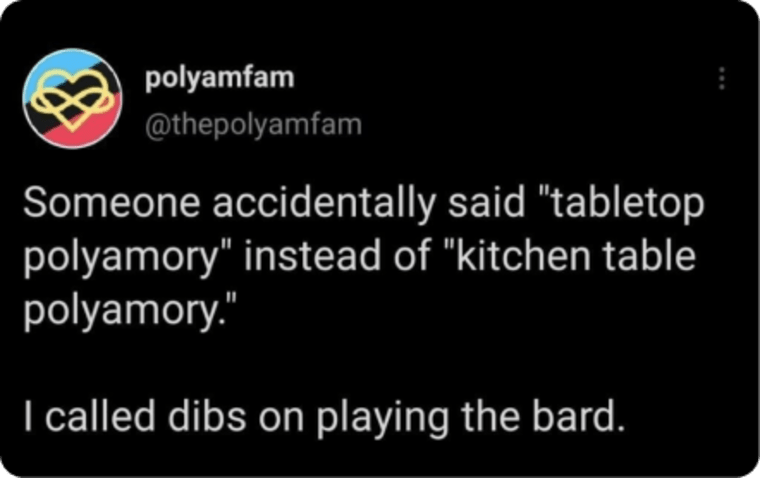
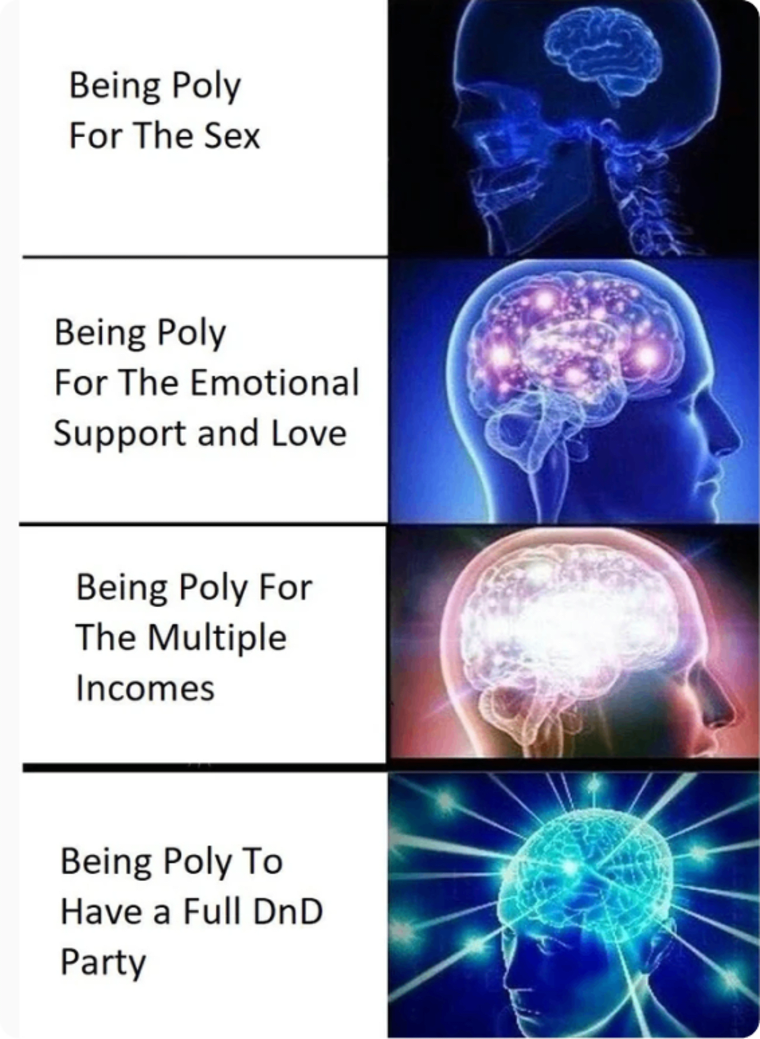
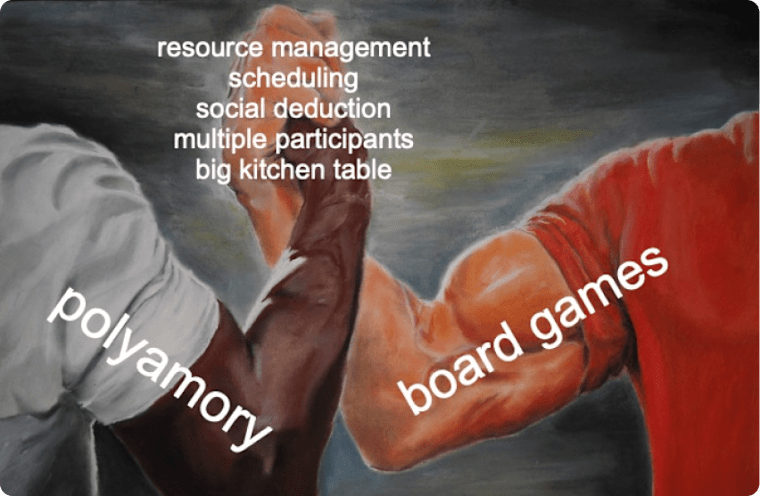
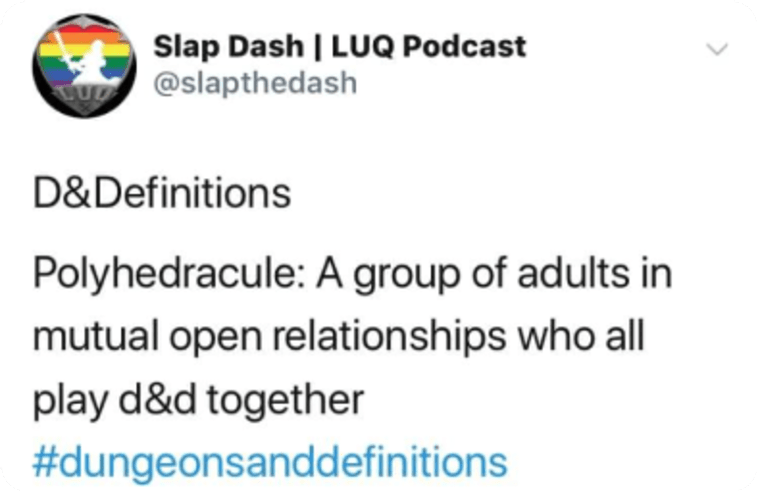
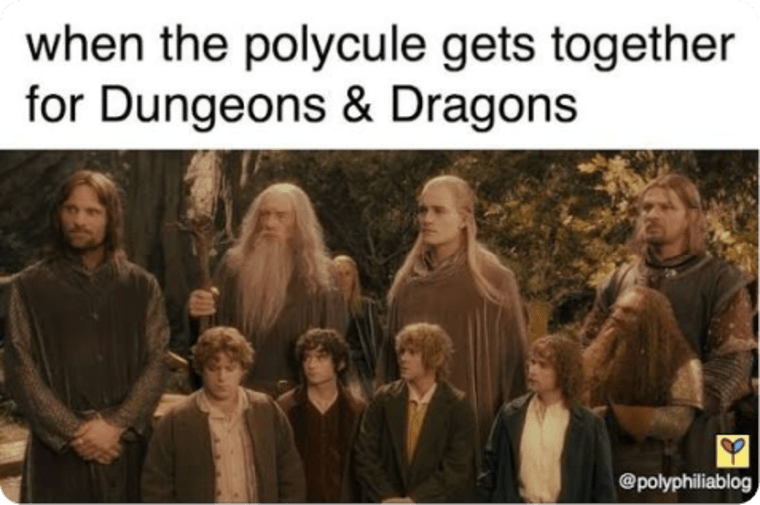
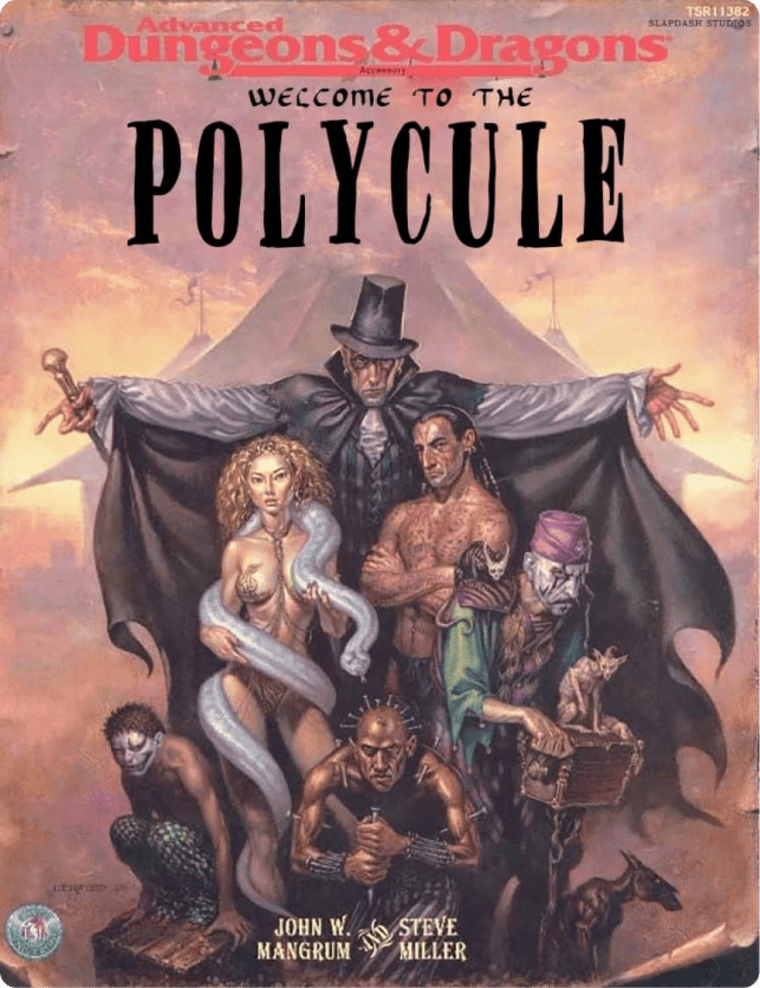
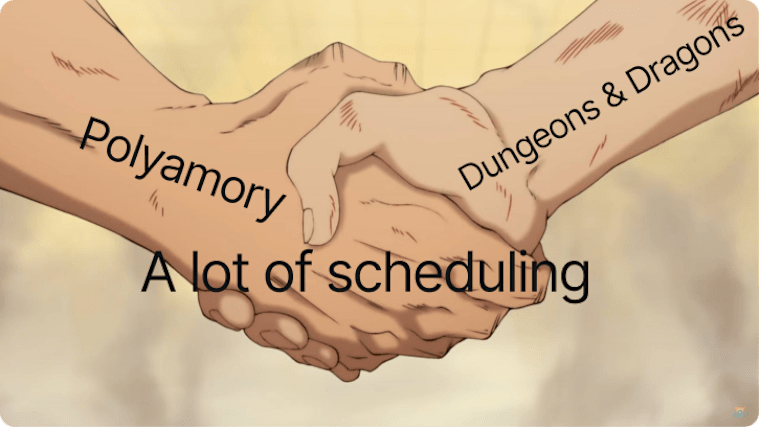
It's a running joke among my poly friends that some people are only polyamorous so they can have a consistent Dungeons & Dragons group. Endless memes echo the sentiment (and it doesn’t stop at D&D), highlighting a range of crossover points between all manner of tabletop games, and ethical non-monogamy (ENM)—from assembling a group of likeminded people, to a nerdy love of scheduling. Inspired by my social media algorithm, I started wondering: what if there was some truth behind the trend? So I went looking for the receipts.
A running joke: are people only poly so they can have a consistent D&D group?
The rumors are true—Poly and ENM people are gamers (and vice versa)
On Feeld, tabletop gamers are 1.7x (65%) more likely to be non-monogamous (encompassing polyamorous people, and those practicing other types of ENM) than non-tabletop gamers. Similarly, poly and ENM members are more than twice as likely (121.7%) to play tabletop games, compared to their monogamous counterparts.
Tabletop games include board games and card games played on a flat surface, like Magic: the Gathering, Warhammer, and—of course —Dungeons & Dragons. But the correlation extends to video gaming, too, where ENM and poly members show an 80% higher video-game play rate. When you combine both types of gaming, ENM Feeld members are gaming at nearly double the rate of monogamous members.
In other words, the overlap runs both ways: people who game are more likely to be non-monogamous, and people who are non-monogamous are more likely to game.
This raises a question: is there something specific about tabletop gaming—the collaborative storytelling, the face-to-face intimacy, the sheer planning involved in keeping a campaign alive—that maps onto how non-monogamous relationships are built? Or is this trend in gaming just one expression of something broader?
Tabletop gamers are more likely to be ethically non-monogamous
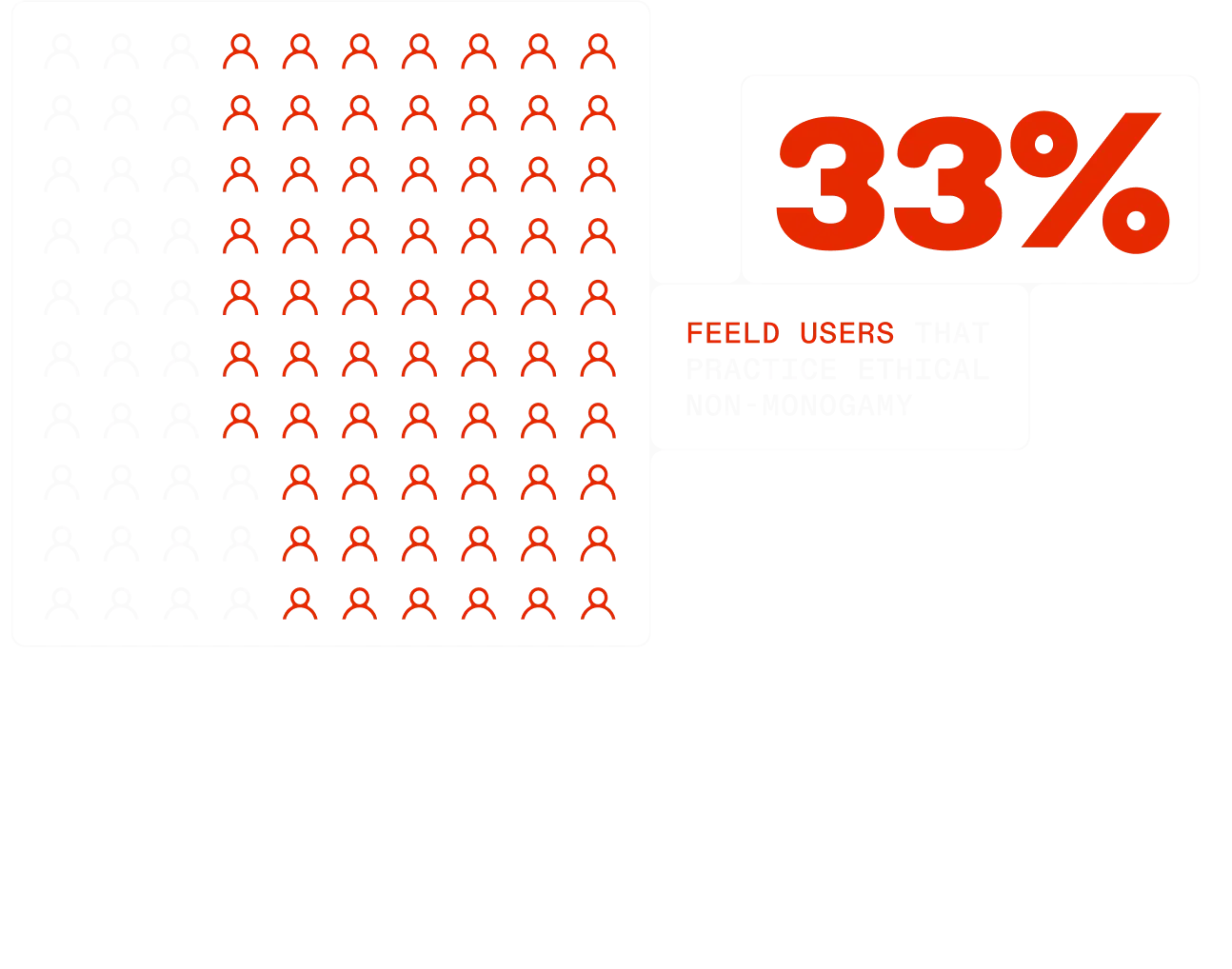
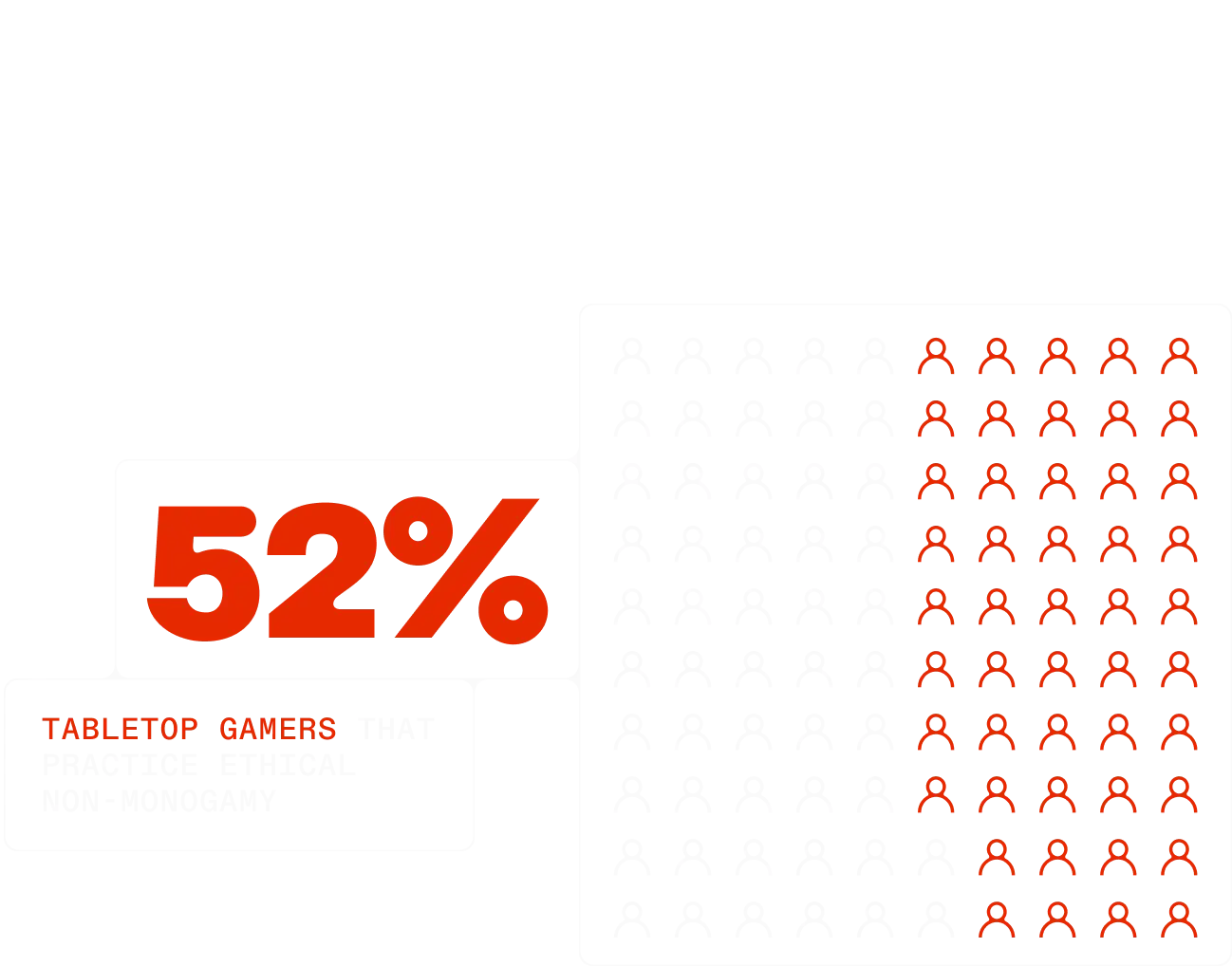
Nerds and non-monogamy
As a proud self-proclaimed nerd, I couldn't stop with tabletop gaming data. I wanted to know if the pattern held across the other corners of nerd culture I’ve been either a part of or adjacent to—sci-fi, fantasy, anime, cosplay, comics, LARPing (Live Action Role-Playing), Renaissance faires. As it turns out, every single one showed elevated ENM rates. Without exception.
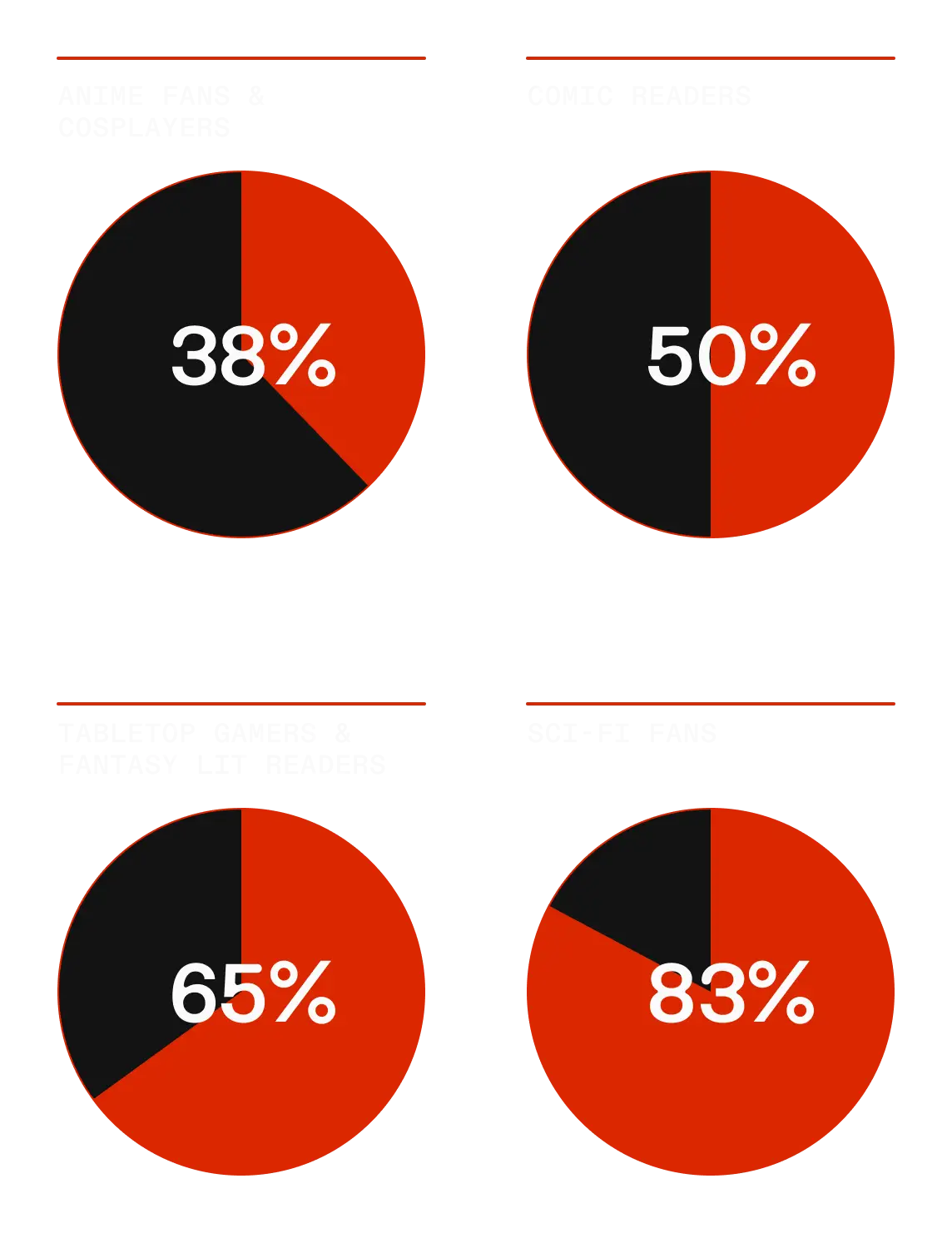
Anime and cosplay fans are 38% more likely to be non-monogamous than the average Feeld member. Comic readers are 50% more likely. Tabletop gamers and fantasy lit readers cluster together, with both sitting around 65% more likely. Sci-fi fans push even higher at 83% more likely.
And finally there's LARPing (where participants dress up as fictional characters and act out scenarios in real-time), and renaissance faires (where festival attendees immerse themselves in 14th-17th-century history and fantasy). Although a relatively small population of Feeld members, participants are more than twice as likely to be non-monogamous, versus the average Feeld member.
Fandoms more likely to be ENM than the average Feeld member.
Why might these communities overlap?
A note before we dive in: correlation isn't causation, and the data can't tell us why these patterns exist—only that they do.
The overlap between non-monogamy, gaming, and nerd culture in general might seem random at first. But when we look at the cultures behind each of these communities, the connection starts to make more sense.
Board and tabletop games provide a structured social interaction, a reason to gather. It invites people into your home, but with a reason. For people who are neurodivergent or experience social anxiety, that structure can make connection easier. Gaming is more intimate than a bar setting, but less intense than being entirely one-on-one.
A. Time management is a key skillset
Anecdotal reporting consistently shows that time management is one of the core logistical challenges of polyamory and ENM, as individuals balance multiple relationships alongside work, caregiving, and daily life. Contrary to popular misconceptions, polyamory is often less about spontaneous threesomes, and more about shared calendar coordination.
In fact, the coordination required is so complex that computational research deems it an “optimization problem” (the name given to mathematical tasks which necessitate finding the best solution from a set of all possible options)—and one which even powerful computers can struggle with.
Anyone who has tried to get five or six adults in the same room on the same night for a D&D session knows the exact feeling. But in the case of both gaming and non-monogamy, showing up consistently is one of the primary ways you can demonstrate care.
B. Both gaming and ENM relationships require explicit rule-setting
It’s not only simple scheduling realities that unites these groups. In monogamy, the rules are largely assumed—we're so surrounded by monogamous culture that most people never have to articulate them. But, in polyamory, they are negotiated: What counts as a date? How much do partners need to know about each other? What are the boundaries around time, intimacy, safer sex practices? What happens when the rules stop working?
Tabletop gaming operates the same way. As Hunt Ethridge, dating expert, coach, and decade-long dungeon master points out, “Dungeons & Dragons is all about putting yourself in someone else’s shoes, mainly your own character, who goes on escapades you could never dream of, and understanding a strange world from their perspective. It’s about vulnerability, emotional intelligence, group-think, problem solving, and laughing when it all falls to pieces, as it inevitably will. All skills that will help you navigate more complex human relations[hips], such as ENM and polyamory.”
Before the first die is rolled, players negotiate house rules, character creation guidelines, and table etiquette. What happens when your character dies? Is this a roleplay-heavy campaign, or a combat-heavy one? Are we doing milestone leveling or XP (Experience Points)? The system doesn't function without that conversation—and neither does the relationship.
Both communities self-select for people who are unusually comfortable with, and capable of, doing something many others find deeply awkward: naming their expectations out loud, putting them on the table (if you’ll excuse the pun), and revisiting them when they're not working.
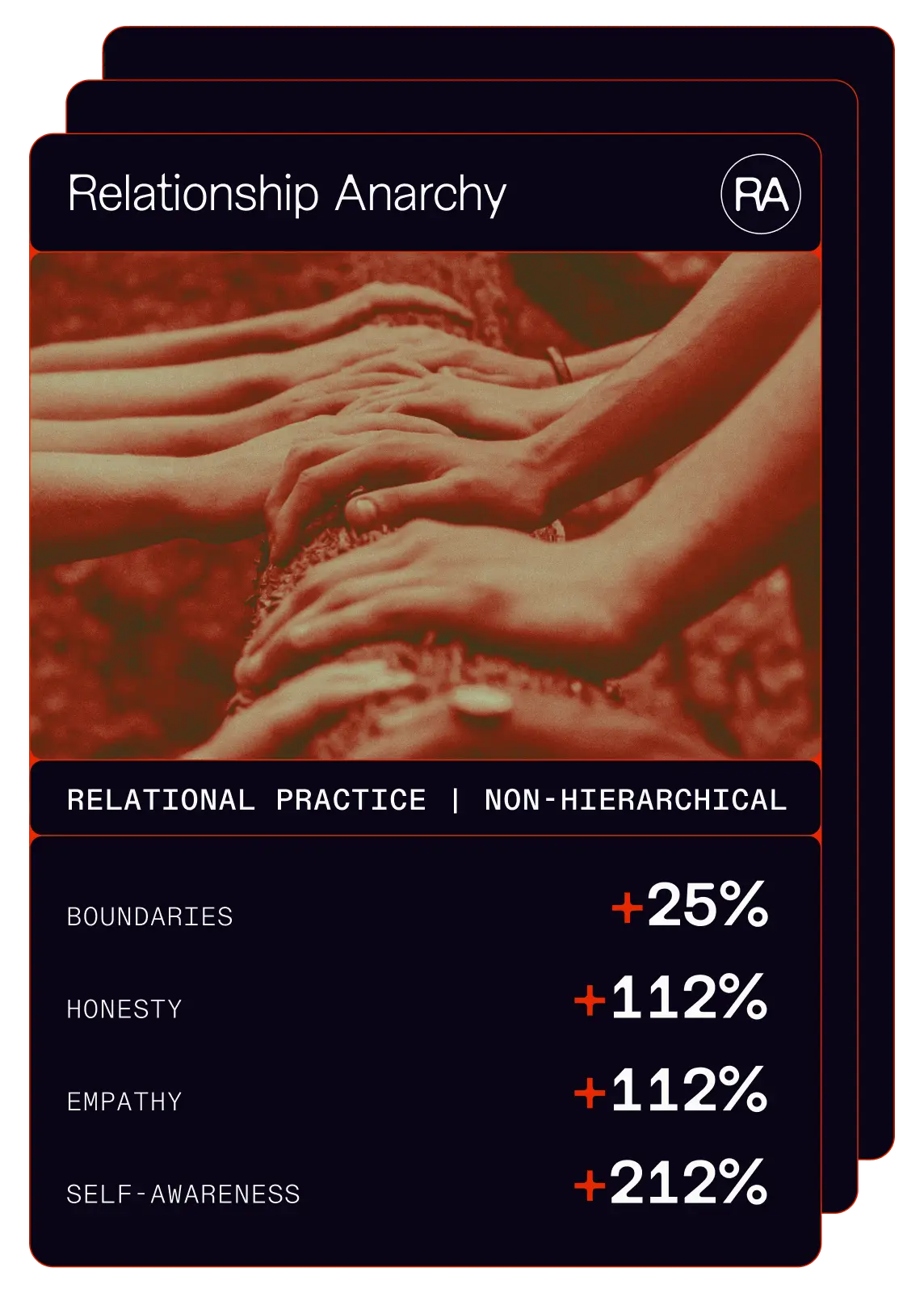
This aligns with broader patterns across alternative relationship structures. In our State of Dating research, people practicing relationship anarchy (RA)—fostering a non-hierarchical approach to relationships of all kinds—were significantly more likely than non-practitioners to cite boundaries (+25%), honesty (+112%), empathy (+112%), and self-awareness (+212%) as essential skills.
While relationship anarchy is distinct from polyamory/ENM, all sit within a broader category of non-traditional relationship structures that require explicit communication and negotiated boundaries.
It's worth noting, too, that this kind of explicit negotiation isn't easy, even for people who've chosen it. The same study revealed that RA practitioners find negotiating boundaries over five times more challenging than non-practitioners. But this isn’t a failure in communication. Instead, this reflects a sharper awareness of the complexity the work actually involves.
ENMers and gamers both understand rules are necessary for play.
People practicing relationship anarchy (RA) were significantly more likely than non-practitioners to cite boundaries, honesty, empathy, and self-awareness as essential skills.
C. Outsiders, together
Zoom out further, back to nerd culture in general, and a broader pattern emerges.
Nerd culture—tabletop gaming, sci-fi, fantasy, cosplay, LARPing—has long been a refuge for people who didn't quite fit the default social script. I know this firsthand. Way back in early high school, long before I understood anything about my own relationship desires or queerness, I gravitated toward D&D groups, the trading card game Magic: The Gathering, renaissance faires., etc. There was a kinship there that I couldn't yet name.
It wasn’t until I was much older, and began embracing my queerness, that I realized how much the nerdy, poly, and queer communities overlap. Personally, I’ve found that these groups often foster a level of acceptance that makes people from other niche or marginalized communities feel welcome. If you've ever felt out of place, too much or not enough for the mainstream, there’s often a seat at the table in nerd spaces. (Granted, there are definitely caveats to this.)
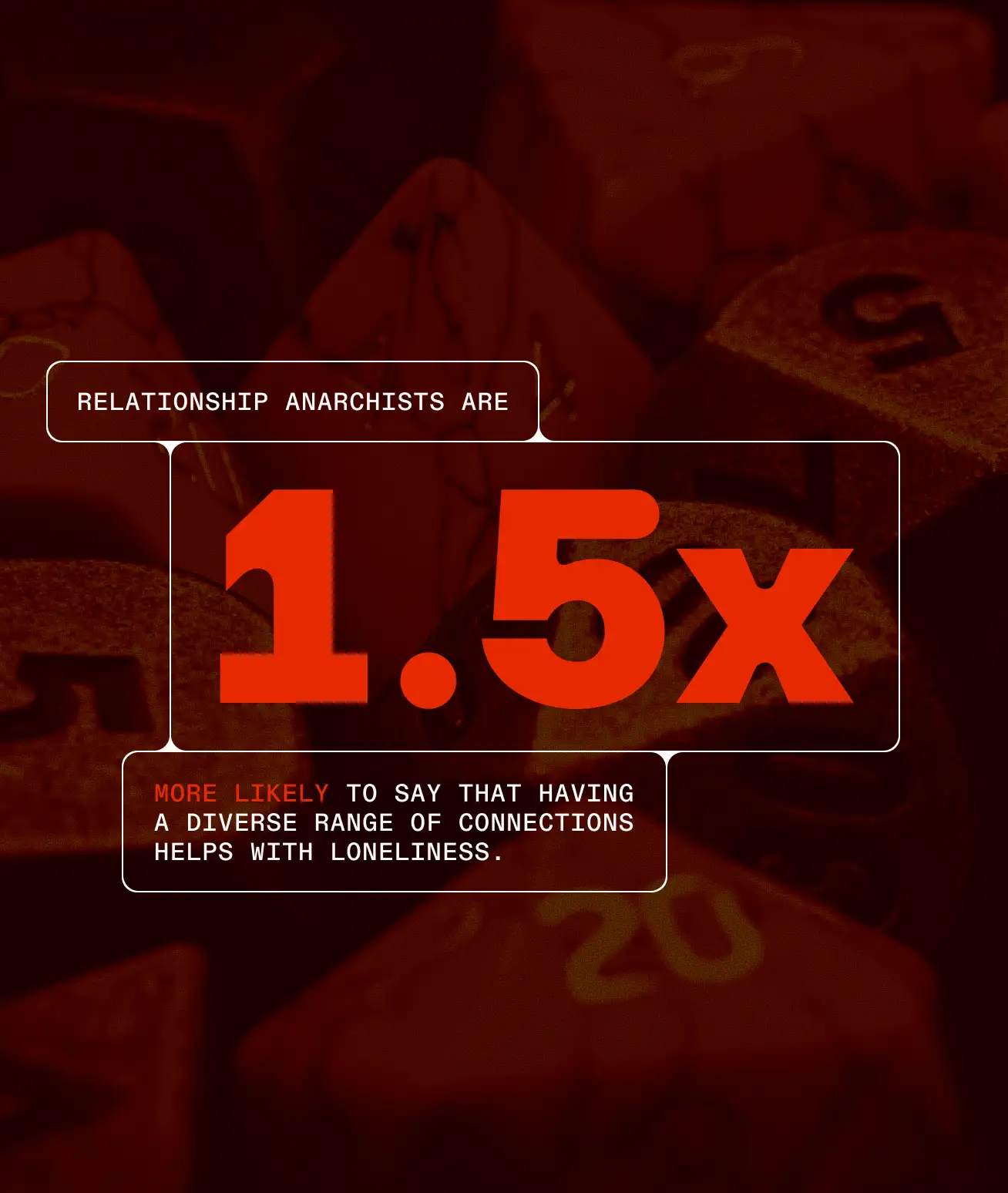
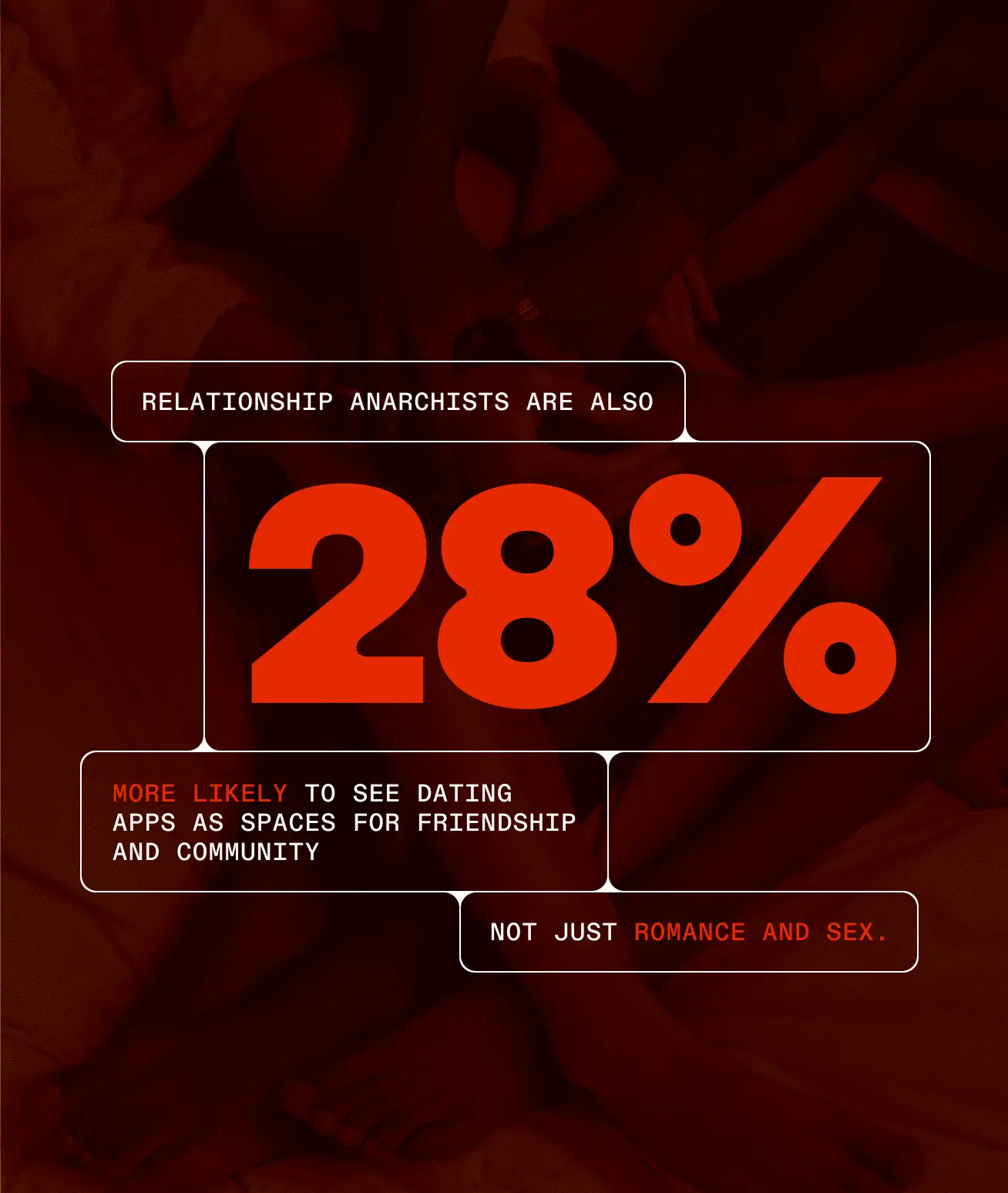
Our research into Relationship Anarchy adds some weight to this observation. We found that relationship anarchists are 1.5x more likely to say that having a diverse range of connections helps with loneliness, compared to non-RA practitioners. They’re also 28% more likely to see dating apps as spaces for friendship and community, not just romance and sex.
Relationship anarchists know how to play
Cultural momentum
This overlap isn’t happening in a vacuum. Both non-monogamy and participatory “nerd” culture are expanding quickly, and at the same time.
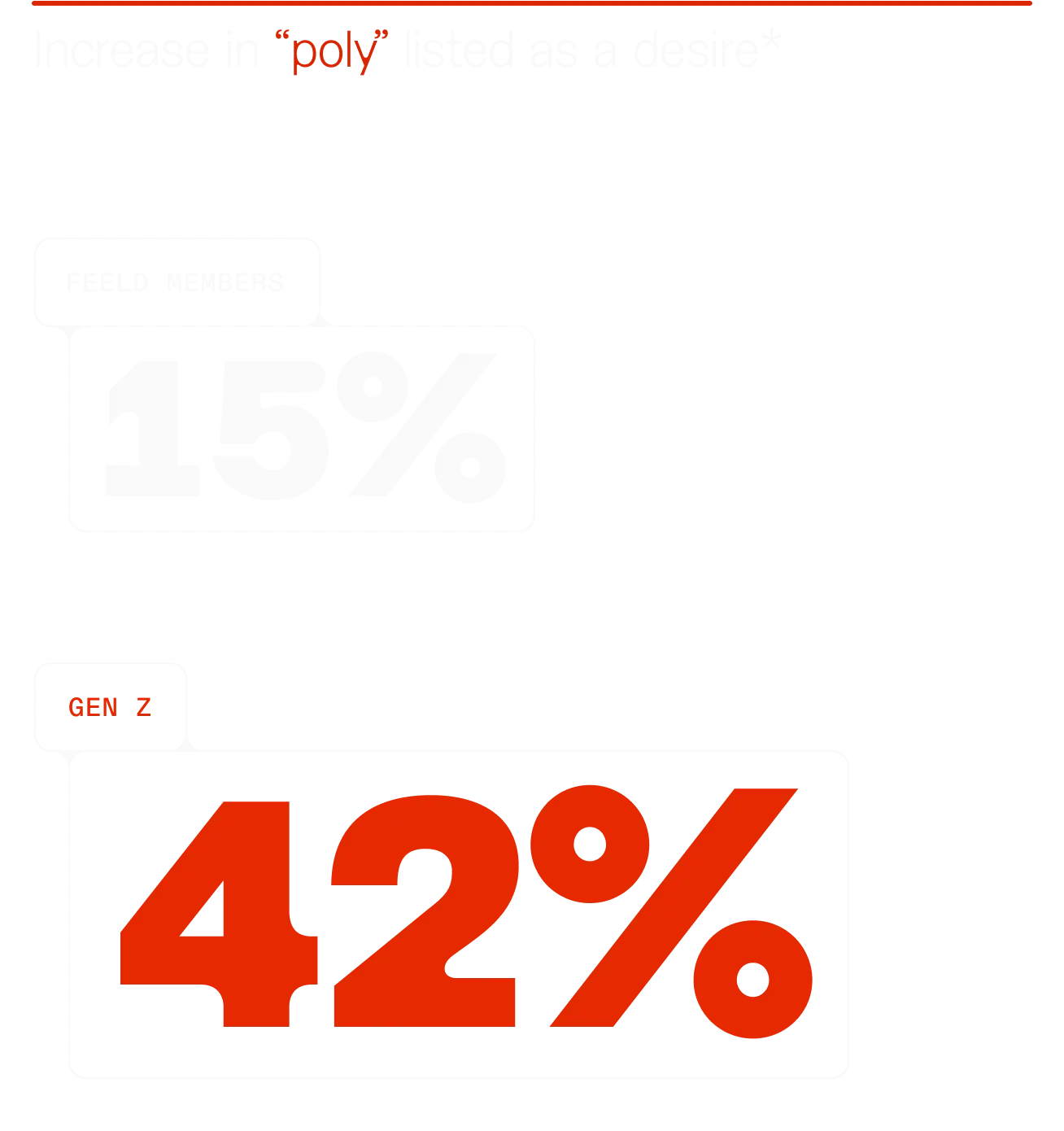
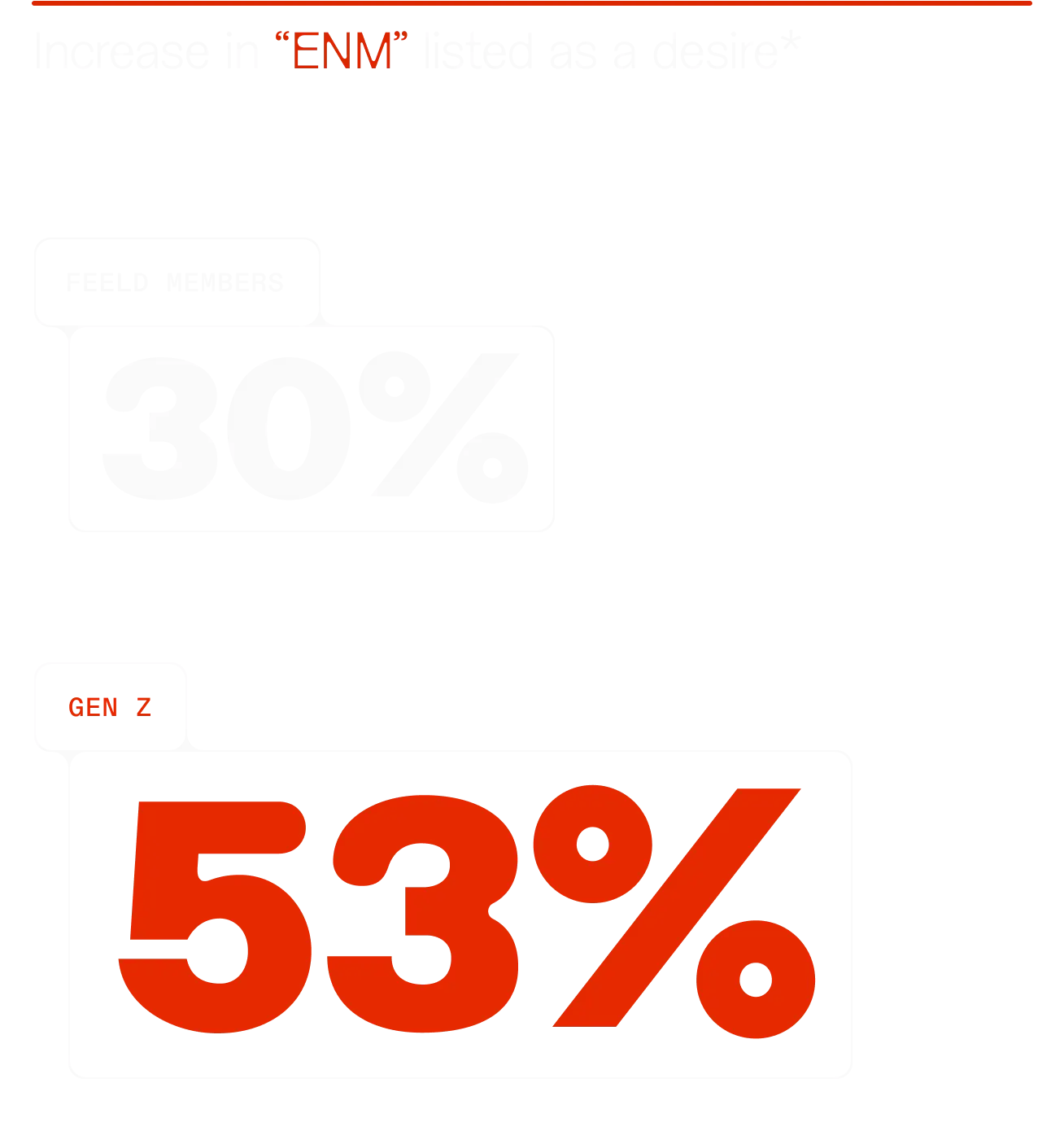
Feeld members have shown a 15% increase in “poly” and a 30% increase in “ENM” being listed as desires in the app over the past year. Gen Z in particular is driving this growth, with a 41.6% increase in “poly” and a 52.8% increase in “ENM” desires. What was once niche has entered the mainstream conversation.
Gen Z are playing by their own rules
*In the app over the past year
Similarly, the worlds built around gaming, fantasy, and collaborative storytelling are scaling in ways that would have been hard to imagine even a decade ago. Dungeons & Dragons now counts tens of millions of players globally, while web series like Critical Role have amassed millions of fans and regularly pull six- to seven-figure viewership, building audiences large enough to fill arenas. The unscripted play Dimension 20, led by Brennan Lee Mulligan, sold out Madison Square Garden in 2025 with nearly 20,000 attendees in just a few days.
Even beyond traditional gameplay, the ecosystem is booming: renaissance faires draw millions of attendees annually and generate tens of millions (USD) in revenue. Immersive LARP events like Drachenfest bring together thousands of participants, and narrative-driven video games like Baldur’s Gate 3, a Game of the Year winner, have sold over 20 million copies and generated more than $1B in revenue. On the big screen, the film Dungeons & Dragons: Honor Among Thieves brought the genre further into the mainstream, grossing over $200M globally, with additional revenue from home streaming and digital releases.
What connects these trends is not the growth itself, but the participation. These are not passive audiences, rather they are communities built on co-creation, negotiation, and shared imagination. As more people move toward ways of living and connecting that require intention, communication, and a willingness to step outside expected narratives, it’s perhaps not surprising that these worlds are expanding in parallel.
Perhaps we could say it’s more like this: people who spend their lives practicing the imaginative work of building fantasy worlds—negotiating their rules, populating them with characters, making them feel real—get good at a particular kind of creative empathy. And maybe that same muscle can make it easier to imagine a different kind of life, a different kind of love. To look at the default script and think: we could write something different.